Welcome to the Archello Podcast, architecture’s most visual podcast series. Listen as Archello's Paris-based Editor in Chief, Collin Anderson, sits down with architects to discuss their careers and projects. Each audio episode is accompanied by a rich visual storyboard which listeners can use to follow the discussion.
Introducing Martin Duplantier
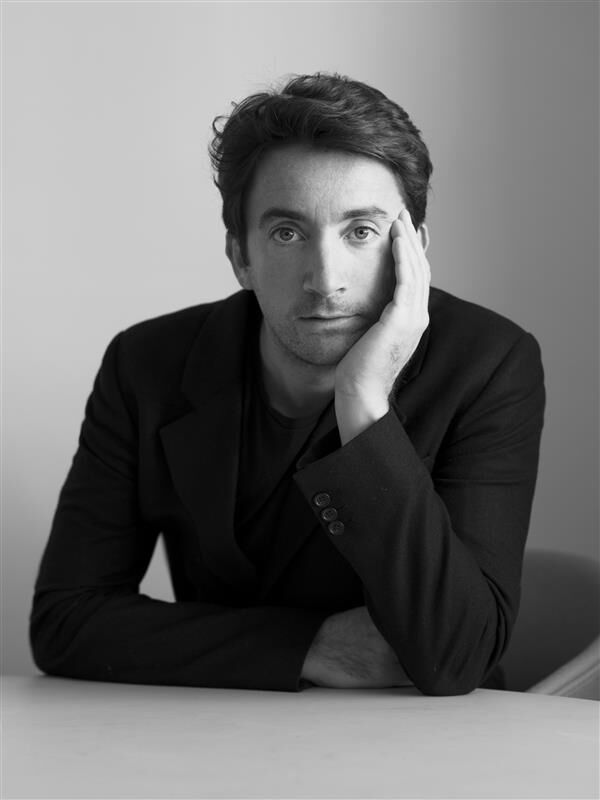
In this episode, Archello speaks with Martin Duplantier, an architect whose practice, Martin Duplantier Architectes, spans offices in Paris, Bordeaux, and Ukraine, shaping projects that range from infrastructure for the Paris Olympics to initiatives in post-conflict reconstruction.
Duplantier’s work explores questions of place, responsibility, and resilience, examining how architecture can respond to uncertainty in times of war while connecting global challenges with everyday urban life.
Listen and scroll as Duplantier discusses his early career, the founding of his practice, his work in Ukraine, and projects that exemplify a deep commitment to context, sustainability, and cultural meaning.
On beginnings, competitions, and building a studio
Duplantier describes how his studio began with a burst of opportunity. “I first started in 2008,” he recalls, “by winning two competitions at the same time—one near Bordeaux and another with David Chipperfield for the HEC campus outside Paris.” Those twin successes required him to open offices in two cities.
With roots in southwestern France, he explains, the Bordeaux office came naturally, while Paris—centralized in its political and cultural power—was essential for visibility. “France is a very centralized country,” he says. “That’s where the decision-makers are.”
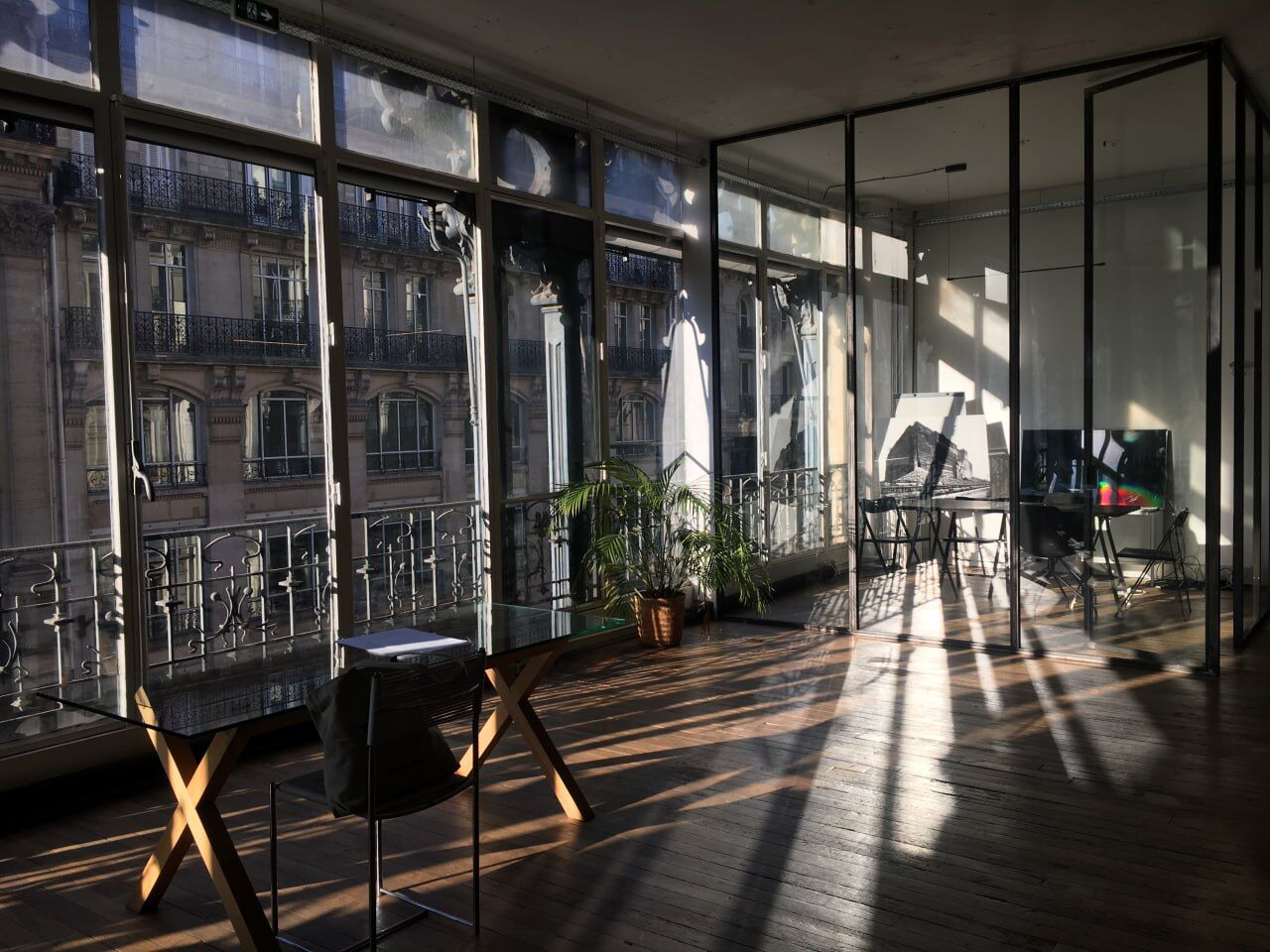
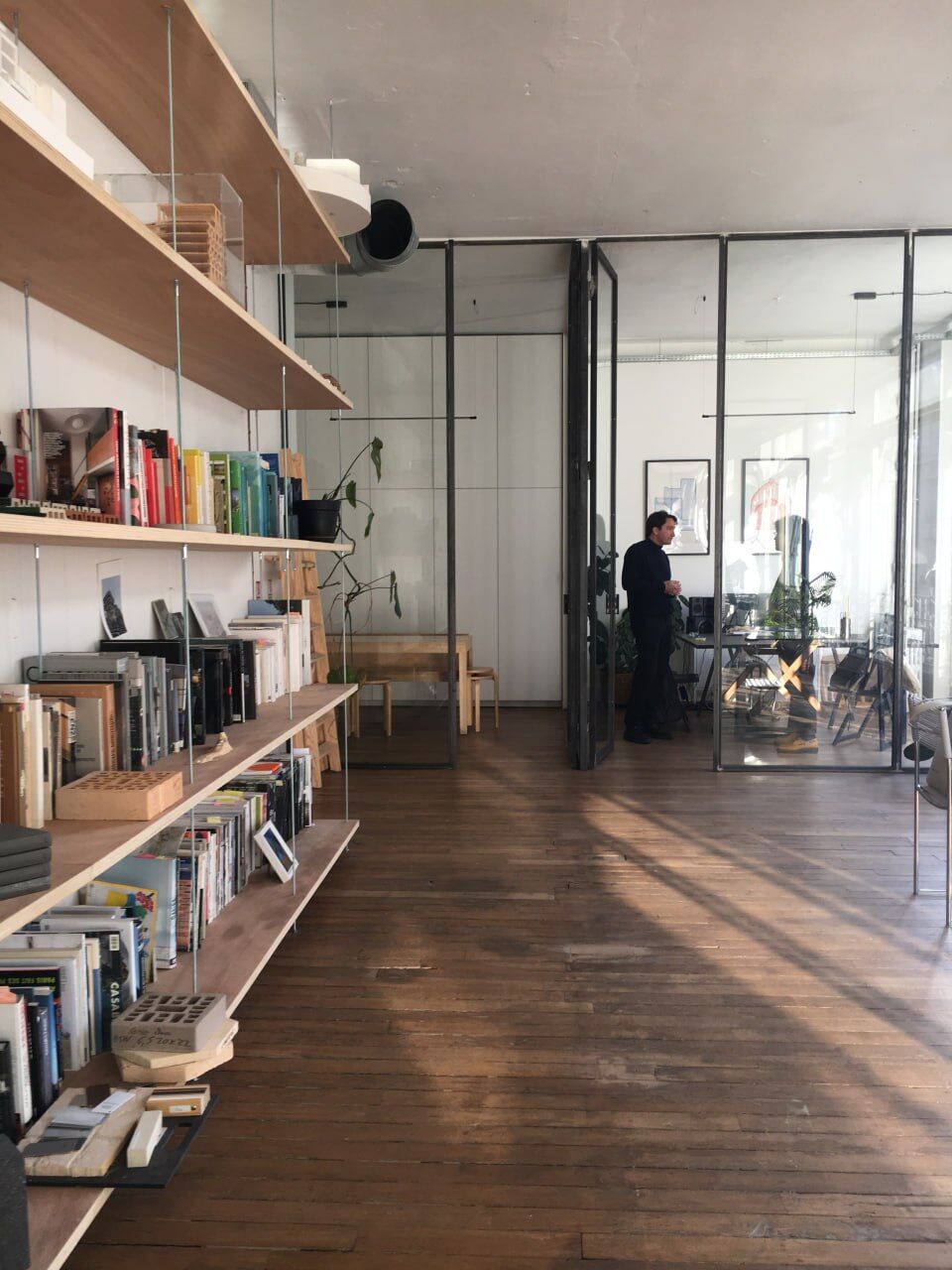
Reflecting on his early years, he notes the role of risk and intuition. “It was a bit unconscious to think that I could do that,” he admits. “I had absolutely no experience in construction sites, so the first person I hired was almost twenty years older than me. Surround yourself with good people that have the skills you don’t.”
Before launching his own practice, Duplantier worked in London at David Chipperfield Architects, an experience that shaped his approach to precision, context, and design continuity. Upon returning to France, he registered with the Chamber of Architects and began receiving competition invitations—marking the start of a practice that would quickly expand beyond national borders.
On expanding internationally and the call from Ukraine
His international journey began unexpectedly. “I’ve always been attracted to working with different climates and cultures,” he explains. In 2014, his team won a competition in Moscow—later disqualified for political reasons—but that project led to a call from Kyiv City Hall. “They told us, ‘We really like what you did in Moscow. Don’t you want to come and develop your ideas here in Ukraine?’”
That invitation opened a lasting relationship with Ukraine. Duplantier began lecturing and leading workshops in Kyiv, Kharkiv, and Lviv, building local partnerships and friendships. When Russia launched its full-scale invasion in 2022, he acted on it. “Many of my friends went to the front line,” he recalls. “I thought, if I’m not going to the frontline, maybe I can do something else.” His studio pivoted toward architectural action—providing jobs to displaced Ukrainian architects, hosting them in France, and supporting heritage protection efforts.
06:40
“Everything the Russians were targeting—landmarks, heritage—was part of their strategy to unroot people and tell Ukrainians that Ukraine doesn’t exist. It’s very linked to architecture and to urban fabric. Architecture has become the second frontline.”
On architecture as resilience and cultural preservation
Duplantier emphasizes that his work in Ukraine revealed an extraordinary creative energy born of crisis. “There’s solidarity, but also innovation,” he says. “It gives meaning to what I do.
His studio’s ethos now extends far beyond Europe. From the Sahara Desert to Cambodia, Duplantier’s work bridges material experimentation with cultural sensitivity. Early in his career, he built schools in Niger using rammed earth and ancient Egyptian techniques popularized by Hassan Fathy. “With almost nothing, you could create the best climatic conditions in the most aggressive environment,” he recalls.
08:15
“Architecture gathers people around projects and around hope. In times of crisis, that act of creating together becomes as essential as the buildings themselves.”
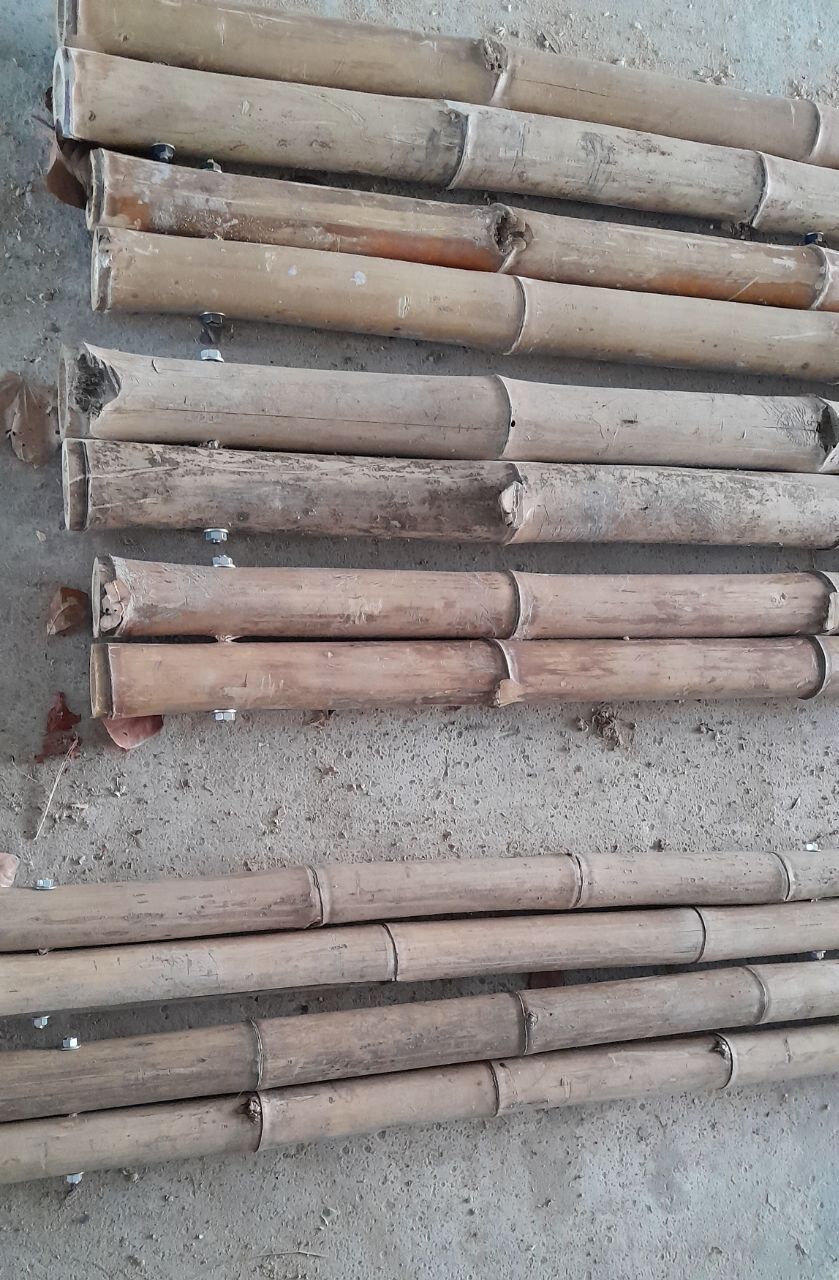
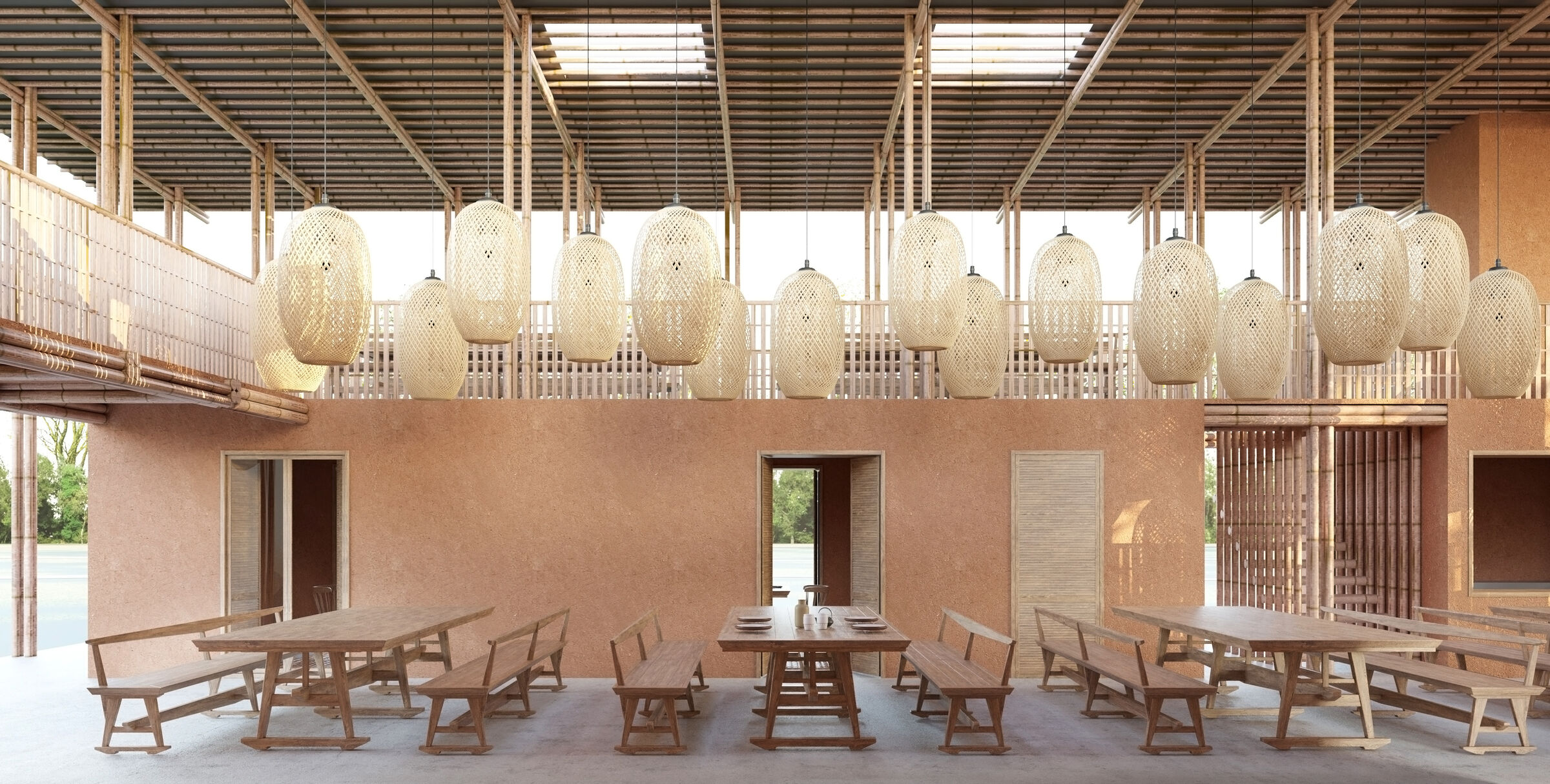
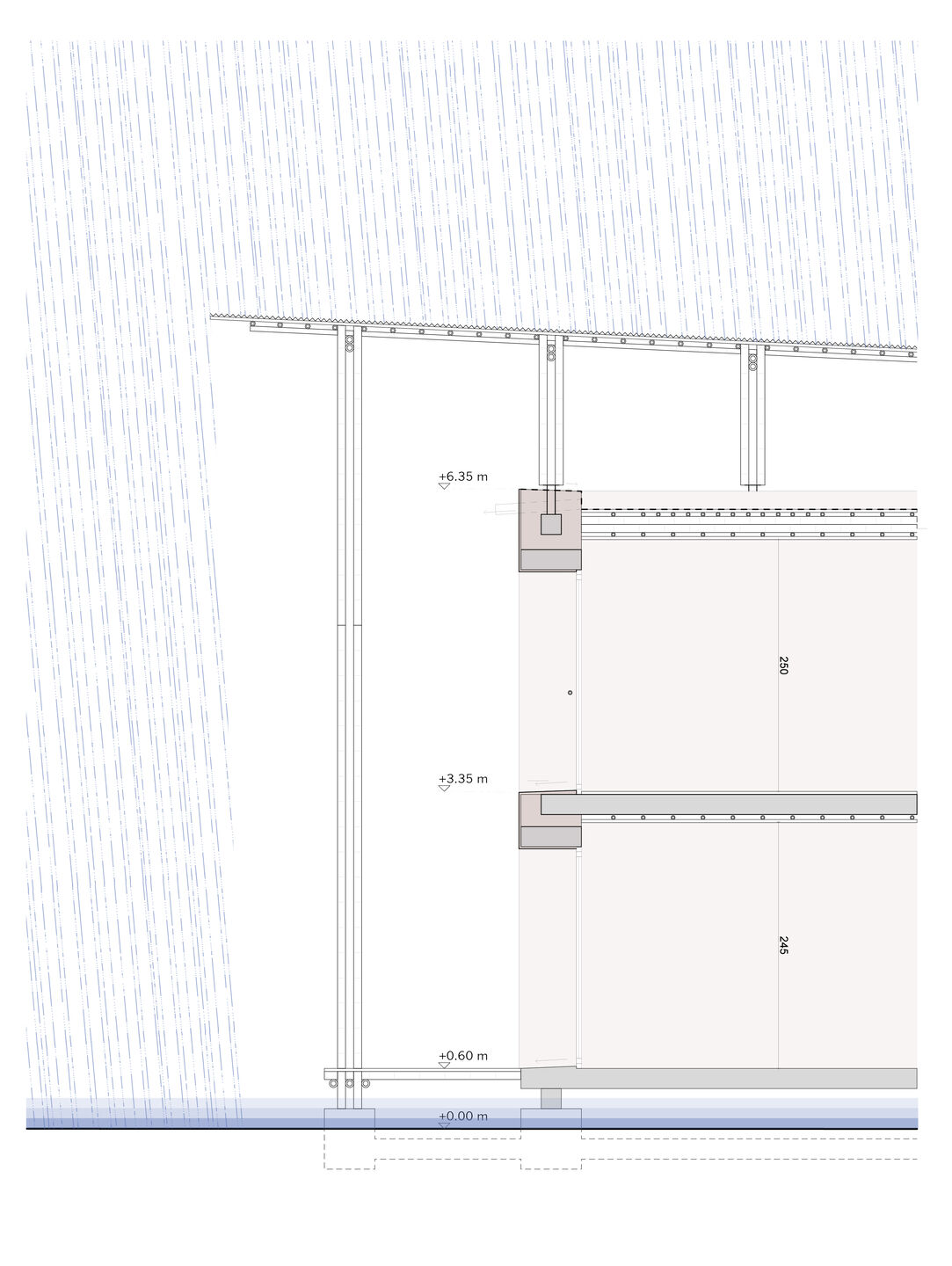
That experience shaped a lifelong respect for vernacular wisdom. “It was such a light in the dark,” he says. “If I build elsewhere—like now in Cambodia, where we’re designing an art school and a museum—it will be in bamboo with rammed-earth blocks, reducing sunlight, creating natural ventilation, and dealing with tropical rains.” For Duplantier, each context demands a new answer. “The critical situation of the world—geopolitical and climatic—requires contextual solutions.”
On sustainability and the French construction landscape
In France, Duplantier sees sustainability as both technical and cultural. “In developed countries, the word sustainability is compulsory,” he explains, “but it has a very national meaning. What is sustainable in Germany is not always seen the same way in France or the US.”
His studio focuses on three key principles: rehabilitation of existing buildings, developing brownfields rather than greenfields, and, when new construction is necessary, minimizing footprint through adaptive reuse and low-carbon materials like wood and recycled concrete. But he also acknowledges the regulatory complexity of working sustainably in France. “Norms are not always coherent,” he says, referencing the evolving fire safety restrictions that have made timber construction more difficult. Still, he remains optimistic: “The world is full of innovative people,” he notes. “We try to help startups navigate these norms.”
The challenge, he explains, is that although Europe is often seen as one market, the construction sector remains fragmented. “Every country is very protective. You have to go through all the normative processes in every single country.” One of his ventures—a timber and compressed straw panel system—collapsed under bureaucratic strain. “It went bankrupt because approvals were too hard,” he admits. “We need flexibility and innovation in regulation.”
On collaboration and leadership with AMO
Beyond his own studio, Duplantier served several years as President of AMO (Architectes et Maîtres d’Ouvrage), a French association that brings together architects, developers, and public clients. “It’s not a chamber of architects or a developers’ club,” he explains. “It’s a platform where all actors in the city-making process can gather and create a common culture.”
He believes that a successful project starts with a shared vision. “A good project is usually a good team—the client, the architect, the city, the mayor—everyone aligned on quality,” he says. Under his leadership, AMO established new programs, conferences, and the annual AMO Prize, awarded jointly by France and a partner country each year. The 2025 edition, for example, pairs French and German teams to explore cross-border collaboration.
Duplantier also championed binational initiatives with Belgium, Spain, and Switzerland, advocating for innovation without borders. “We should learn from each other,” he says. “Innovation has no frontier.” He further promoted fair contracts for private projects, explaining how in France, even private developers often hold design competitions. “A mayor may tell a developer: if you want your planning approval, organize a competition. Everyone benefits—the city, the developer, the architect.”
This system, Duplantier argues, produces higher-quality architecture and civic engagement. “Once the project is chosen, no one complains—because they were already in the jury,” he says with a smile. Through AMO, he is now working to export this collaborative model to other countries, including Ukraine.
On maintaining a presence in Ukraine amid conflict
Duplantier travels to Ukraine monthly, despite the long and difficult journey. “It takes twenty-four hours from Paris to Kyiv,” he says. “But I thank the national railway for keeping the country connected—even to frontline cities like Kherson.”
His Ukrainian office operates under extraordinary conditions. “The main issue is building a team,” he notes. “I’m very lucky to have them.” Over time, their focus has evolved—from heritage protection to education and urban resilience. Projects now include an Atlas of Schools, mapping and redesigning school prototypes across the country, and urban strategies for frontline cities like Zaporizhzhia.
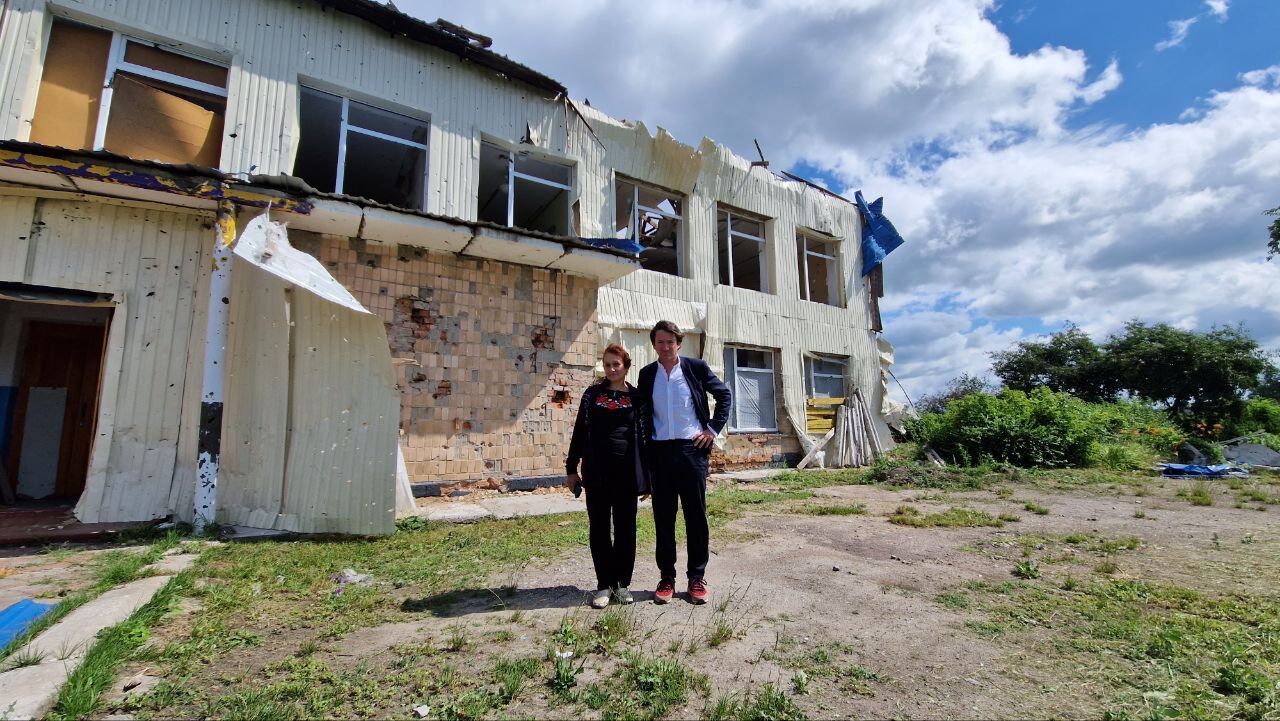
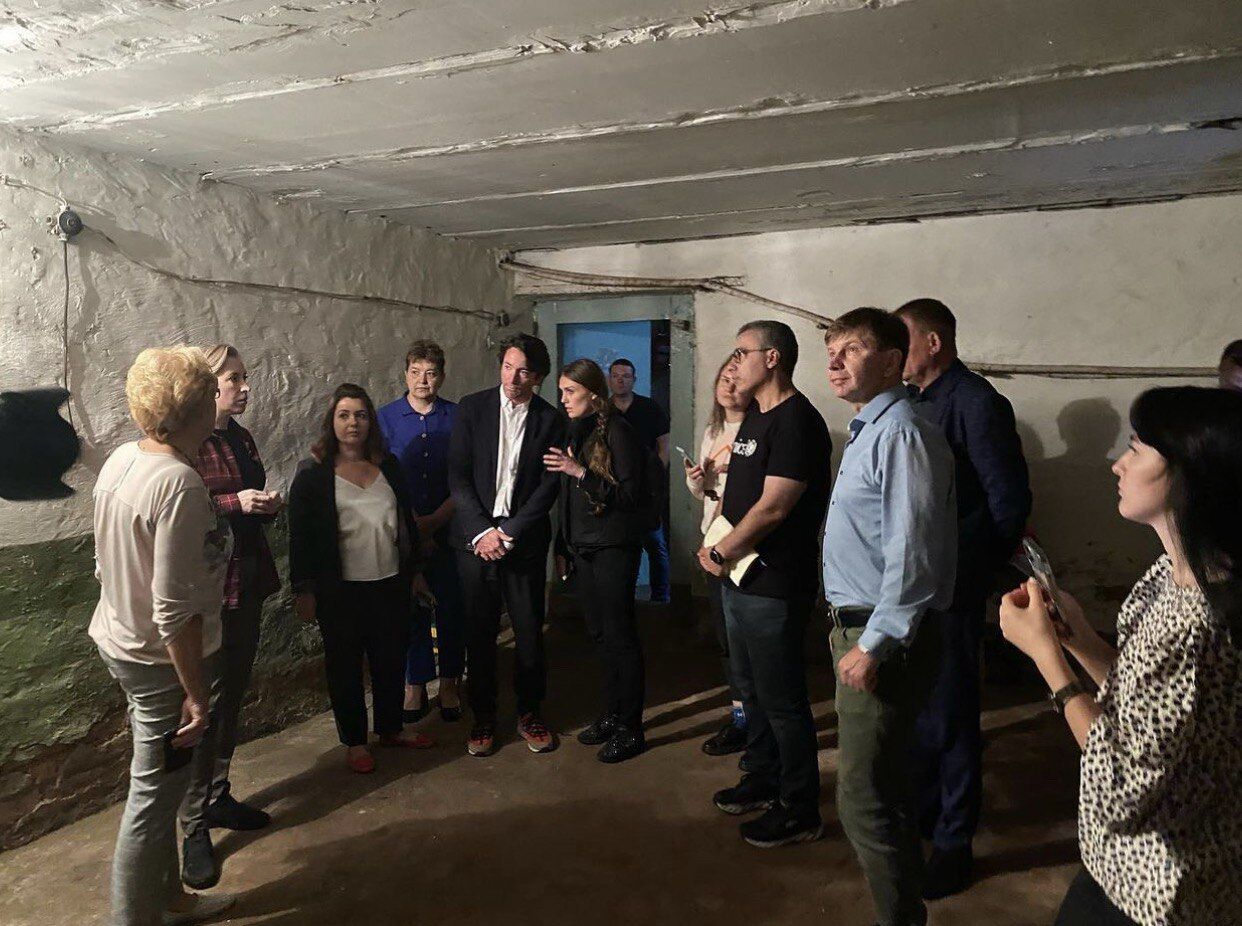
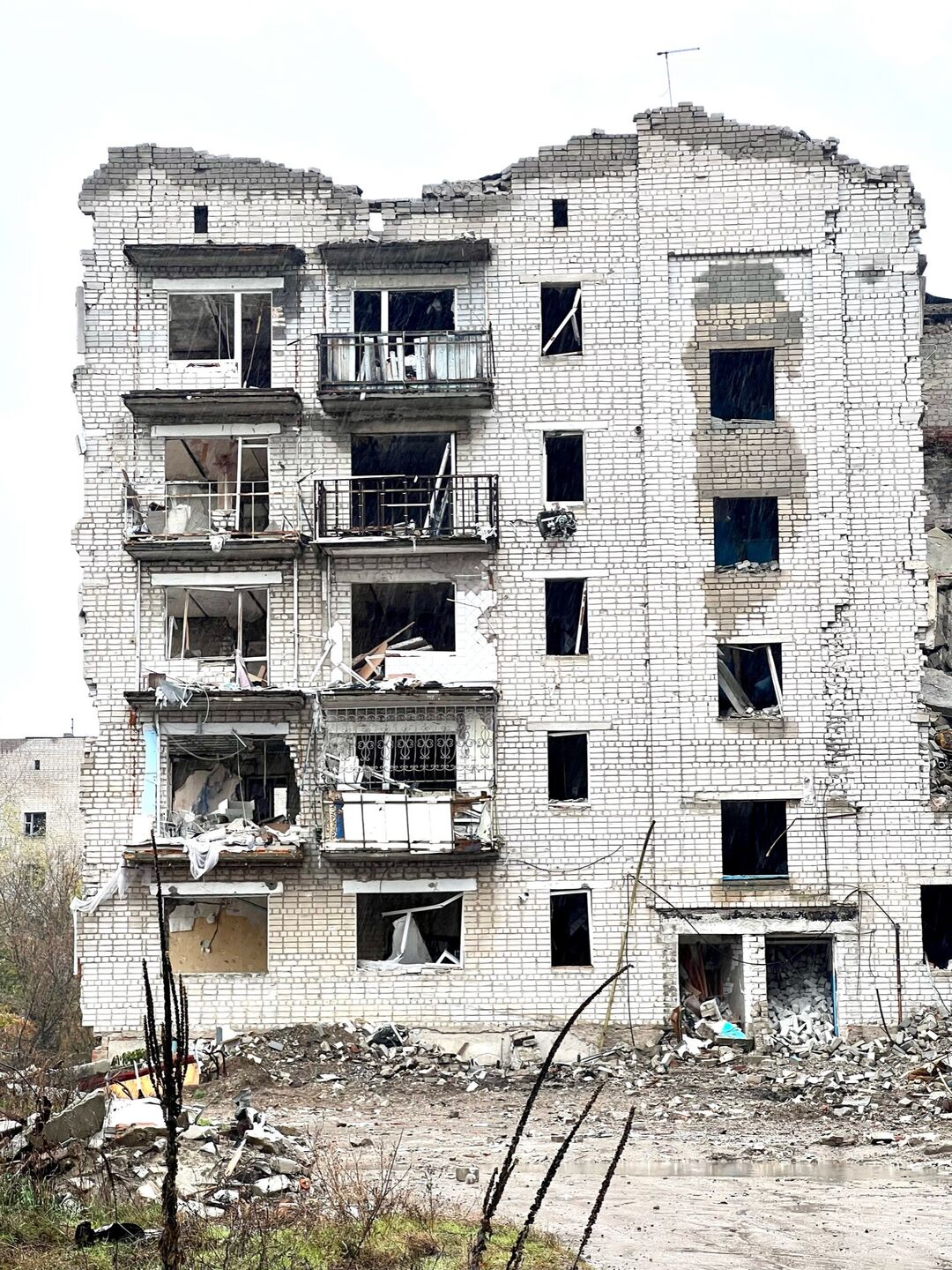
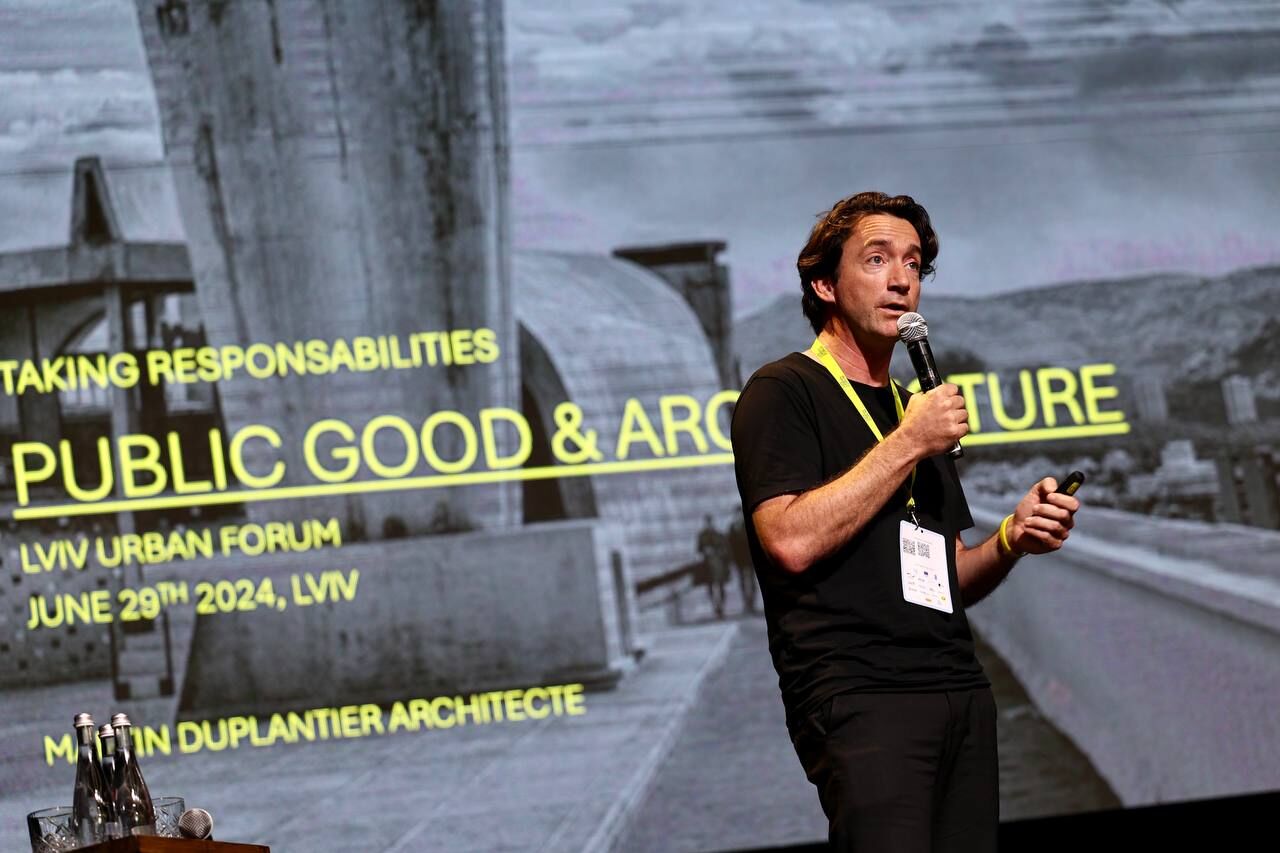
“Because we don’t know the quality of the peace to come,” he explains, “we must design both for livability and defense.” These projects consider how to protect both bodies and souls—how to make life sustainable in the face of destruction. “You’re overlapping crises: ecological, human, psychological. You need innovative solutions.”
Duplantier believes Ukraine’s radical experimentation can inspire Europe. “The projects Ukrainians are developing are so bold that they contain seeds for a common future,” he says. “Schools can become the heart of social life—shelters, community centers, places of hope.”
On adaptation, sustainability, and identity
Duplantier describes architecture as a cultural frontline. Before the invasion, architects in Ukraine had limited voice; now, they are key to the country’s identity. “Architecture is our link to geography and place,” he says. “It’s collective and essential.”
26:27
“It’s not about being green—it’s about strength. Independence from Russian gas or oil, producing your own energy and water—these are forms of resilience that define true sustainability.”
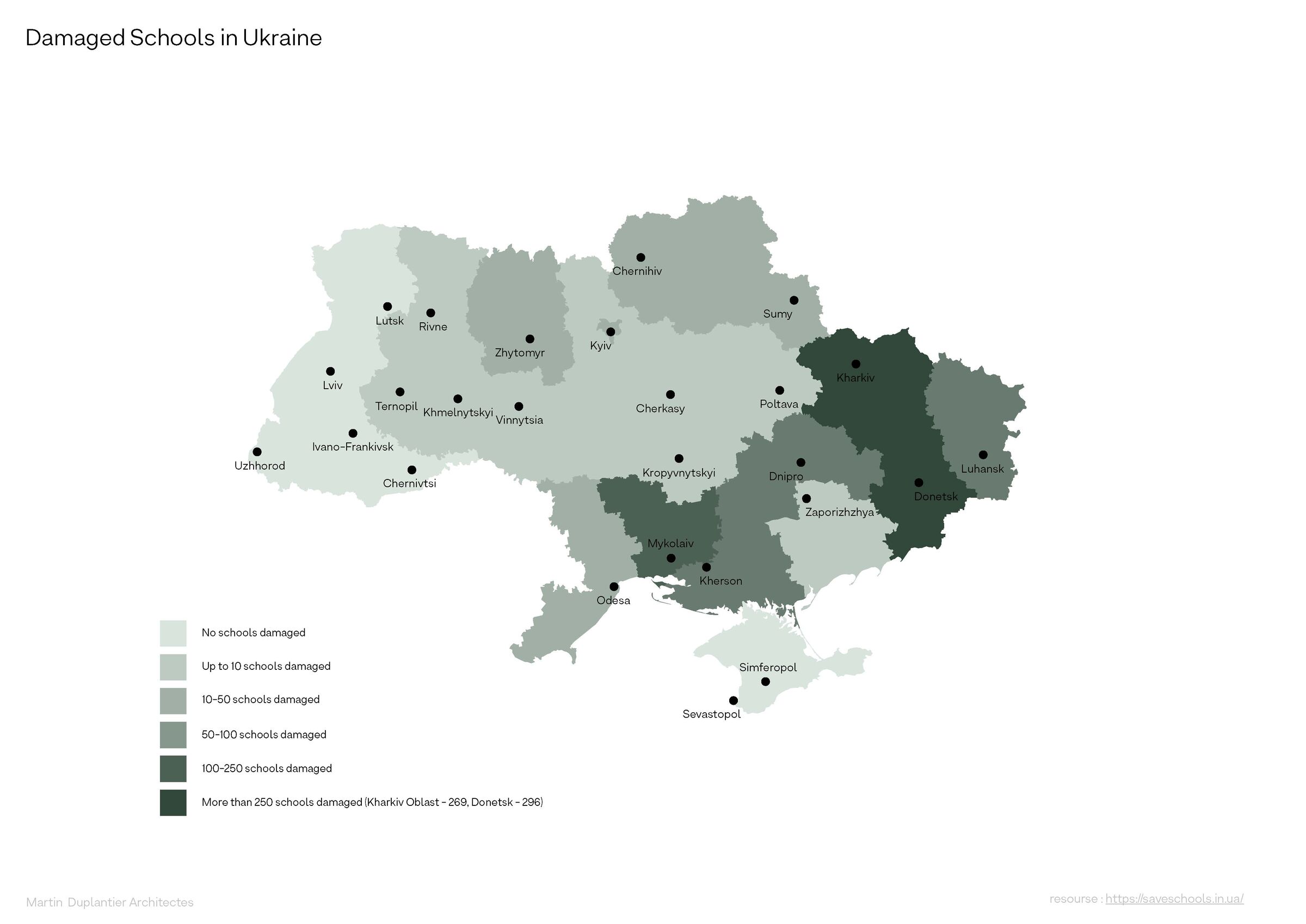
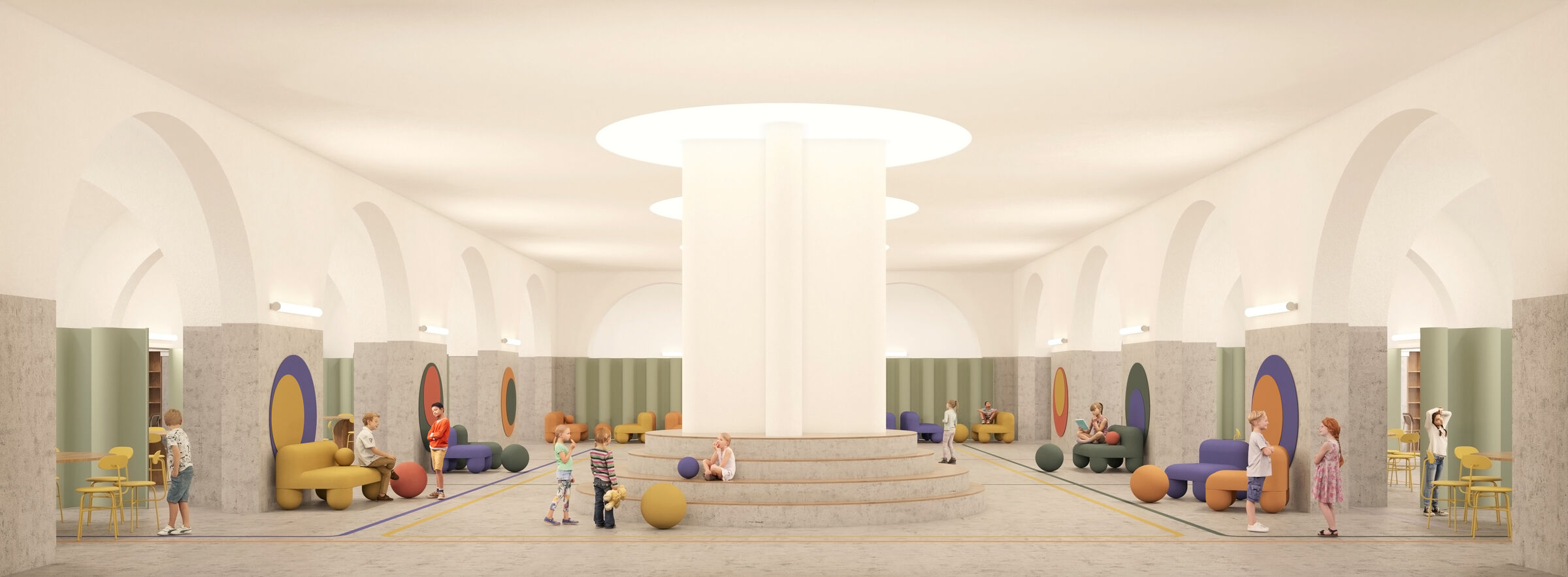
His Atlas of Schools project embodies this philosophy. With over 3,000 schools destroyed or damaged, his team is rethinking the typology entirely. “We’ve mapped the Soviet standards and found them very formal—little room for creativity or interaction,” he explains. The new approach keeps existing structures where possible but reimagines them: adding bomb shelters, flexible classrooms, and creative learning spaces.
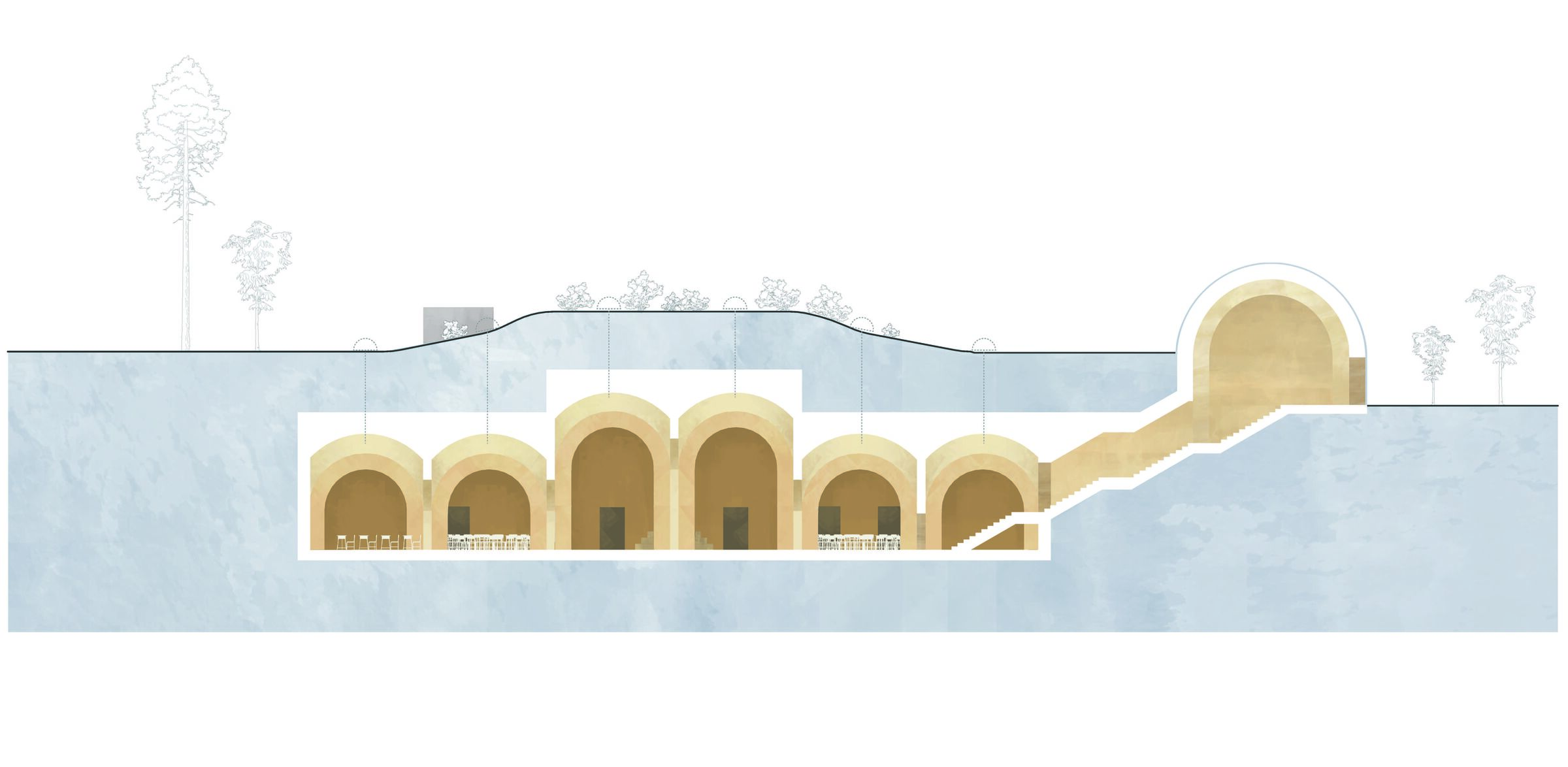
In frontline regions like Zaporizhzhia, he and his team are developing underground school prototypes that can double as cultural venues during peacetime. “They can become music studios or art spaces,” he says. “Architecture must exist even underground.”
On rethinking sustainability through history
For Duplantier, sustainability goes beyond technology. “It’s about your own strength toward any aggression, but also your history,” he says. Ukraine’s architectural legacy—vernacular wooden churches, monumental city buildings—reveals both fragility and resilience.
He points out that Soviet-era building codes still limit timber use, effectively forcing construction in concrete or steel. “We need to reform the whole system,” he says. “Reconstruction is transformation—it’s the opportunity for Ukraine to become a modern, innovative, uncorrupted country.”
31:50
“Reconstruction is more about transformation than about building. It’s the opportunity for Ukraine to become a modern, innovative, uncorrupted country—and for architecture to take its part in shaping that change.”
On community projects and the Cantine de Mariupol
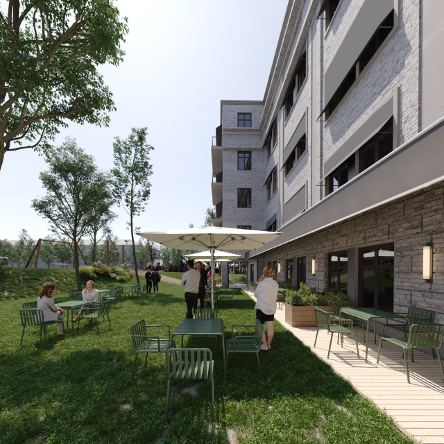
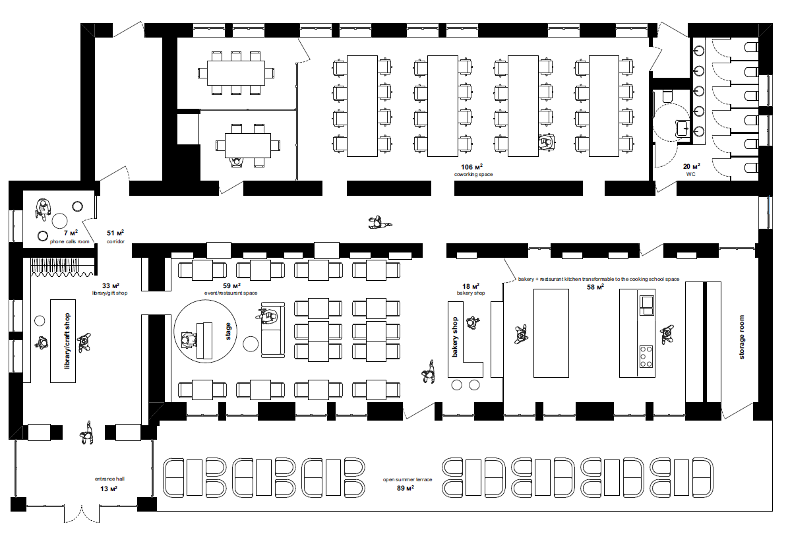
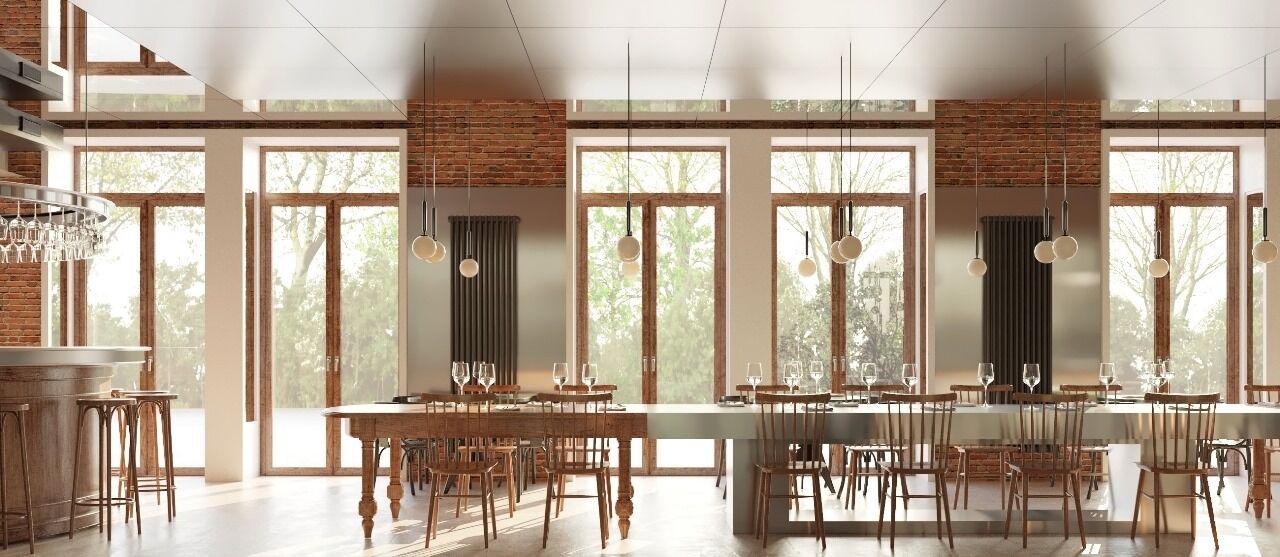
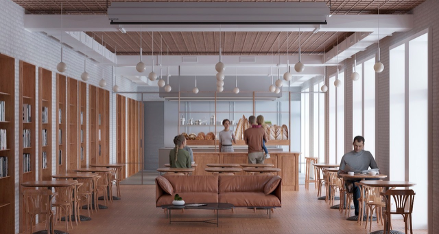
Among his ongoing efforts, the Cantine de Mariupol is particularly symbolic. The project transforms a former university building in Dnipro—home to displaced families from Mariupol—into a shared culinary and educational space. “We wanted a place that brings people together,” he says. “What gathers people more than food?”
The project is funded by France and realized in collaboration with Michelin-starred chef Thierry Marx. “Thierry told us, ‘Let’s go for it.’ He has an academy and can train the first dozens of people learning new skills.” The canteen functions as both culinary school and restaurant, offering training and community-building for women and children affected by war.
On the Venice Biennale and the French Pavilion
This year, Duplantier co-curated the French Pavilion at the Venice Biennale, themed around instability—geopolitical and climatic—and architecture as a creative lever. The pavilion showcased fifty projects selected from over 300 submissions worldwide, half from France and many from Ukraine.
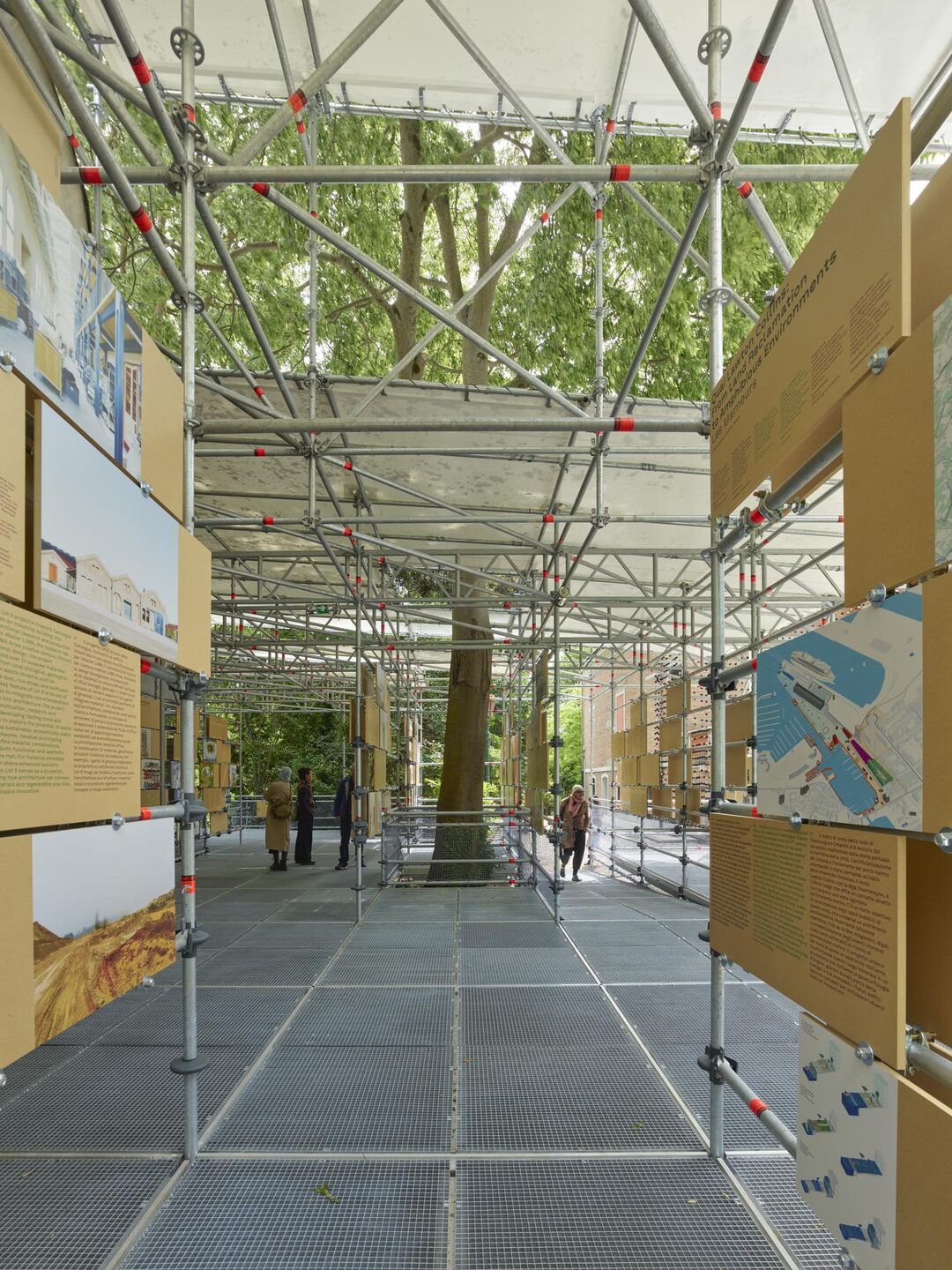
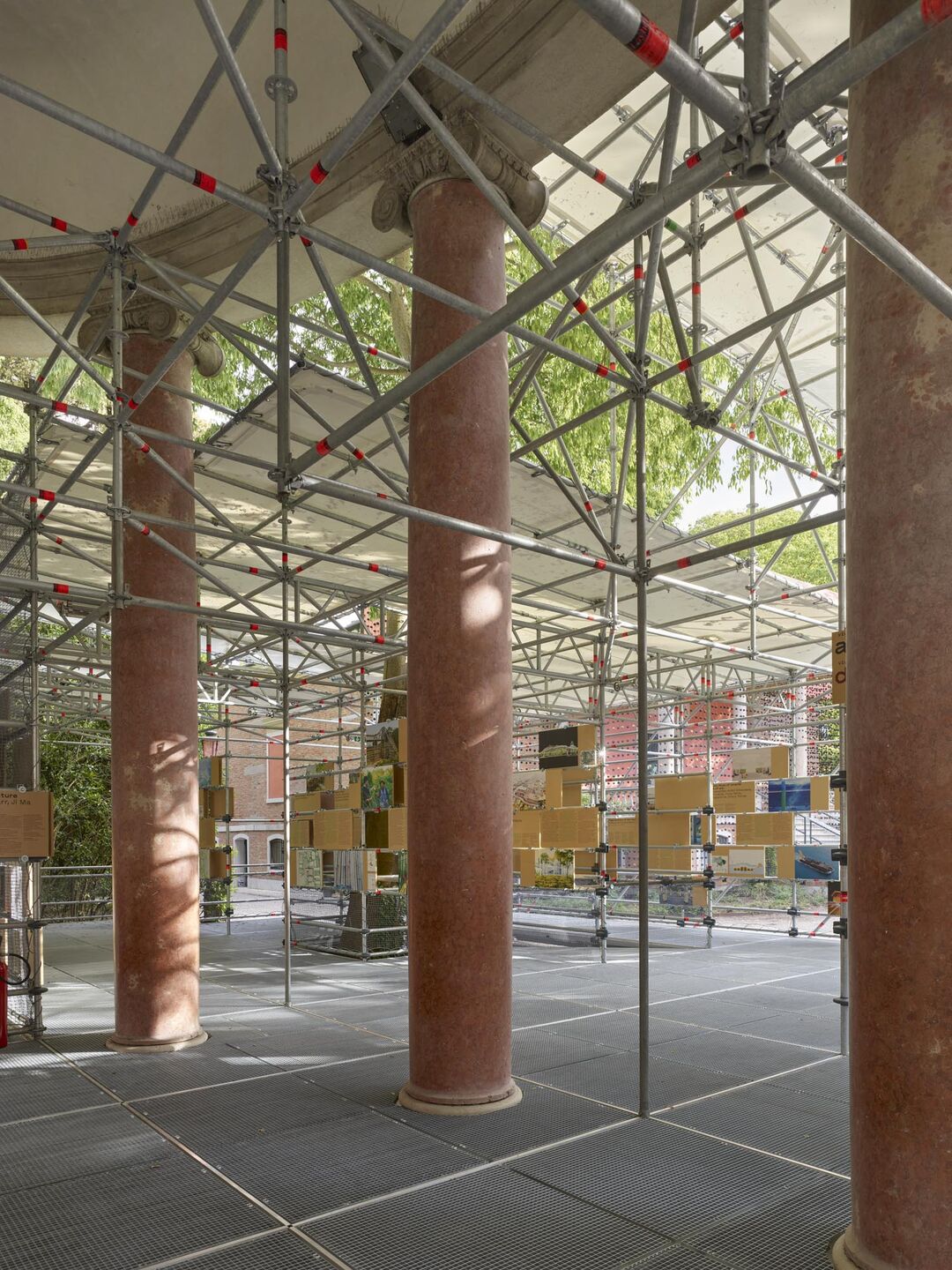
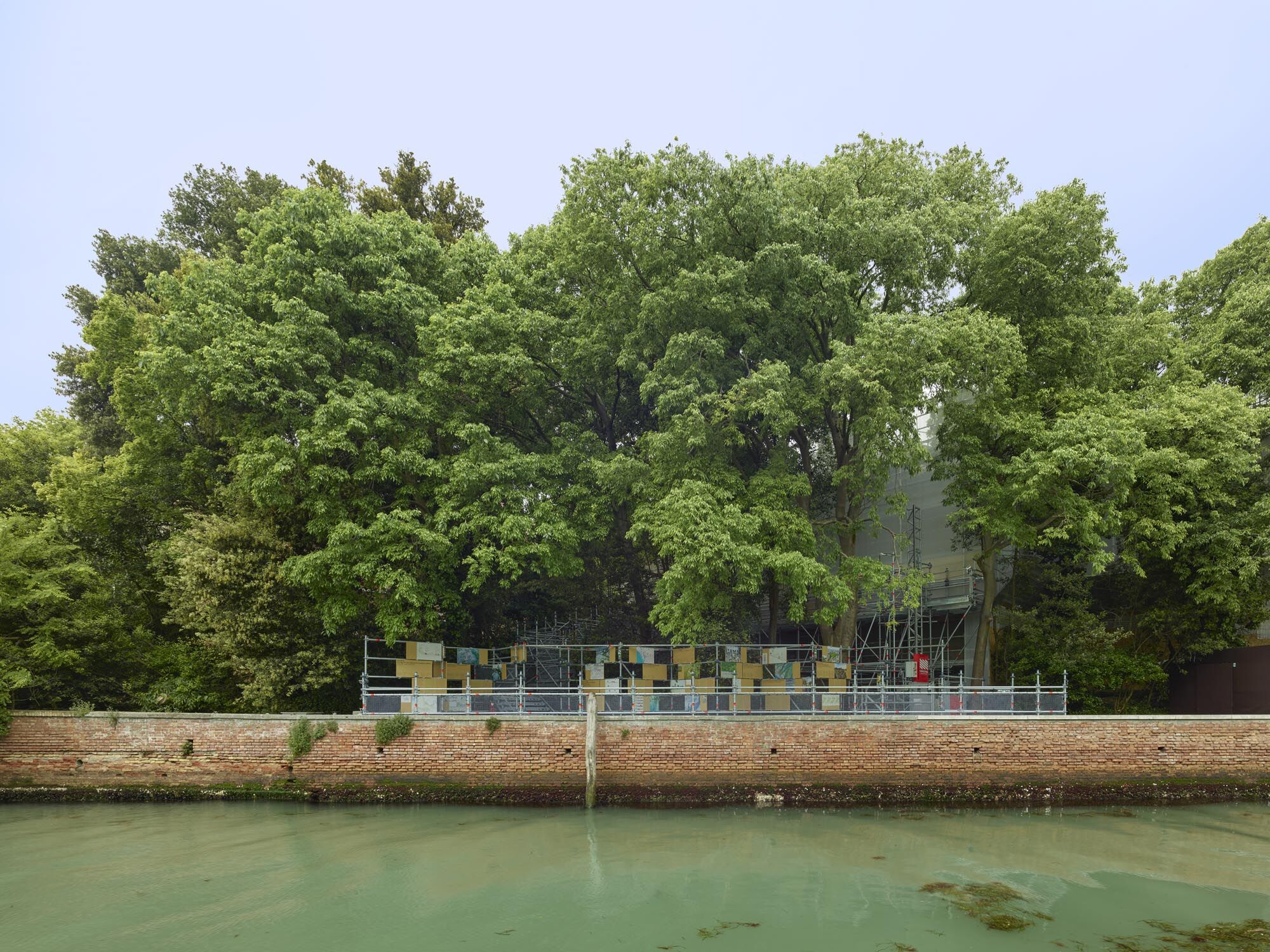
“We wanted to show Ukraine not only as a battlefield but as a place of the future,” he explains. “At the opening, cities like Kharkiv, Zaporizhzhia, and Mariupol were represented. There’s hope if we want it.” He views postwar periods as pivotal moments for architecture—“either the best or the worst of history.”
At Venice, Duplantier also participated in a panel with UNESCO and Dominique Perrault. The discussion focused on two themes: 'Everything is Heritage' and 'The Great Adaptation.' “The 20th-century idea of heritage was conservative—protecting and preserving,” he explains. “Now we must take heritage as an ingredient for the future.” Meaning adaptation is not compromise, but evolution. “We have to make our habitat livable,” he says. “If we just protect what is there, we won’t make it.”
On infrastructure and the Olympic Mobility Center
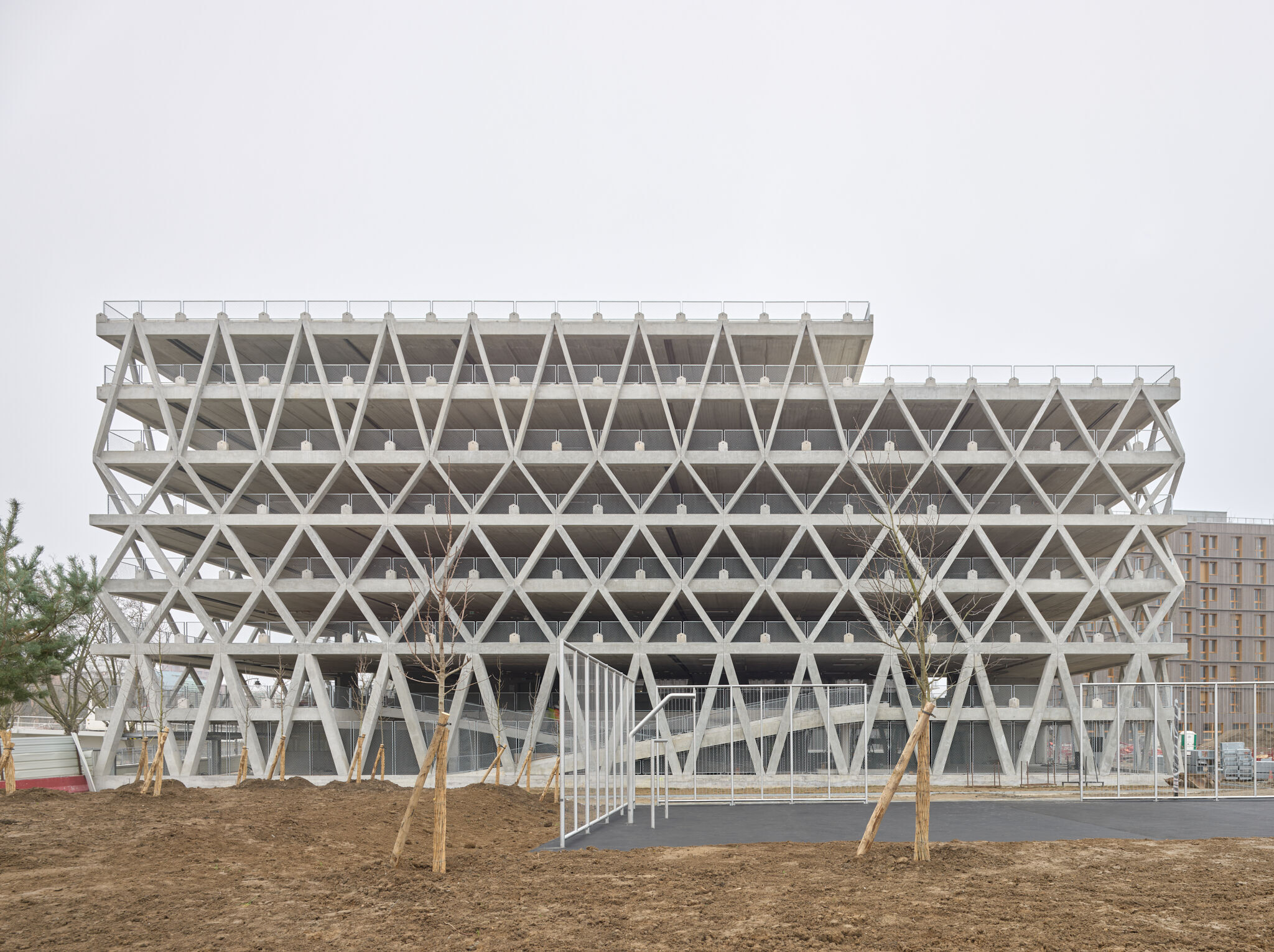
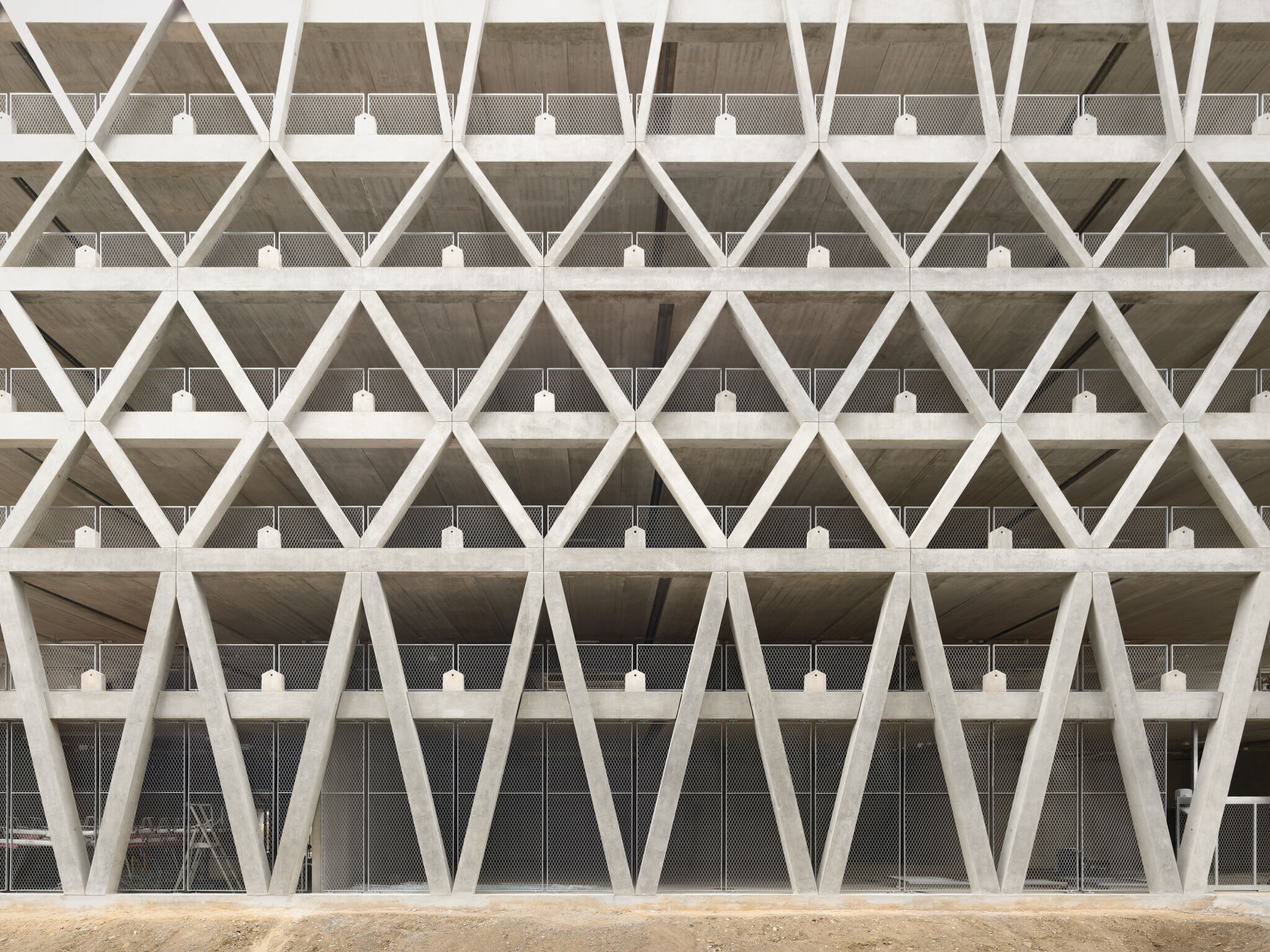
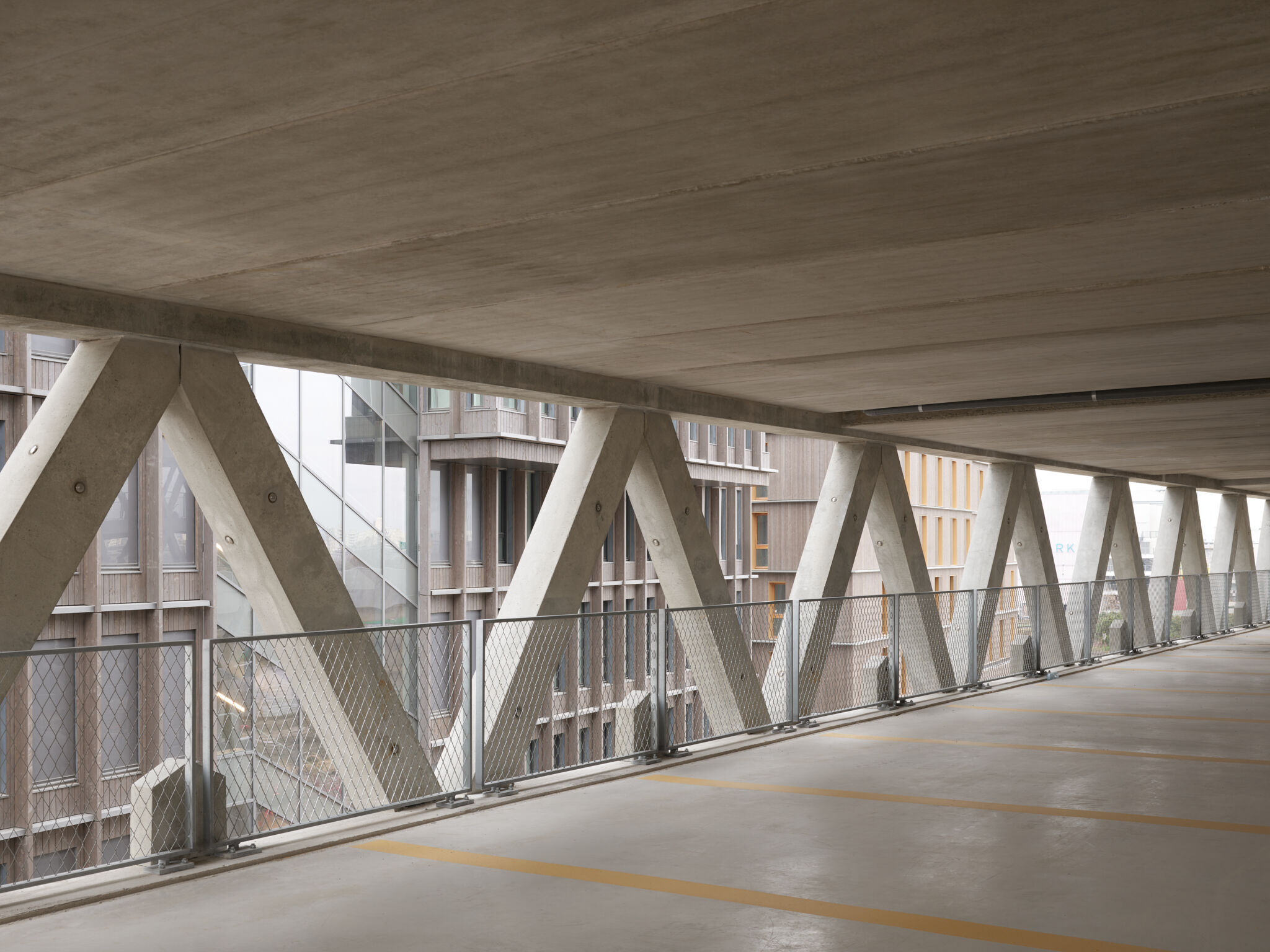
Returning to Paris, Duplantier reflects on his recent project for the 2024 Olympic Games—the Mobility Center in the new eco-neighborhood on the Seine. The building serves as a logistics hub where all deliveries, vehicles, and bicycles converge, keeping the district car-free.
“It’s an island site, and even deliveries—washing machines, for example—go first to the Mobility Center, then small electric vehicles bring them to your door,” he explains. Originally planned in timber, the structure was reworked in low-carbon concrete for safety and cost reasons. “We developed a matrix to use as little concrete as possible,” he says. “Every slab is free and reversible—if one day cars disappear, the building can serve another purpose.”
He describes the project as an experiment in long-term thinking: “Usually private companies don’t plan for fifty years ahead, but our client was public, and it made sense.” Even the construction process innovated—concrete elements were transported by boat instead of truck to reduce emissions. “Infrastructure is the backbone of our cities,” Duplantier says. Drawing from his work in Western Ukraine, he notes how the war has reoriented the country’s geography—from Odessa and the Black Sea to Lviv and the European frontier. “It’s a huge challenge,” he explains. “But if we rebuild infrastructure wisely, we can host more people, reconnect cities, and strengthen the future.”