Sustainability Report
Embodied carbon
Several design decisions help reduce the project's embodied carbon. The development regenerates a previously degraded brownfield site, avoiding the environmental impacts associated with developing undeveloped land and restoring five hectares of the site as landscaped public green space.
During design and construction, detailed 3D modelling of the concrete structure, steel structure, and facade enabled precise coordination, reducing material waste, fabrication errors, and construction time. Material specifications also favour products with lower environmental impacts, including aluminium facade systems manufactured with recycled aluminium, ceramic cladding produced using recycled raw materials and closed-loop manufacturing processes, FSC- and PEFC-certified wood-based interior products, and flooring supported by carbon-neutral manufacturing and take-back programmes.
Operational Emissions / Energy
Operational energy demand is primarily reduced through passive architectural strategies integrated into the building envelope. A highly reflective white facade minimizes solar heat gain, while adjustable external aluminium shutters provide user-controlled shading on the south, east, and west elevations, reducing cooling loads during warmer months. The proportions of glazing and opaque panels were refined through full-scale mock-ups to maintain daylight and occupant comfort even when the shutters are closed.
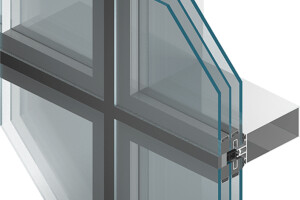
High-performance aluminium window and curtain wall systems further improve the thermal performance of the building envelope by limiting unwanted heat transfer. Rainwater harvesting systems reduce potable water consumption and lessen the burden on the municipal stormwater network, while the Seaside Garden is planted exclusively with native coastal vegetation that requires minimal irrigation and maintenance.
Service and maintenance emissions
The project incorporates durable, low-maintenance materials to reduce emissions associated with replacement, repair, and long-term building operation. Ceramic facade panels were selected for their resistance to weathering, UV exposure, and staining, allowing them to maintain their appearance with minimal maintenance over an extended service life. Powder-coated aluminium facade systems provide corrosion resistance in the coastal environment while remaining fully recyclable at the end of their service life.
Interior finishes also contribute to longevity, including abrasion-resistant Egger PerfectSense wood-based panels and modular Interface carpet tiles that can be selectively replaced rather than removing entire floor finishes. The native planting strategy within the Seaside Garden further reduces long-term maintenance requirements by minimizing irrigation, fertiliser use, and ongoing landscape management.
Afterlife
Adaptive reuse was implemented primarily at the site scale rather than the building scale. The medical complex transforms a long-degraded brownfield site into an active healthcare campus, restoring ecological value through new green spaces and native planting. However, the buildings themselves are purpose-designed for healthcare functions, and the available project information does not indicate that future changes of use, flexible floor plates, or adaptable structural systems were incorporated to accommodate different programmes over the building's lifetime.
Circular economy principles are reflected mainly through the selection of recyclable and responsibly manufactured materials rather than through design for disassembly. Several specified products support material circularity, including aluminium façade systems with high recycled content, ceramic panels manufactured using closed-loop production processes, recyclable wood-based boards, and Interface carpet tiles that can be returned through the manufacturer's ReEntry take-back programme. While many building components are recyclable at the material level, there is no evidence that the structure or envelope was designed for systematic disassembly or component reuse at the end of the building's service life.
Key products in low carbon design