Sustainability Report
Certificates
Embodied carbon
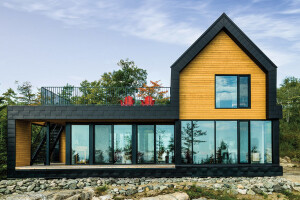
The project significantly reduces embodied carbon through light-frame wood construction, advanced framing, a monolithic concrete slab for reduced consumption, the use of ecological/carbon-neutral concrete, recycled plasterboard, and prioritizing local resources like wood and granite. The project implemented several strategies to reduce embodied carbon:
-
Light-Frame Wood Composition with Advanced Framing: This approach allowed the use of only essential structural wood elements, directly reducing the amount of structural material required.
-
Monolithic Concrete Slab: Utilized for the foundation, this significantly reduced concrete consumption.
-
Ecological, Carbon-Neutral Concrete: Specifically opted for, further lowering the embodied carbon of the foundation.
-
Prioritization of Local Resources: Emphasis on local resources such as wood and granite, reducing transportation emissions.
-
Recycled Materials: Recycled plasterboard panels were used.
-
Highly Efficient Envelope: Insulation exceeding building code requirements by 30% contributes to long-term durability, reducing future material replacement needs.
Operational Emissions / Energy
Conceptualized following "Passivhaus principles" and achieving a HERS score of 47 (53% more energy-efficient than a standard new home), with insulation exceeding code by 30%, optimized natural light, and thermal mass. Data shows the house consumes approximately 40% less energy than a comparable standard house. The project employs the following comprehensive strategies to minimize operational emissions and energy consumption:
-
Passivhaus Principles: The project was conceptualized following Passivhaus principles, aiming for ultra-low energy consumption.
-
Highly Efficient Building Envelope: Constructed with insulation "exceeding building code requirements by 30%."
-
Home Energy Rating System (HERS) Score of 47: This indicates that Les Bases is "53% more energy-efficient than a standard new home."
-
Measurable Energy Reduction: Data collected shows the house consumes approximately 40% less energy than a standard house of comparable size.
-
Bioclimatic Advantages: Leveraged through "solar orientation and natural ventilation."
-
Optimized Natural Light: Openings have been carefully designed to "optimize natural light without causing overheating."
-
Thermal Mass: The choice of materials complements the approach by providing "significant thermal mass," which helps regulate indoor temperatures.
Service and maintenance emissions
The project's strategies related to service and maintenance emissions include:
-
Durable Materials: The selection of materials for their durability, including ecological and recycled options, reduces the need for frequent replacement and associated maintenance.
-
Highly Efficient Envelope: A highly efficient building envelope with superior insulation reduces the load on heating and cooling systems, potentially extending their lifespan and reducing maintenance needs.
-
Healthy Living Space: The focus on creating a healthy living space through material selection minimizes harmful off-gassing, potentially reducing the need for certain types of maintenance or interventions.
Afterlife
Adaptive reuse and long-term flexibility were key design considerations. The floor plan, mechanical systems, and features such as the aligned corridor and kitchen window, are designed for future expansion to accommodate changing family needs.
The project incorporates elements designed for deconstruction:
-
Monolithic Concrete Slab for Deconstruction: The "monolithic concrete slab further facilitates deconstruction with minimal on-site damage," implying easier material recovery.
-
Recycled Materials: The use of recycled plasterboard panels and the general prioritization of ecological and recycled materials supports circularity by utilizing existing material streams.
-
Focus on Durability: Emphasizing durability ensures materials remain in use longer, delaying their entry into waste streams and supporting a longer material lifecycle.
Key products in low carbon design