Sustainability Report
Embodied carbon
Low Carbon
Carbon Emissions
261
kg CO₂-eq./m²
Carbon Capture
186
kg CO₂-eq./m²
A partial Whole Life Carbon assessment was conducted, focusing on embodied and stored carbon.
- Embodied carbon: 261 kgCO2e/m²
- Biogenic carbon: 186 kgCO2e/m²
Embodied carbon overview
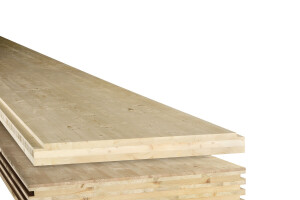
- The total material-related CO2 impact amounts to 3,200 tonnes. Compared to a concrete and steel structure, approximately 1,700 tonnes of CO2 emissions were avoided. The use of cross-laminated timber (CLT) and glulam stores approximately 1,500 tonnes of CO2 within the timber structure.
- Hybrid timber and concrete construction was used, incorporating prefabricated mass timber elements. Structural materials include CLT, glulam, concrete, steel for the emergency staircase, timber frame construction, timber facade frames, and mineral wool insulation.
- Prefabrication enabled reduced on-site construction time and supported efficient assembly.
- Total timber volume used: 2,000 cubic metres; glulam: 246 cubic metres; CLT: 1,756 cubic metres.
- Approximately 85 percent of the timber is used for structural applications. Spans were standardised during engineering to reduce timber consumption. The concrete mix included 20 percent recycled concrete granulate.
- A digital building information model controlled production in a fully automated factory. Prefabrication and just-in-time delivery minimised waste.
- All timber was supplied by Binderholz and is PEFC certified. Binderholz processes timber from sustainable and controlled forest management. Production sites meet PEFC standards and are externally audited. Forests are naturally regenerating and planted, with regulated reforestation practices in place for approximately 170 years. Materials were sourced within 150 kilometres of Binderholz sawmills in Austria and Germany. Binderholz operates according to a zero-waste principle, with by-products such as bark, chips, and sawdust processed into pellets and briquettes or converted into thermal energy and electricity in biomass facilities.
Operational Emissions / Energy
Efficient
Operational emissions overview
- The installation system results in an energy demand close to zero, ensuring low operational emissions. Operational emissions have not yet been formally assessed.
- The parking area uses permeable paving to enable water infiltration.
Service and maintenance emissions
Service and maintenance emissions overview
- Moisture protection measures were implemented during construction to support long-term material performance. Timber elements were delivered sealed and protected after installation. Prefabricated facade elements enabled rapid enclosure, limiting exposure to wind and moisture.
- The timber structure is protected with plasterboard walls and ceilings to address fire protection, acoustics, and moisture conditions. Visible exterior CLT elements are treated with fire-resistant coating. A sprinkler system was not required to meet fire safety standards.
- The project ensures long-term monitoring and maintenance under Woonstad Rotterdam’s standard maintenance programme.
Afterlife
Disassemblable Elements for Circular Economy
- Approximately 85 percent of newly used materials are renewable.
- The building was designed for disassembly using two-dimensional elements and assembled with dry connections wherever possible, enabling reuse in future life cycles. Binderholz offers buy-back guarantees for CLT and glulam elements upon request.
- The project is conceived as a material depot with residual value and long-term CO2 storage in its timber structure.
Key products in low carbon design

CO2
binderholz glulam GLT
binderholz group
CO2
binderholz CLT BBS
binderholz group
Share or Add Valckensteyn to your Collections