Corner style fireplace
An overview of projects, products and exclusive articles about corner style fireplace

Product • By EcoSmart Fire • Be Dual-Sided Designer Fireplace
Be Dual-Sided Designer Fireplace
Sleek and slender dual-sided ethanol fire for ‘blended in’ or standalone feature.
A slimline portable fireplace with two viewing sides, offering a wide range of design possibilities for enhancing indoor or covered outdoor settings. Be Series’ clever corner fireplace design enables the portable, vent-free fire to appear as though it’s ‘blending’ into walls, creating an eye-catching feature. Its long, column-style design with open top and 90-degree glass panel provides a stunningly tall, fully-enclosed flame, which immediately commands attention in any room. Minimalist design combined with robust ethanol fireplace technology adds unique style and enhances the aesthetics of your interiors or covered alfresc... More
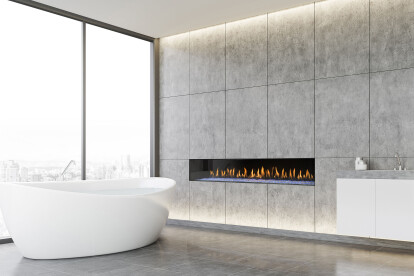
Product • By Montigo • Montigo Prodigy
Montigo Prodigy
Perfect for high end luxury homes or light commercial applications, the Prodigy adds tranquility and warmth to any space.The linear burner produces a relaxing ribbon-like flame. Your desired media can completely cover the bed of the firebox, enhancing the ambiance even when the fireplace is not in use.Clean contemporary lines and frameless double glass design deliver breathtaking aesthetics. Finishing materials can be attached directly to the fireplace and brought down to the edge of the glass creating a stunning focal point without interruption. More


Project • By European Home • Residential Landscape
Renovating Early Modernism: An Interview with Arch
Walter Gropius gets all the acclaim in Massachusetts. Perhaps it’s because he taught at Harvard and his Gropius House in Lincoln, MA, looms large as a pillar of early modernist American architecture. However, he wasn’t alone, and he wasn’t the first to introduce the international modern style to the United States. Edwin B. Goodell Jr. (an MIT man just drive home the rivalry) was a member of a group of lesser-known architects that would later be called the “Invisible Modernists.” By the time Gropius and others came to the U.S. from Europe, Goodell had already designed and built a number of homes inspired by the Bauhaus aesthetic.One of Goodell’s early homes still sits on a rocky New England hillside in... More