Sustainable mobility
An overview of projects, products and exclusive articles about sustainable mobility


Project • By Studjurban • Urban Green Spaces
Birgu's Living Piazza
The redesign of Pjazza tal-Belt Vittoriosa exemplifies sustainable, heritage-led urban regeneration, aligning layered memory with contemporary civic needs. The once vehicle-dominated square is reclaimed as a pedestrian-priority public realm, improving universal accessibility, environmental comfort and everyday social interaction. Green infrastructure is implemented, using native, drought-resistant species that moderate heat, provide shade and enhance biodiversity, while stormwater is retained and attenuated via a historical underground reservoir, supporting local infiltration and environmental resilience. Traffic presence is reduced, walking and cycling are encouraged and barrier-free routes are prioritised to reinforce safety and civ... More
News • News • 27 Dec 2022
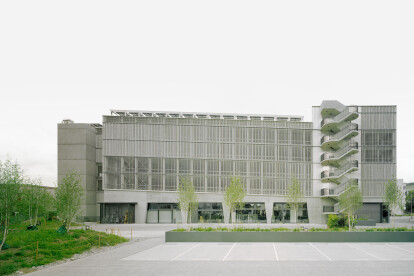
Mobility Hub Zug Nord by Hosoya Schaefer Architects functions as a gateway to the city
The Mobility Hub Zug Nord (MHZN) serves as the gateway to the city and provides access to the Tech Cluster Zug (TCZ) via the curved pedestrian bridge. Designed by Hosoya Schaefer Architects, the hub goes beyond the functions of a typical parking garage.
Valentin Jeck
Directly connecting to the Zug-Baar bypass and to a public transport node which has plans to integrate other mobility modes, the design boasts a futuristic vision. For instance, visitors will shift to a self-driven bus at the MHZN that will take them to the TCZ or the city. Additionally, parking lot users can opt to rent electric bikes or scooters at any time to complete specific routes with accuracy.
Hosoya Schaefer Architects
The MHZN is built to be... More


Project • By studiostudio architettiurbanisti • Townscapes
Intervention by spot-projects: Urban acupuncture as a public space regeneration strategy
Public space regeneration through the “Pedibus” micro-projects in the Oltrarno quarter, Florence
The Oltrarno is a historic district south of the River Arno in Florence with a number of intrinsic characteristics that makes it one of the most problematic areas of the city.
The morphological situation is complex and varied: the historic city center is protected by UNESCO as a World Heritage Site while the pedestrian areas must coexist with congested traffic roads. Moreover the dynamic participation of local citizens in spontaneous committees and the richness of social life (locals, immigrants, tourists) envision the possibility to test here a pioneering project for the regeneration and re-appropriation of public space.
In particular the... More