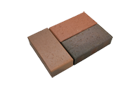
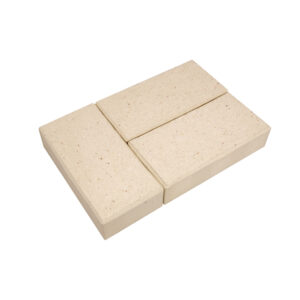
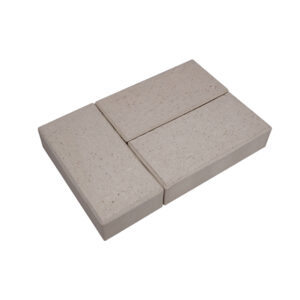
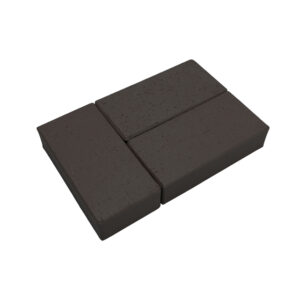
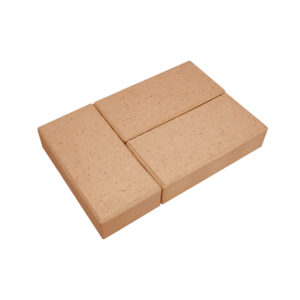
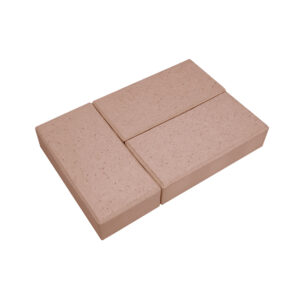
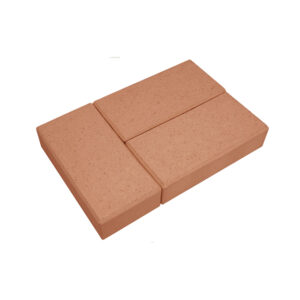
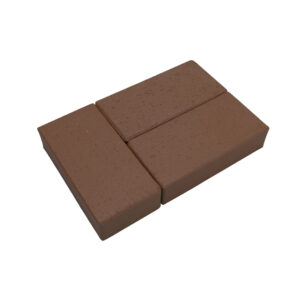
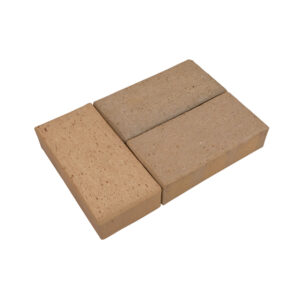
Paver White is part of Clay Pavers range of products from Malpesa.
Clay pavers for Flexible/Rigid laid paving of Internal floorings/External
coverings/Roof coverings. Suitable for vehicular circulation areas :
Sizes and shapes : 200x100x50mm & 200x100x60mm
Types of Paving
Rigid paving
Rigid paving with CLAY PAVING BLOCKS involves laying the units
on a mortar bed, prepared on top of a rigid base, and securing them
with mortar joints.
Clay paving blocks laid as rigid paving are advisable in the
following cases:
- Paving with a gradient of over 9%.
- Areas where the continued presence of water is expected, such as
vehicle washes, swimming pool and shower area surrounds,
premises where the paving needs to be washed frequently with high
pressure waterjet, etc.
When the desired effect is that of wide joints, or when wide joints
are required for other reasons.
Flexible paving
The system of flexible surface course construction with clay
paving consists of laying the paving blocks on a bed of coarse
sand, pre-compacted without agglomerates, subsequently filling
the joints with finer sand and then compacting once again.
Apart from the cases mentioned above in which rigid paving is
advisable, flexible paving with CLAY PAVING BLOCKS is
recommended for the following reasons:
The use of sand represents a reduction in costs, both in materials
(mortar is not used) and in labour (production per man/hour rises
considerably).
Expansion joints are not required in this type of paving, and this
results in a surface continuity which improves the aesthetic
appearance and allows the designer greater freedom when
creating spaces.
The most suitable model of block laid on a well calculated bed will
produce road paving totally guaranteed to withstand heavy vehicle
traffic.
It facilitates any subsequent work which may need to be carried
out on the paving. It is particularly useful when repairs have to be
carried out on utilities networks buried beneath the road surface,
as the units which have to be pulled up can be re-laid in the same
positions. This avoids the “patching” which often occurs with other
types of paving.
The paving can be used immediately, without having to wait for the
binding materials to gain the necessary strength