Solar Control Glass
Solar Control Glass is manufactured with Solar Control Coatings consisting of thin metal oxide layers within the inner face of the outer glass pane.
By using Solar Control Coatings on your architectural glazing design you can:
• Reduce Solar Gain whilst maintaining light transmission and clarity
• Reduce cooling costs in high glazed spaces
• Create a comfortable internal environment with a minimal glass design
• Suitable to be applied to almost any glass specification or product
With the rise in large glass elevations used in architectural design projects both residential and commercial. In addition, the technical advances in the thermal insulation of glass mean more and more architects include large glass elevations in their designs for a contemporary design aesthetic. As well as using a low e coating within the insulated glass, IQ Glass recommends that a solar control coating should be considered in design.

Solar Control Coatings
The solar control coating is applied to the internal face of the external glass panel of an insulated glass unit, also known as face two of the glass unit. The metal oxide coating reduces the amount of short wave radiation that travels through the glass unit thus reducing the increased heat levels inside.
There are a range of solar control coatings available, affording you different levels of light transmission, external tints and solar control. The most popular of these solar control coatings is a 70/35 solar control coating which maintains the unit’s light transmission at 70% for a natural appearance whilst reducing the G factor of the glass unit to 35%.
Solar Control coatings must always be used on an insulated glass unit, either double or triple glazed.
At the Showroom
Various levels of solar control glass can be seen around the newly renovated IQ Glass showroom, ranging from the standard 70/35 which is barely noticeable to the human eye, all the way up to a high-level solar control glass which acts as reflective glazing.
As with many technical glazing solutions, some clients worry that coatings will change the look of the glass. When visiting the IQ glass showroom, you will be able to see an example of 70/35 solar control glass incorporated into our double height, automated vertical sash window.
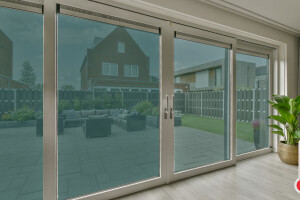
The vertical sash window sits next to a double height automated sliding pane without a solar control coating on the glass, as seen in the image to the left. This allows clients to see the difference on a large scale in person, side by side.