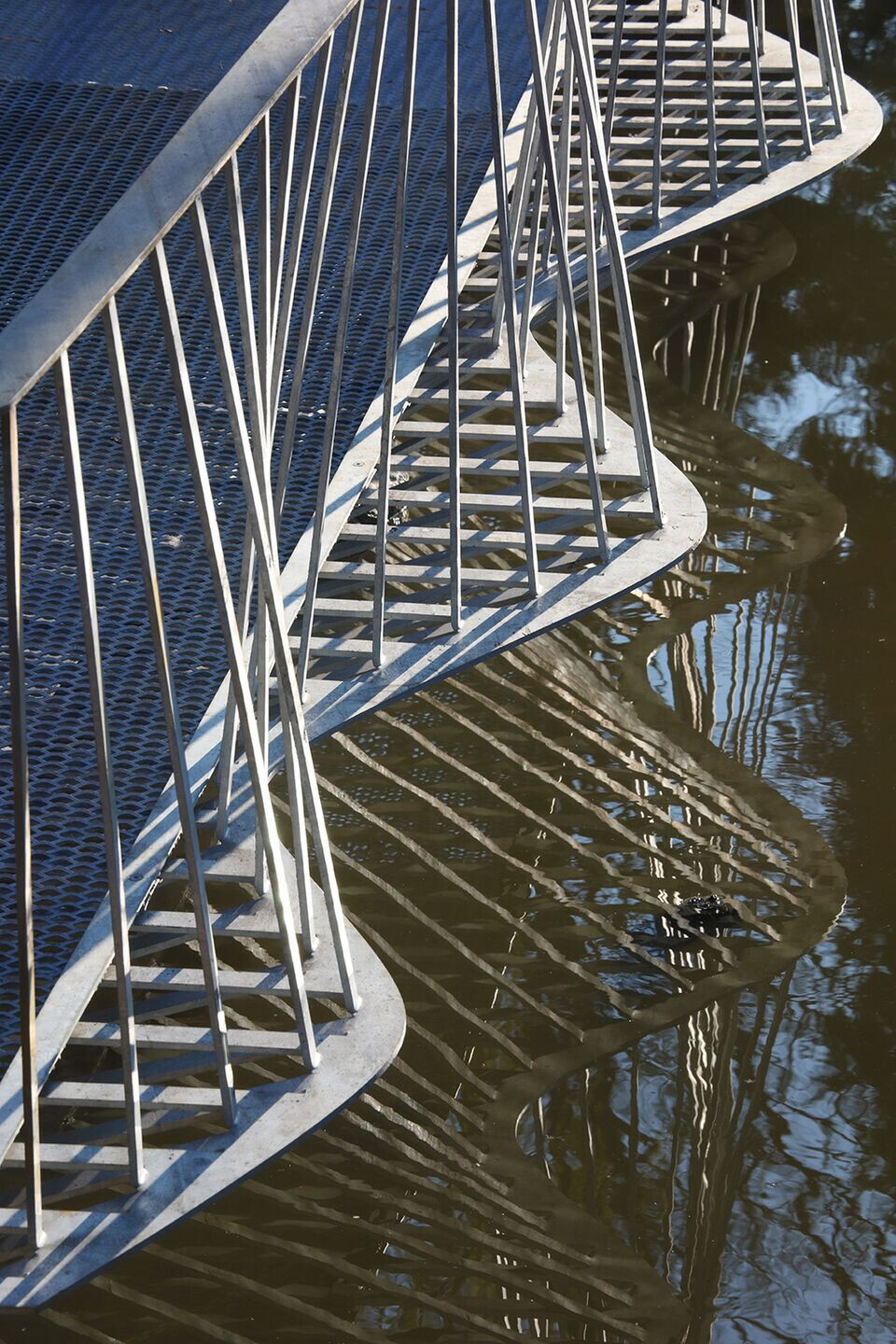
The unique circumstances of the Crystal Palace Park Dinosaur Islands and the need for a secure crossing inspired the structural artwork of Swing Bridge. Informed by Tonkin Liu team’s decade-long immersion in biomimetic studies, the project delivers three specific innovations: swinging to access the banks, undulating geometry for structural strength, and the comb construction technique.
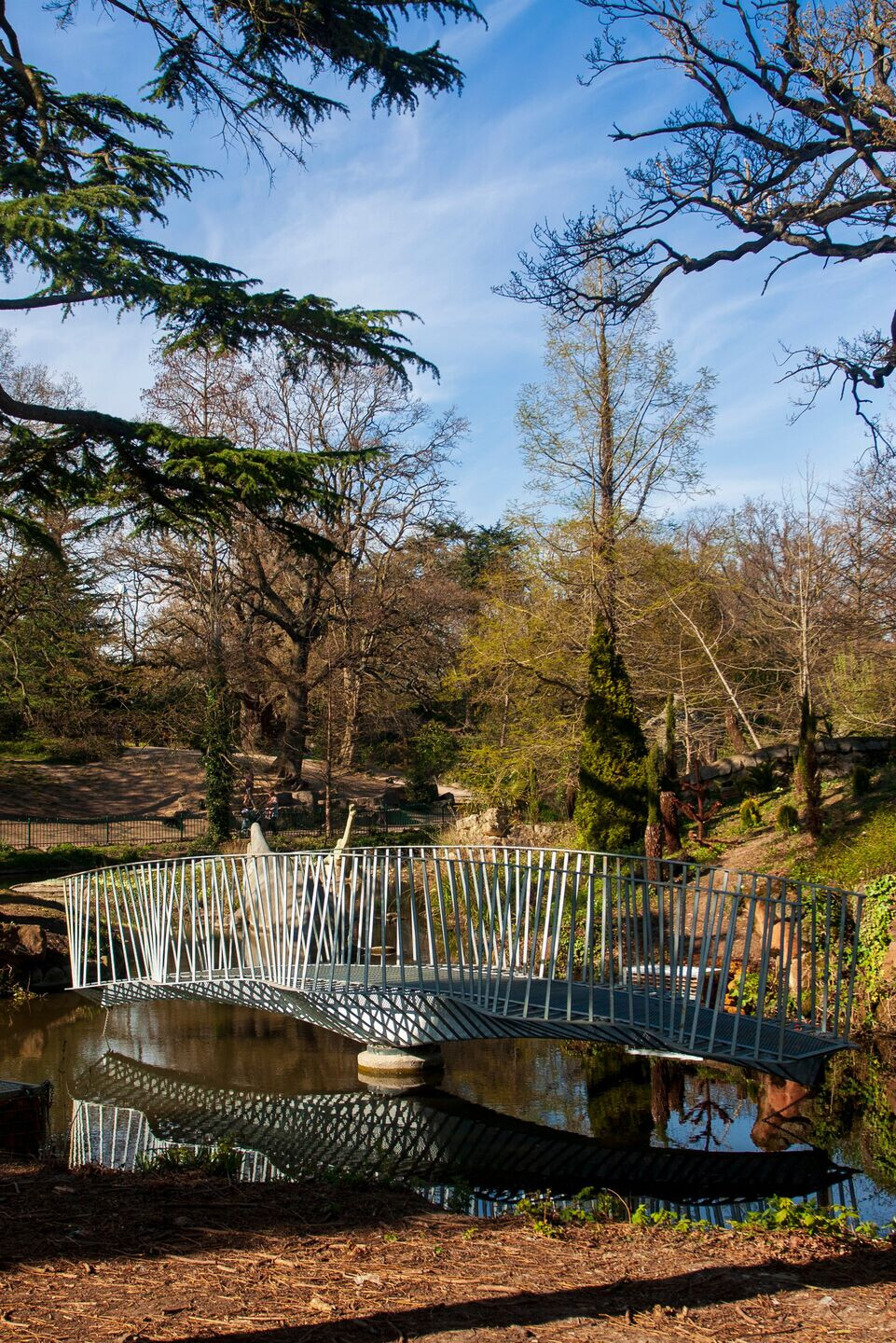
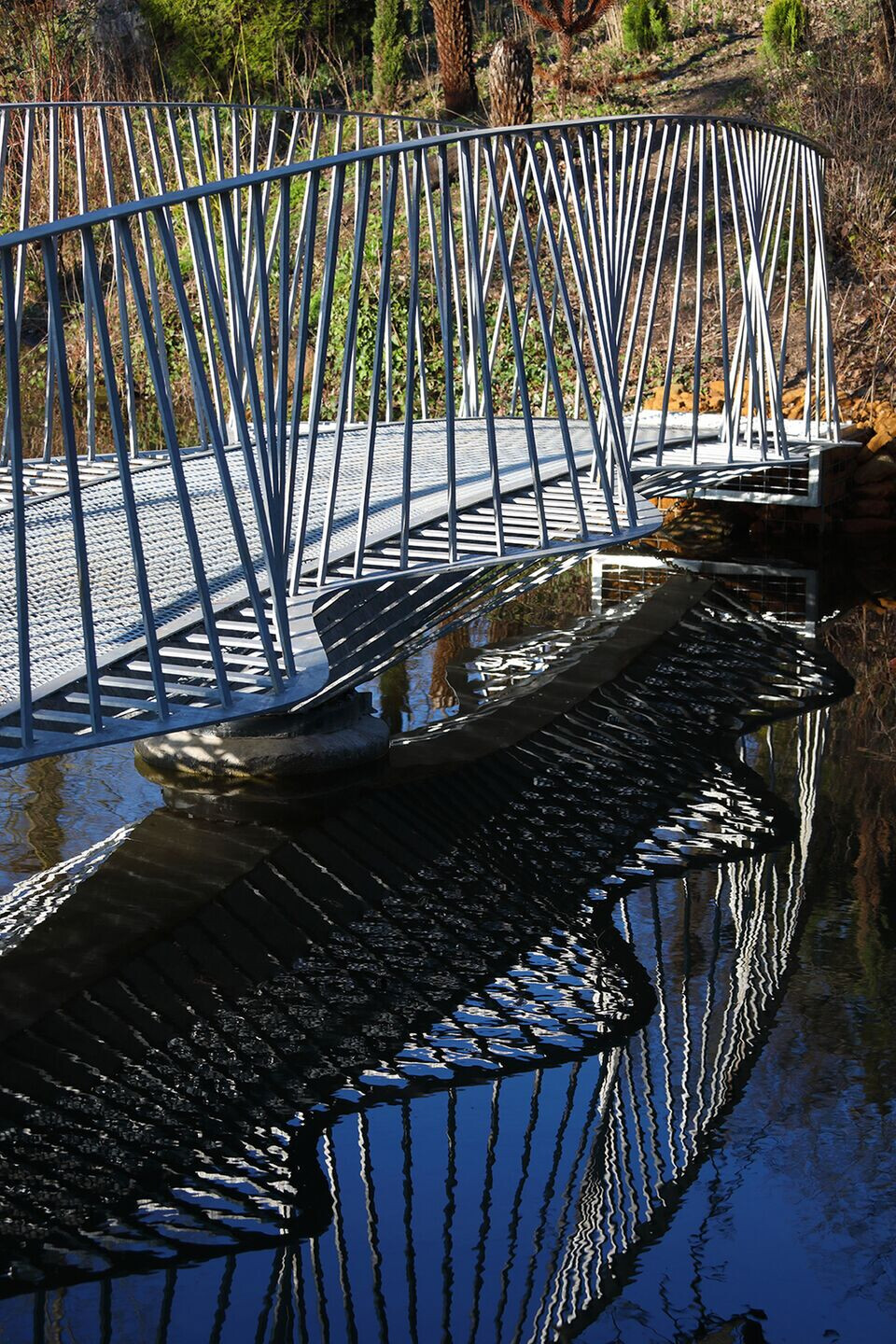
The 167-year-old, Grade I Listed concrete Dinosaur sculptures were configured to depict extinct animals in the lost worlds of deep geological time. The team chose the bridge’s location to mark the start of this sequence, helping to tell a story of evolution, which in turn inspiring the reference to the prehistoric bony fish, the precursor to the Dinosaurs and the evolutionary timeline depicted on the islands.
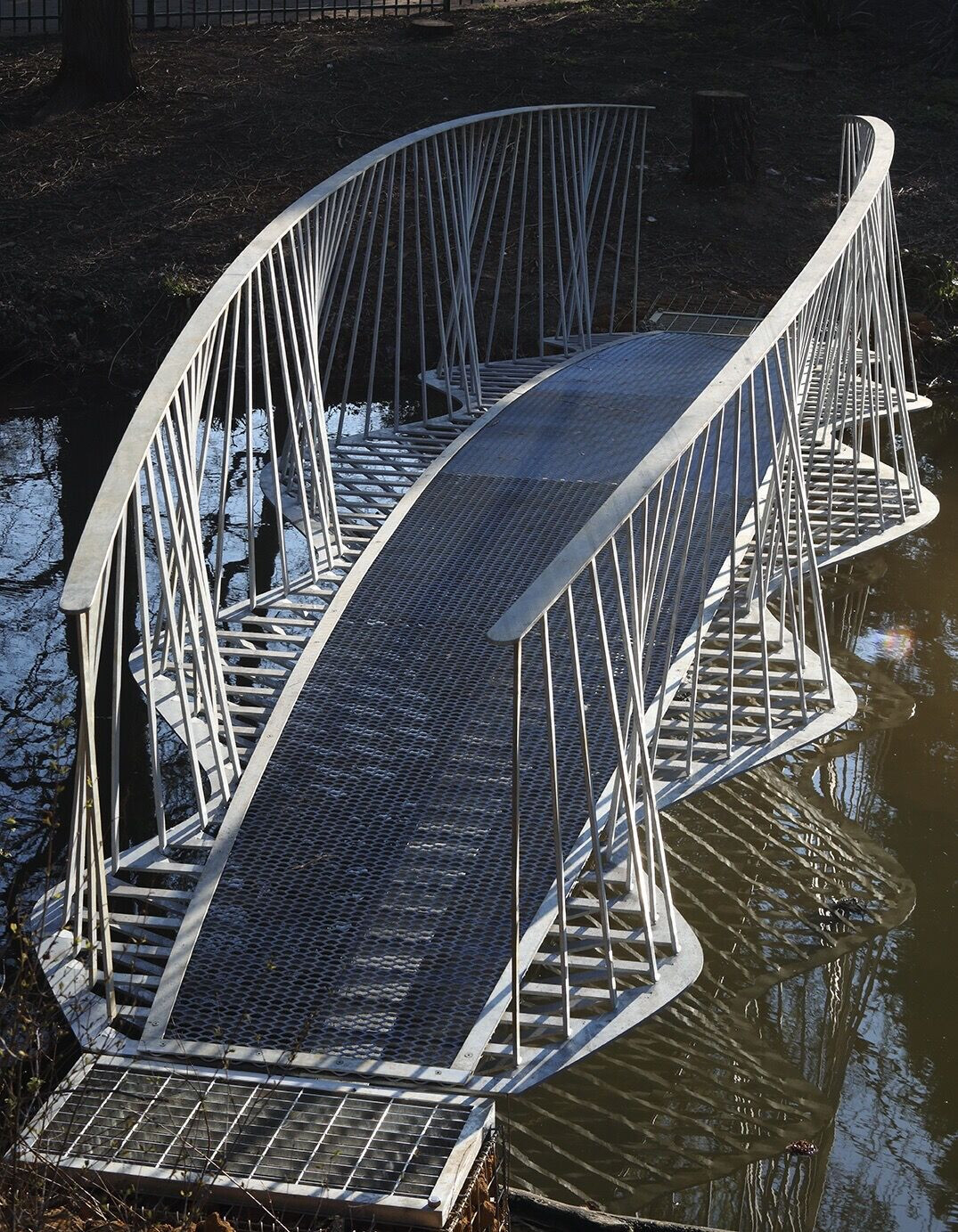
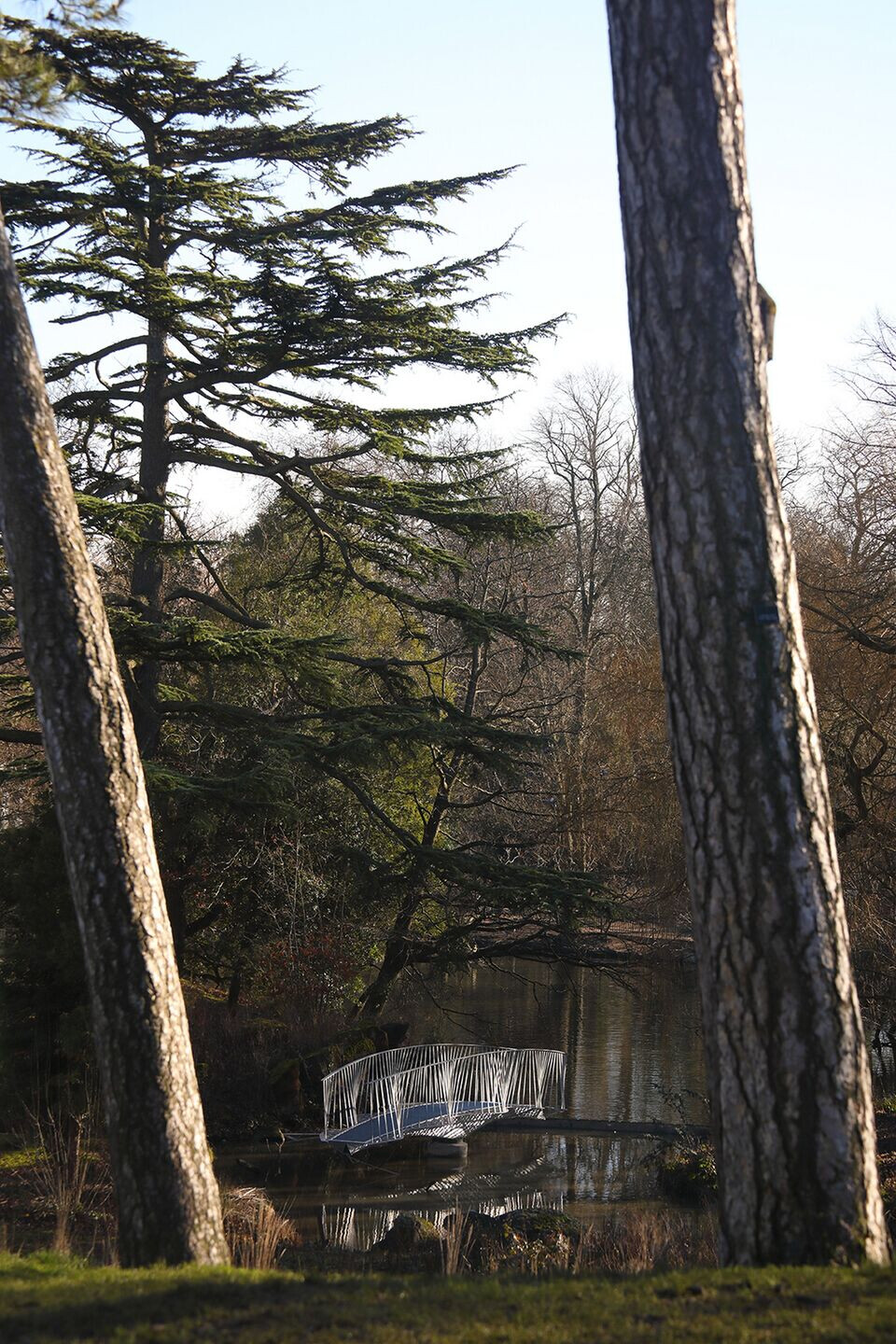
To protect access to the Dinosaur Islands, the bridge has been designed to remain in the water and only make its connection to land when access is given for education and for maintenance. This negates the need for a large protective barrier, keeps its distance from the Dinosaurs, and requires only one central foundation. Crystal Palace Park in turn enjoys, when the bridge is not in use, a sculptural artwork floating in water.
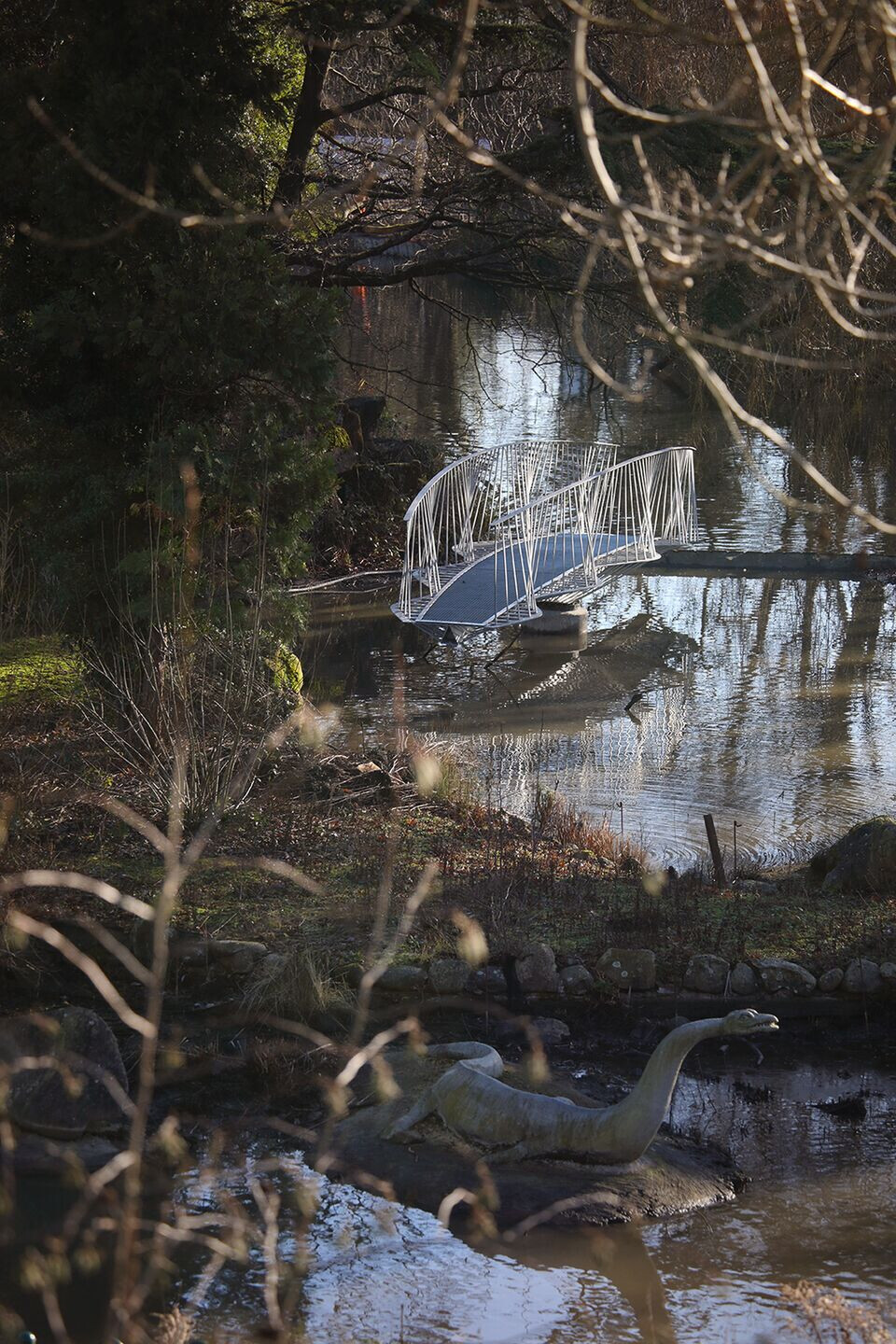
Form gives strength through geometry in each of the component of the structure. A triangular spine beam delivers load to the central bearing, its tailored form is minimised in response to the bending moments. The skeletal deck structure projects out from the beam’s backbone like form. The bridge form gains overall strength from being widest and tallest over its central support.
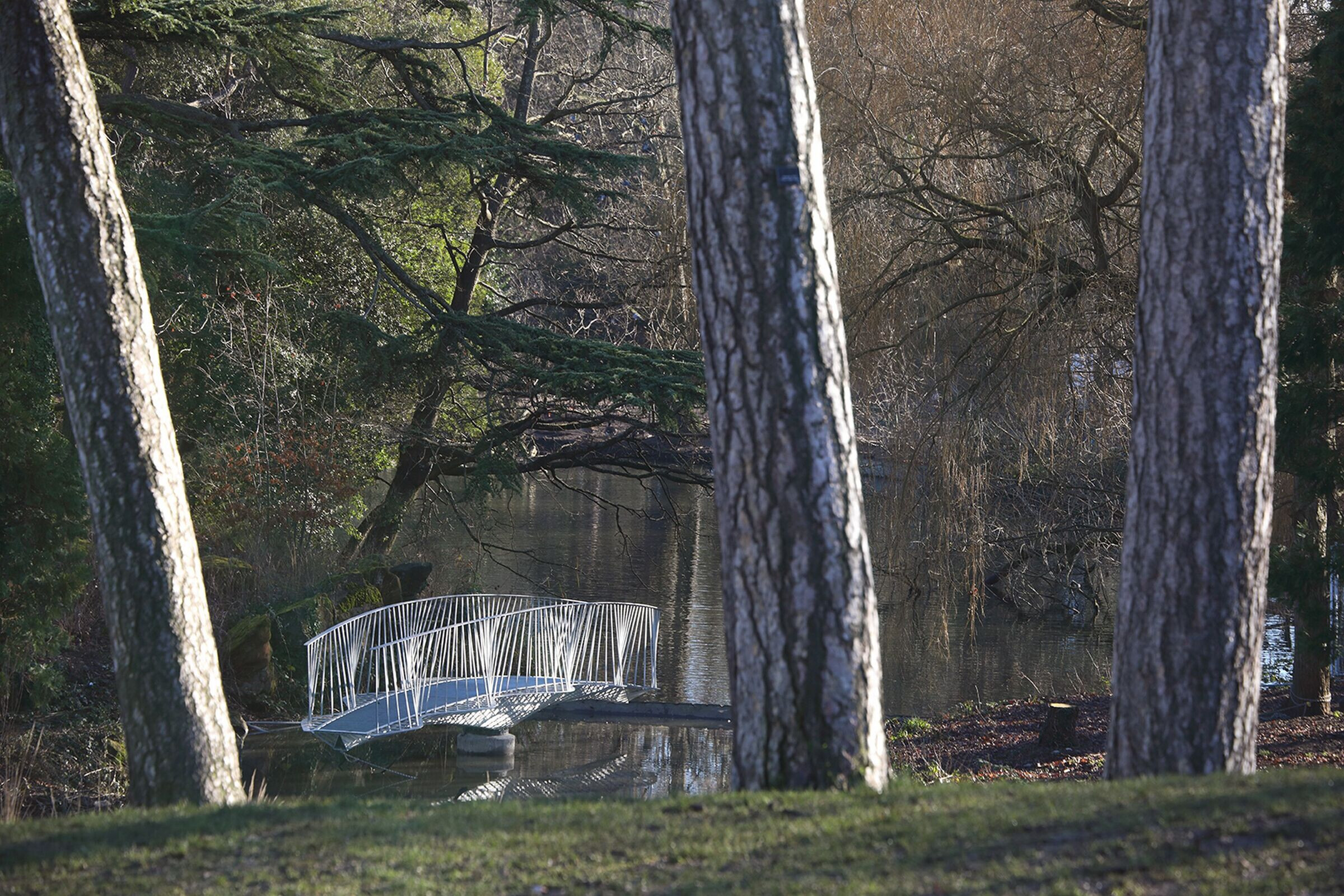
Minimal thickness of the steel sheet is achieved by optimising resistance through the geometry. In the evolution of the first bony fish, an undulating movement produces a force that propels it forward. The undulating form of the balustrade and deck resists forces applied to the handrail through a push-pull action. The balusters lean backward and forward along the length of the undulating deck, the outer acting as a strut and the inner acting as a tie. The multiple bent and welded prongs act together like spokes in a wheel to give the undulating form lateral stiffness. The frequency and pitch of the oscillation have been engineered to find the optimum form.
Team:
Architect: Tonkin Liu Architects
Structural Engineer: Arup
Main Contractor, Fabricator, and sub-structure design: Cake Industries
Laser-cutting: M-Tec
Galvanising sub-contractor: Joseph Ash Galvanising
Piling Design: Michael Aubrey Partnership Ltd
Pile Contractor: Capital Piling Ltd
Photographers: Stuart Chambers, James Balston & Tonkin Liu