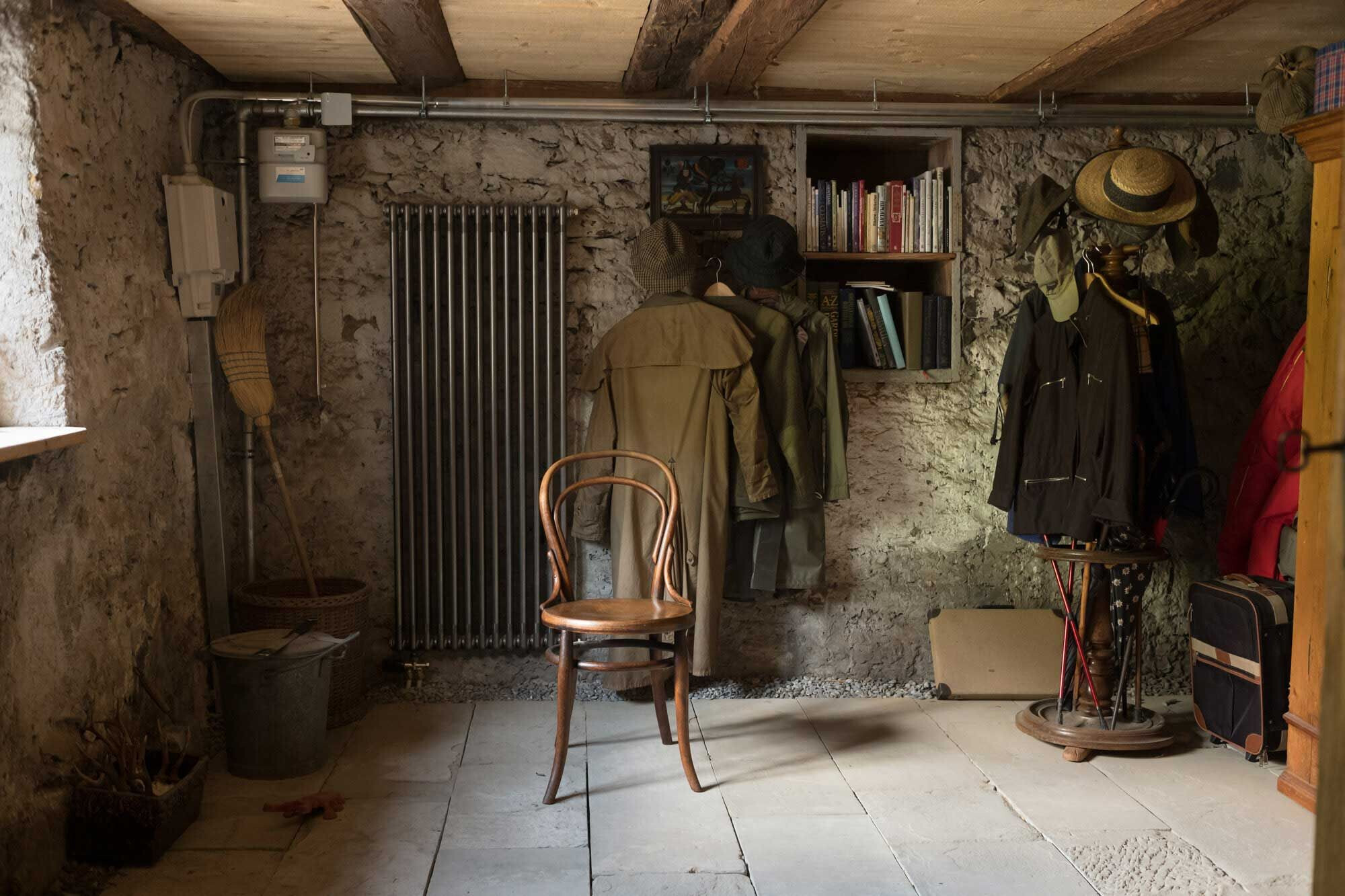
A few months ago, our renovation project “Im Eichen” was completed. Nothing conspicuous. If you were strolling along Eichenstrasse, you might not even notice the renovation. From the outside, only attentive eyes would spot the restored historic windows set into the reddish-brown roughcast and the newly inserted wooden slats in the added hayloft. That’s about it. “Im Eichen” refers to a row of houses just below the Bergli, in the oldest remaining village-like part of Glarus. On the left, the neighbor is a medieval blockhouse; on the right stands the “Old Town Hall.” None of these were built by architects in the modern sense—they were the work of master builders or laypeople.
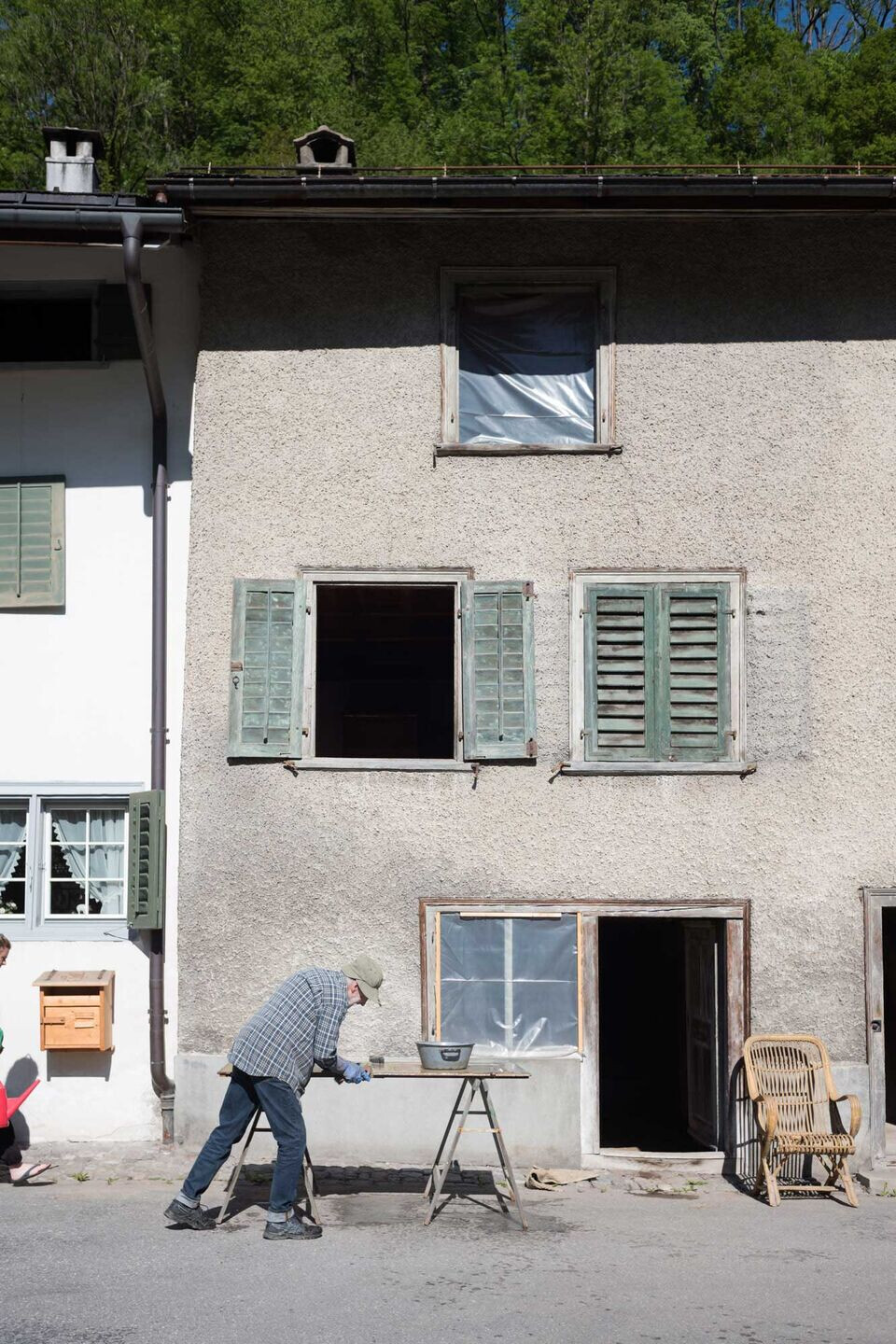
This type of house is called vernacular in professional jargon—buildings rooted in their place, climate, and available materials. Above all, they seem to be infused with a deep humanity. My client, a man well over eighty and skilled with his hands, was open to unconventional ideas from the very beginning. We immediately understood each other. Soon, we were dreaming up all kinds of plans and organizing the site. But I quickly realized that neither I nor my architect colleague was particularly needed. Decisions were made on-site, without us. Despite our drawings, the fridge had already been bought, and the kitchen countertop was already carved.
The project did evolve with our input, but our role remained unusual and ambiguous. Even the photographic documentation was taken over by the “handy-man,” as the client jovially called the all-rounder. We had connected him with a friend—both a craftsman and a photographer. But instead of documenting the progress day by day, as intended, he created a kind of artistic, personal anthology of thousands of moments and moods. I didn’t receive a USB stick, but rather an art book. And so it went with the whole renovation.

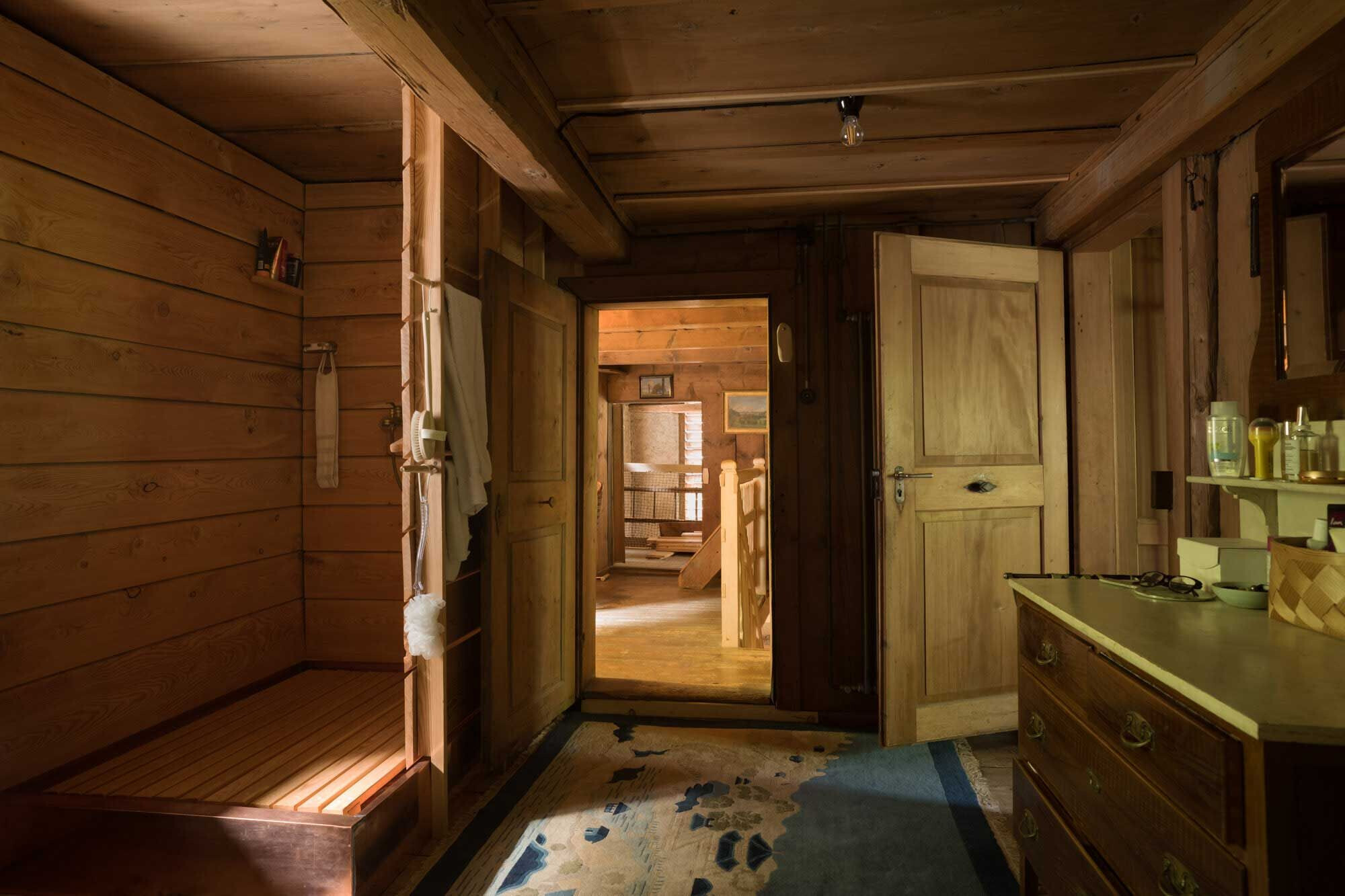
Looking back, it confirmed what I had long suspected—and said out loud: our profession is not always as indispensable as we like to believe. Vernacular architecture emerges from the existing, the tried and tested, from needs, pragmatic thinking—and above all, from the joy of creating together. At “Im Eichen,” this spirit became visible in the many carvings to be discovered inside, in the loving, time-consuming details, and in some daring decisions—like the shower, for example. We built it from solid larch wood, without tiles, silicone joints, or waterproofing membranes. This joint invention, of course, was again executed differently than I had planned—but even so, like many aspects of the project, I found it strangely wonderful and touching. I will certainly build this peculiar shower again one day—though next time with precise, dimensioned plans, just the way I imagine it. Will it then be better and more beautiful?