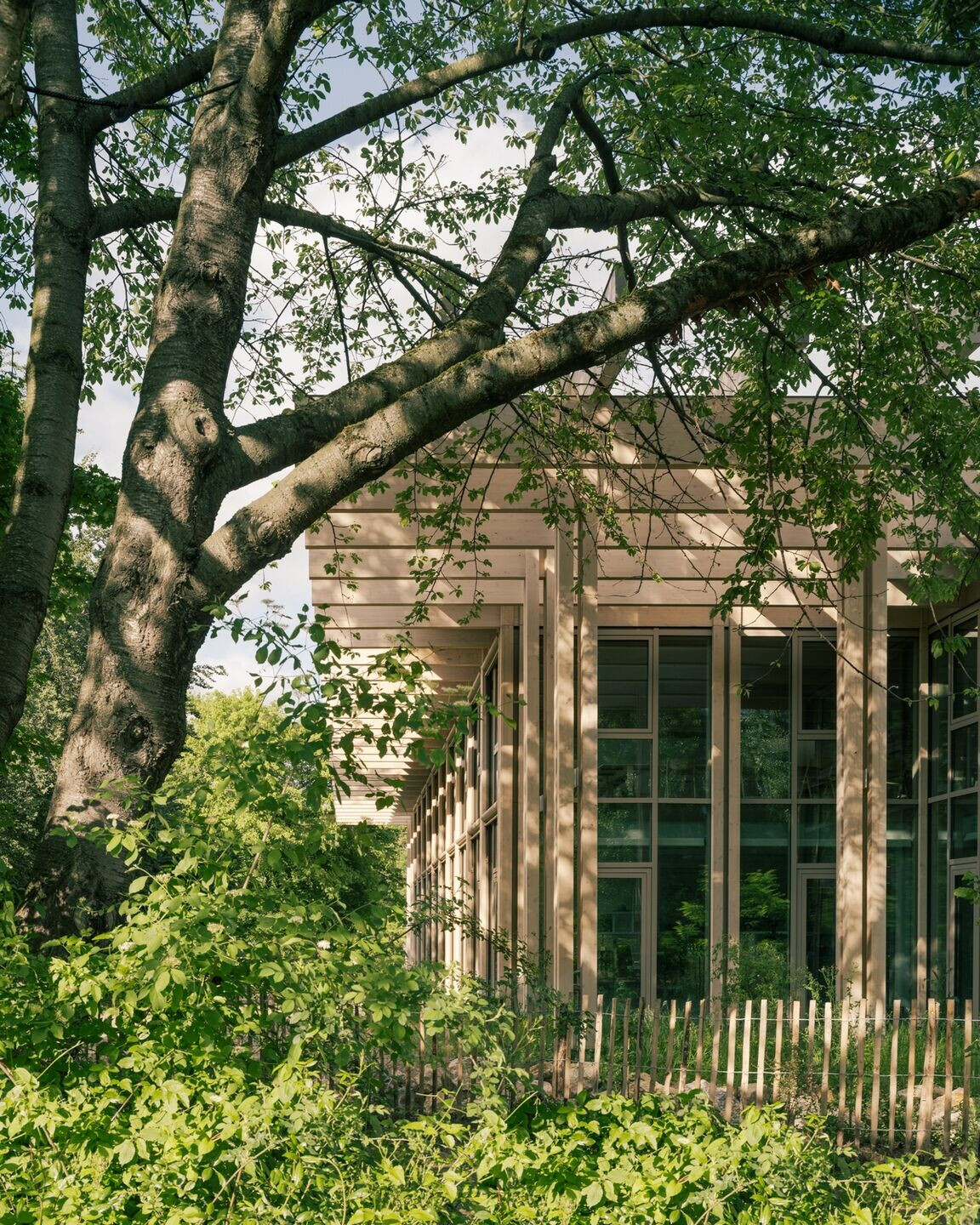
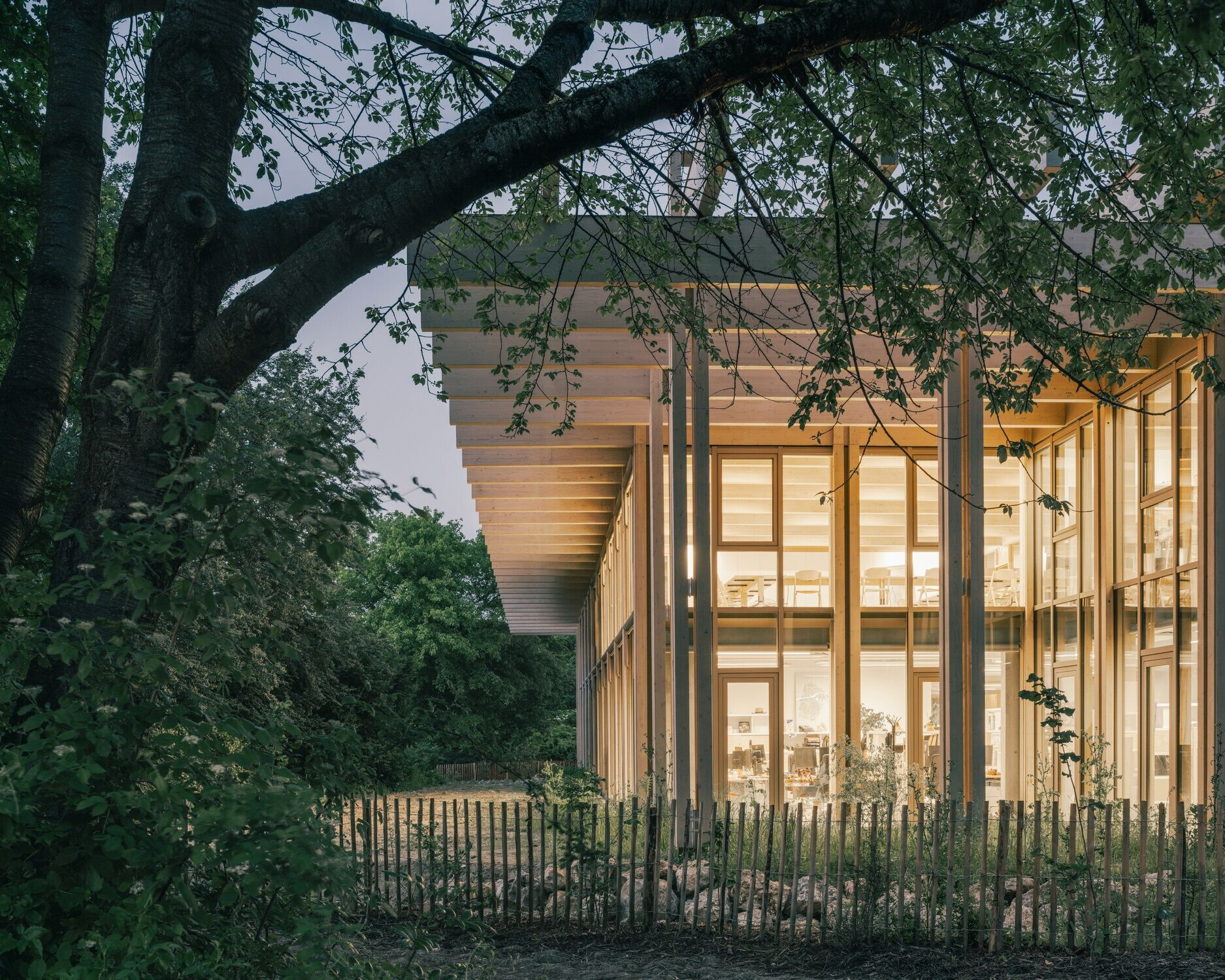
Le Pavillon Jardins was designed as a working base for the teams responsible for managing the Parc de la Villette in Paris and its Grande Halle. Built on a footprint of approximately 3,000 square meters, the project simultaneously restores around 5,000 square meters of landscaped ground to the public park and reopens access to the Fond de Rouvray dock.
Designed by Atelier du Pont, which led both the architectural and interior design, the building aligns with Swiss architect Bernard Tschumi’s 1982 masterplan for the park. It follows the logic of the Folies — Tschumi’s system of small, adaptable pavilions distributed across the park — while addressing contemporary environmental constraints.

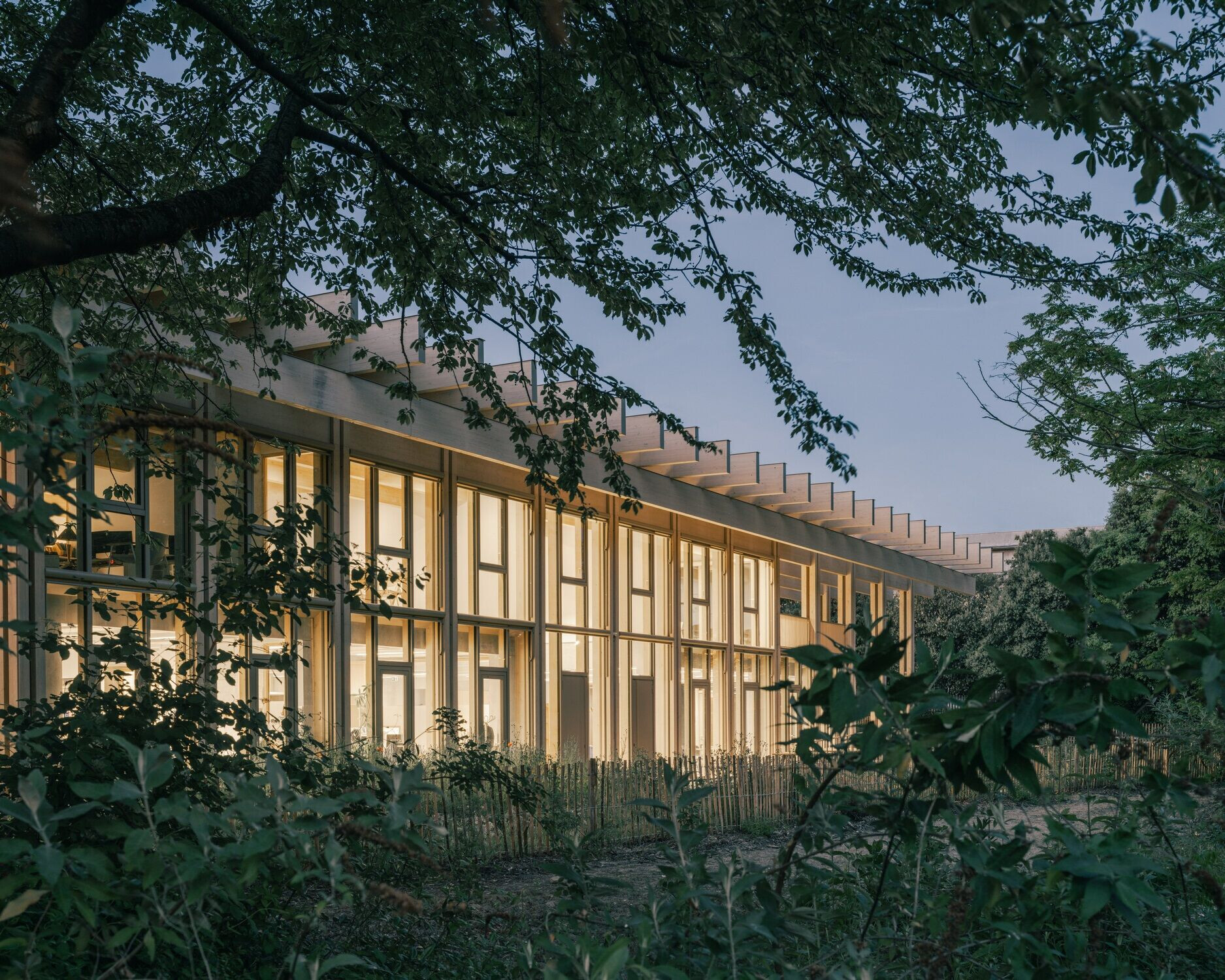
From the outset, the project was developed under strict site conditions related to biodiversity preservation. Construction phasing and scheduling were adapted to protect existing species, particularly during bird nesting periods, embedding ecological considerations directly into the delivery process rather than treating them as post-design mitigations.

Urban continuity and form
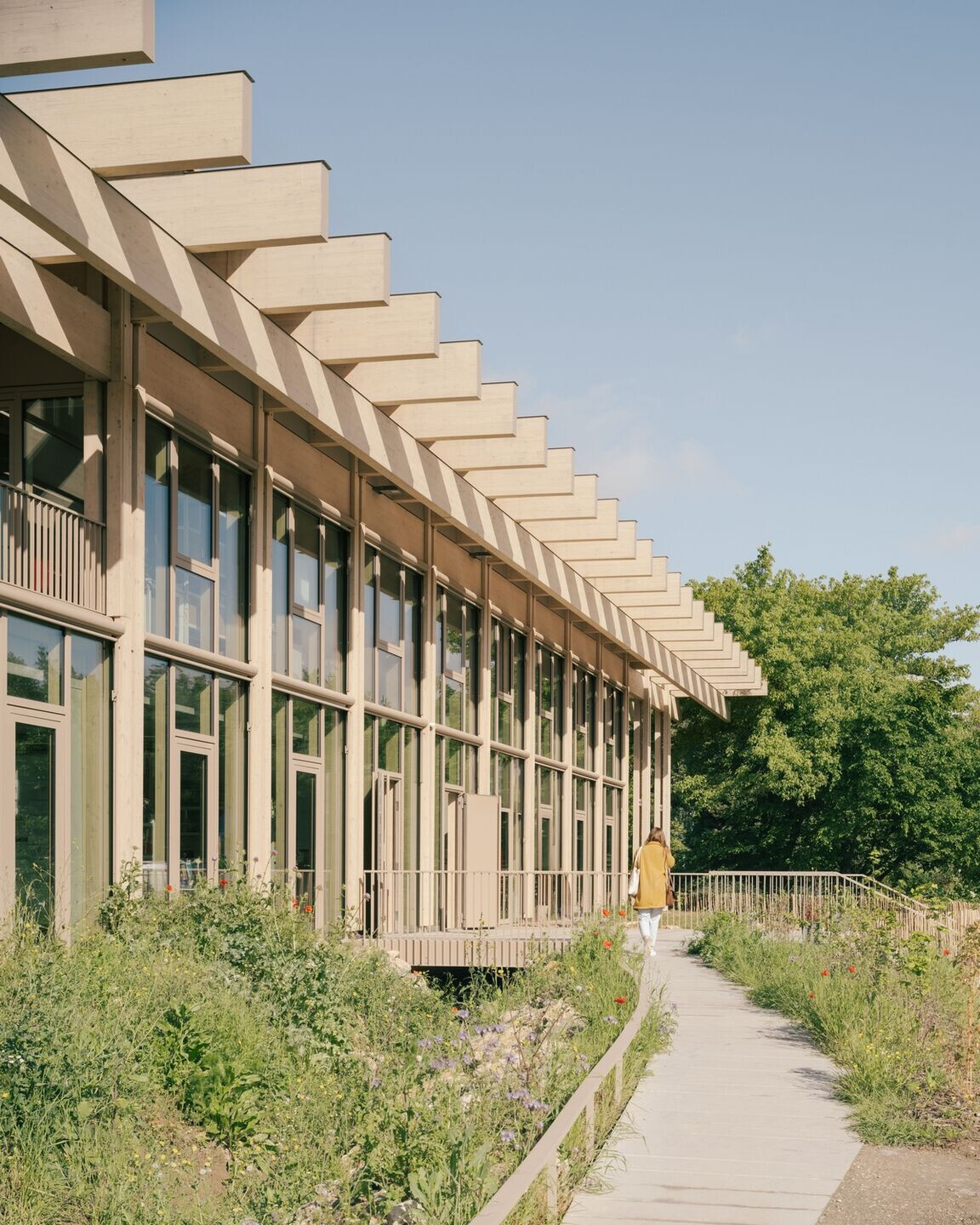
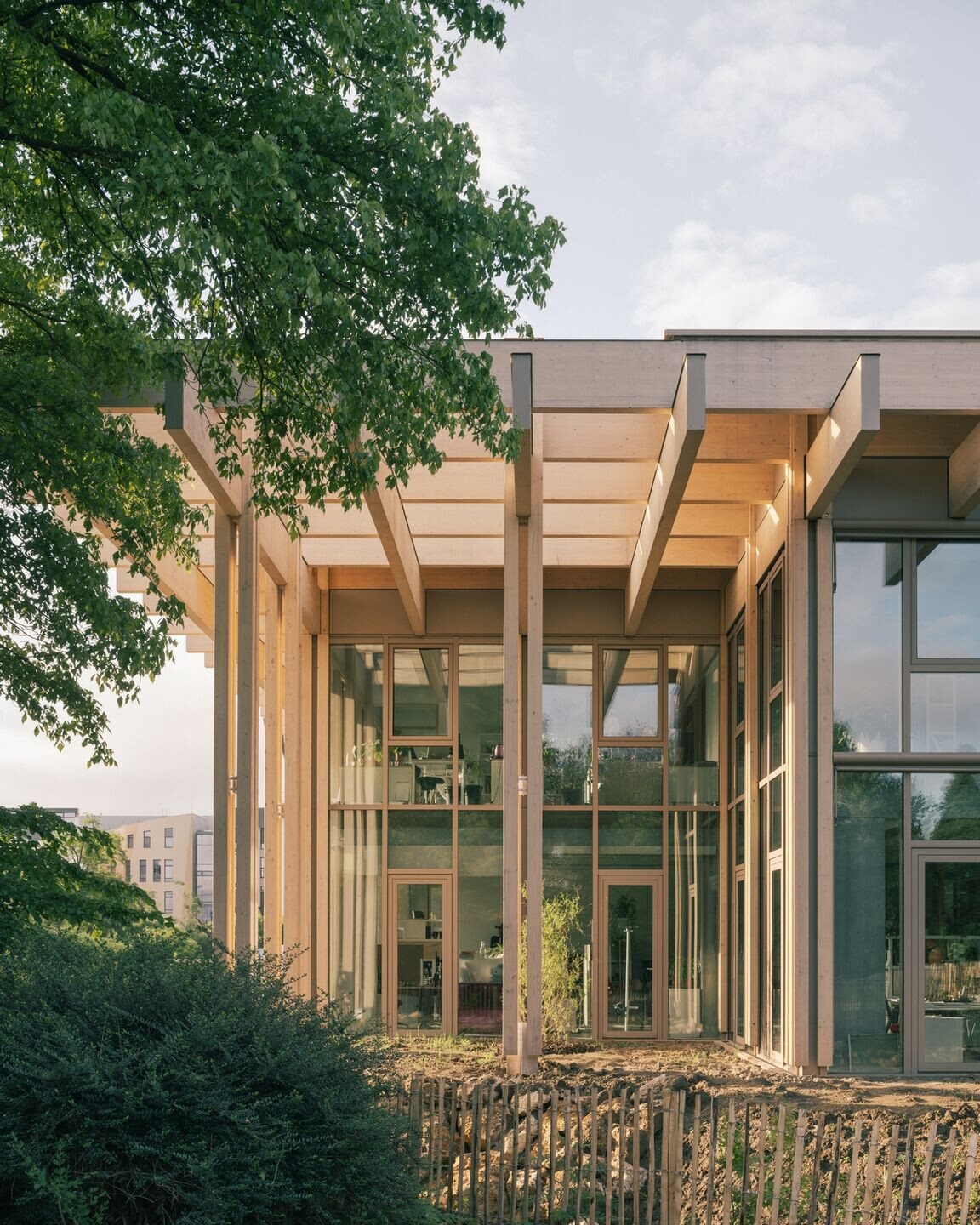
The pavilion’s height is limited to eight meters, matching the surrounding Folies and ensuring visual continuity within the park. Its geometry is defined by two interlocking structural systems — one concrete, the other timber — each selected for specific physical and environmental properties.
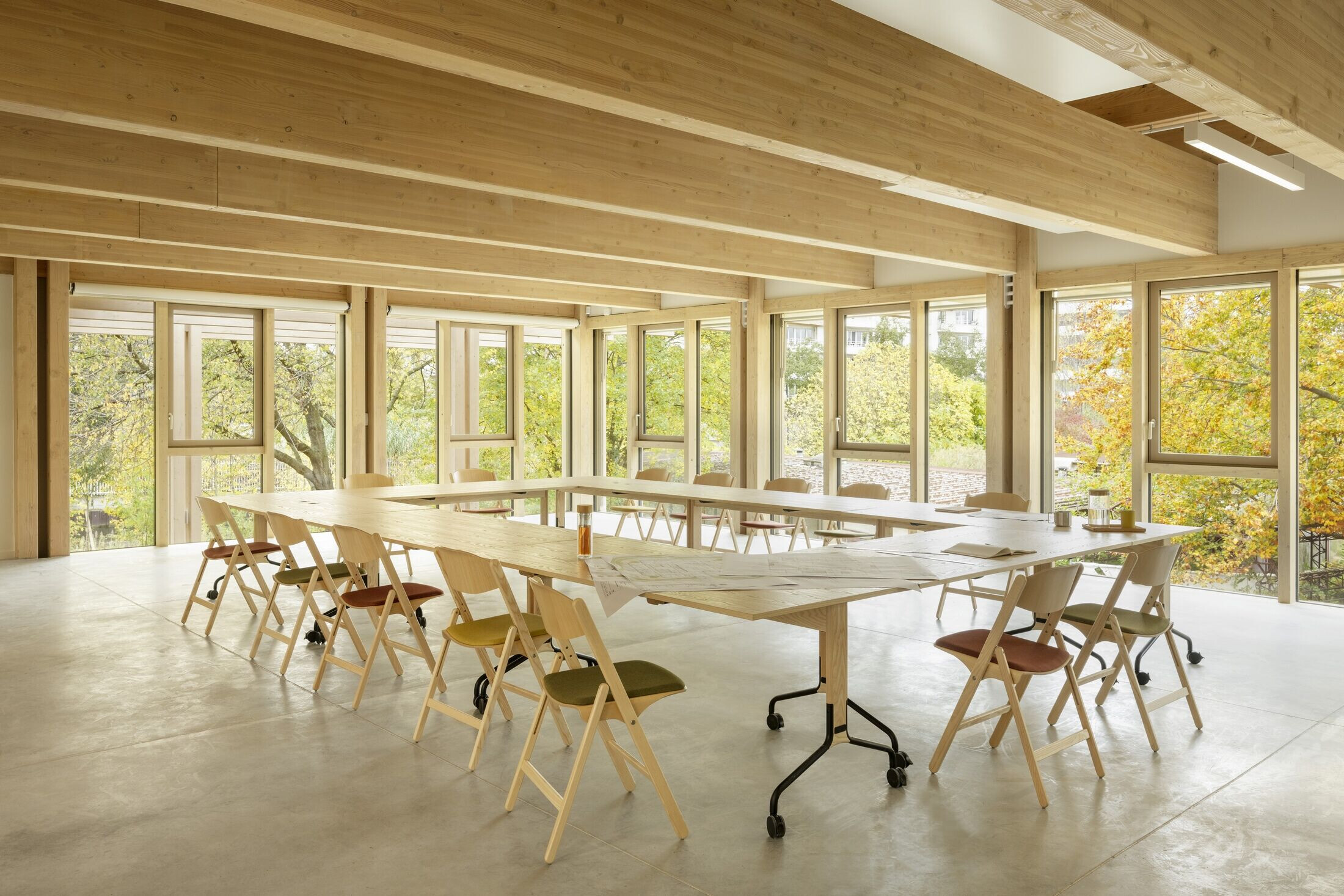
Spans of up to 12 meters free the interior from structural constraints, allowing open and adaptable floor plates. The building’s alignment and massing reinforce existing pedestrian routes through the park, while its variable geometry supports long-term adaptability. Rather than a fixed object, the pavilion is conceived as an evolving structure capable of accommodating changing operational needs over time.
Environmental strategies
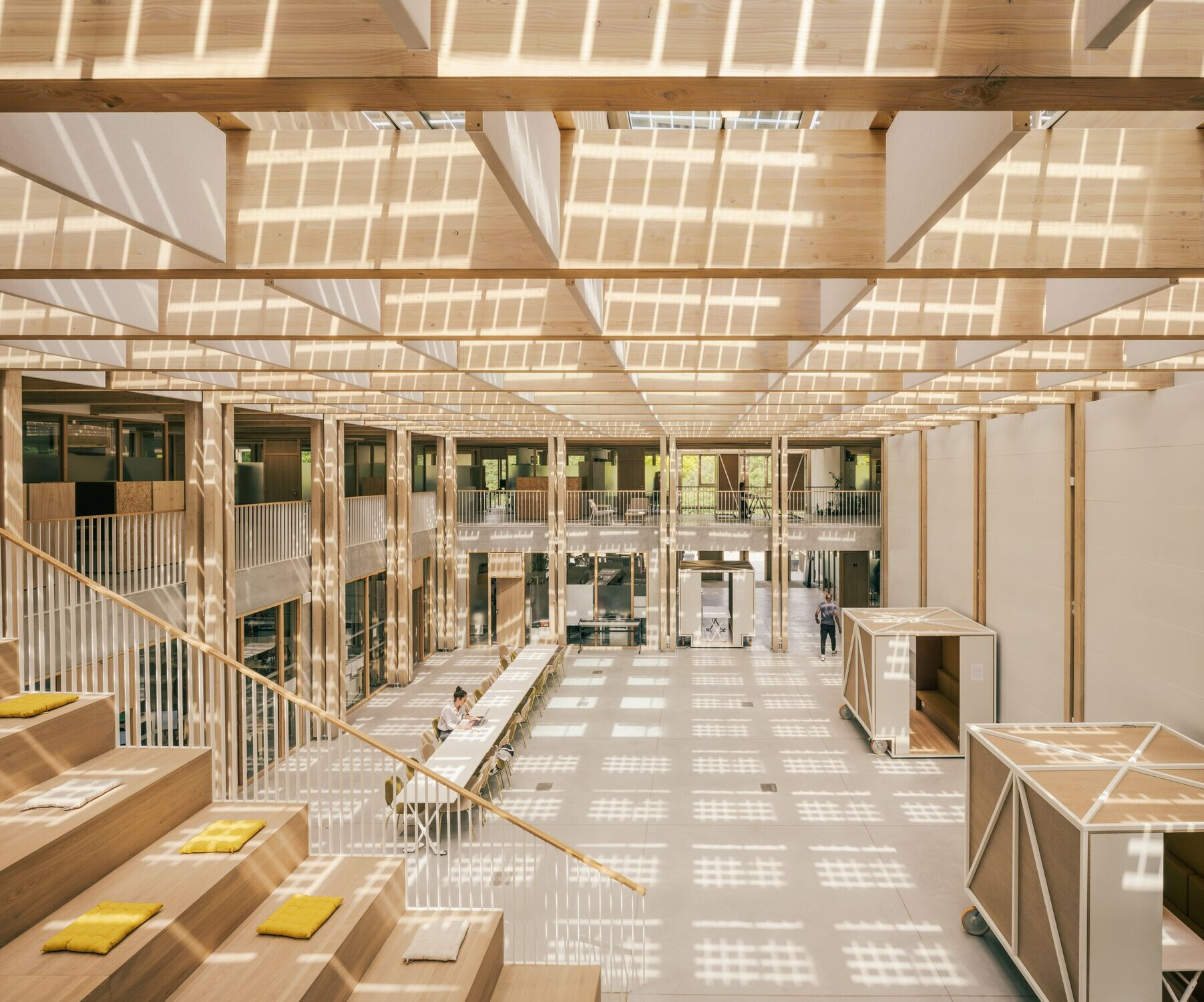
Environmental performance is driven primarily by passive and low-tech design choices. The building operates without air conditioning, relying instead on natural ventilation, triple-glazed facades, roof overhangs, and projection blinds to maintain thermal comfort. A large central atrium acts as a bioclimatic regulator, distributing daylight deep into the plan while supporting natural air movement and thermal buffering.
Climatic wells and a vegetated roof further moderate internal conditions, reducing summer heat stress and contributing to urban microclimate regulation. Solar gains are carefully controlled through photovoltaic cells integrated into the atrium’s glass roof, which both limit excessive summer radiation and supply part of the building’s electrical demand, embedding energy generation within the architectural envelope.


Materials and structure
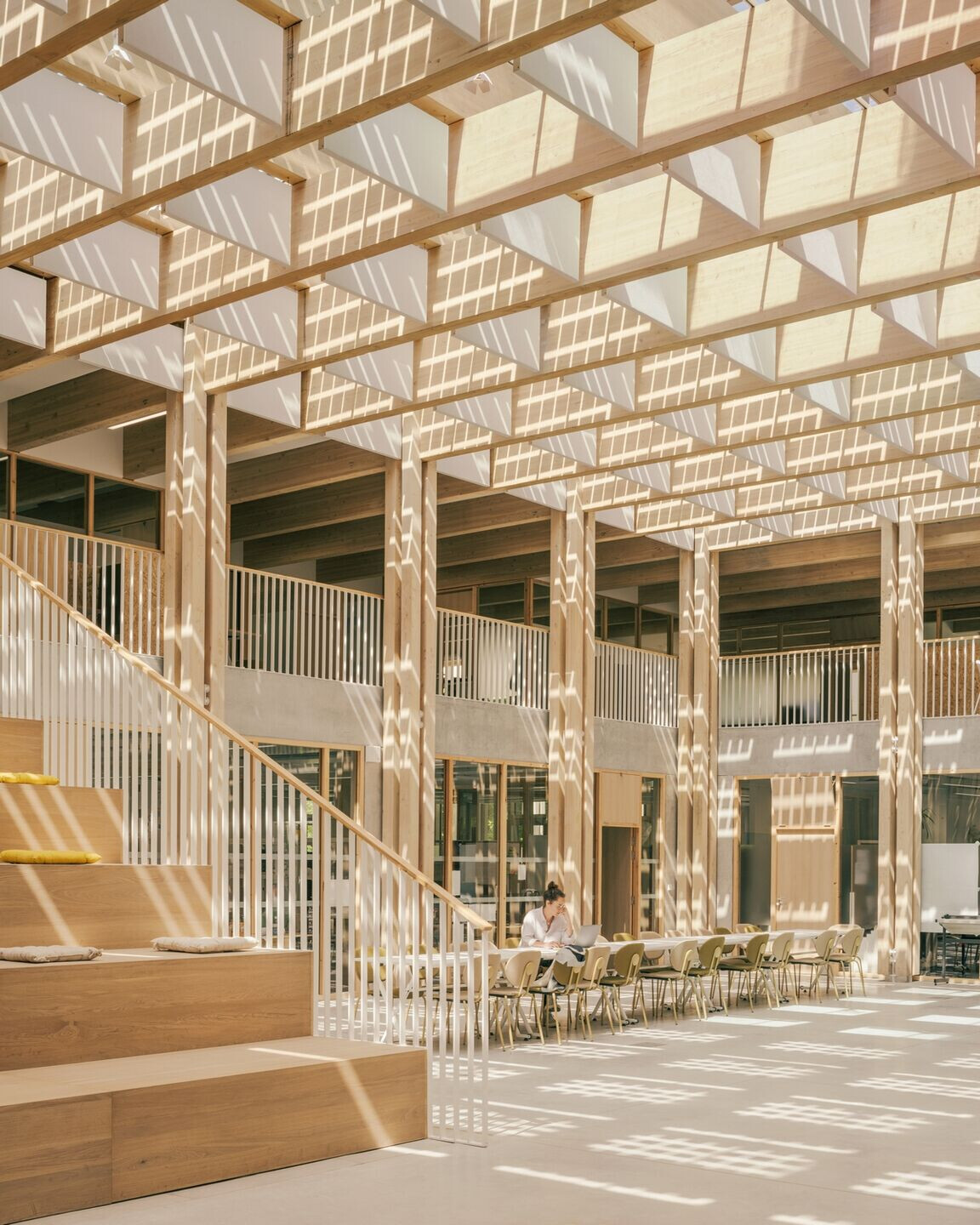
The mixed concrete–timber structure reflects a deliberate balance between inertia, strength, lightness, and environmental impact. Concrete is used selectively for its structural mass and durability, while timber forms the primary load-bearing system where span capacity, weight reduction, and carbon performance are critical.
Approximately 500 square meters of Douglas fir sourced from the Massif Central in south-central France were used in the timber structure, increasing the proportion of biogenic material in the project. Interior fittings follow the same material logic, with a significant share of built-in elements and finishes made from PEFC-certified wood species, including larch, birch, ash, oak, spruce, and poplar. This supports traceability and responsible sourcing while limiting reliance on high-impact finishes.
Operational energy and use
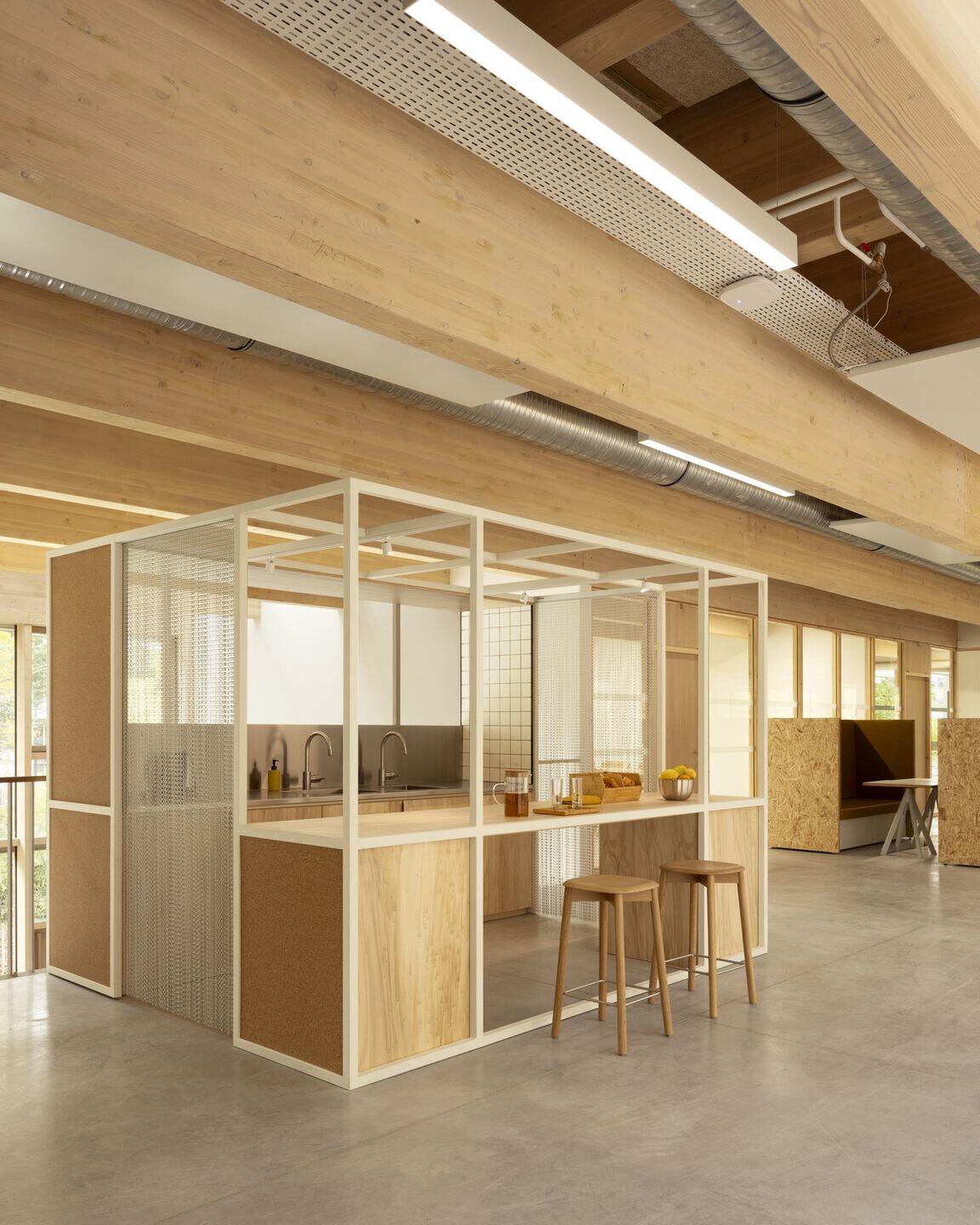
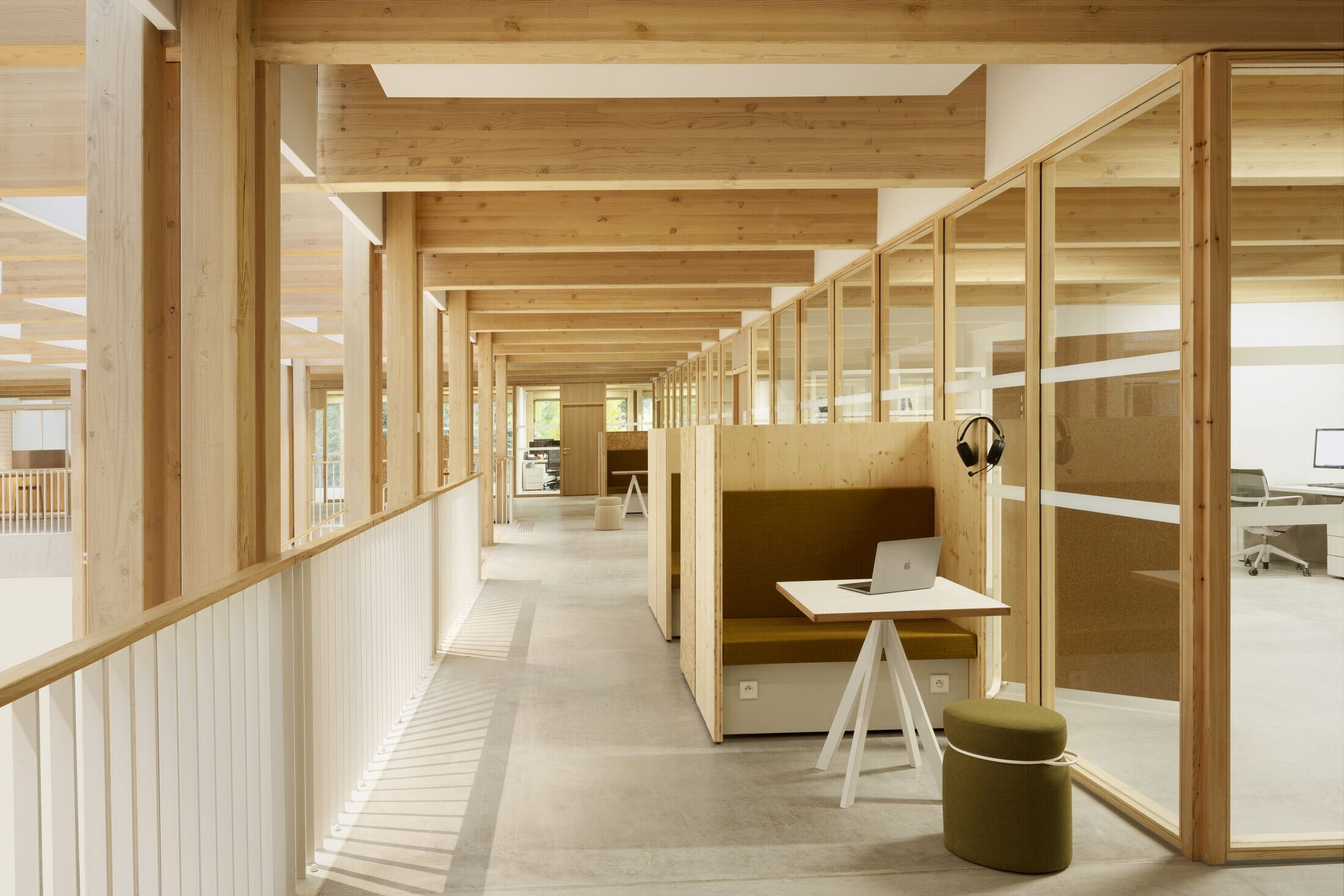
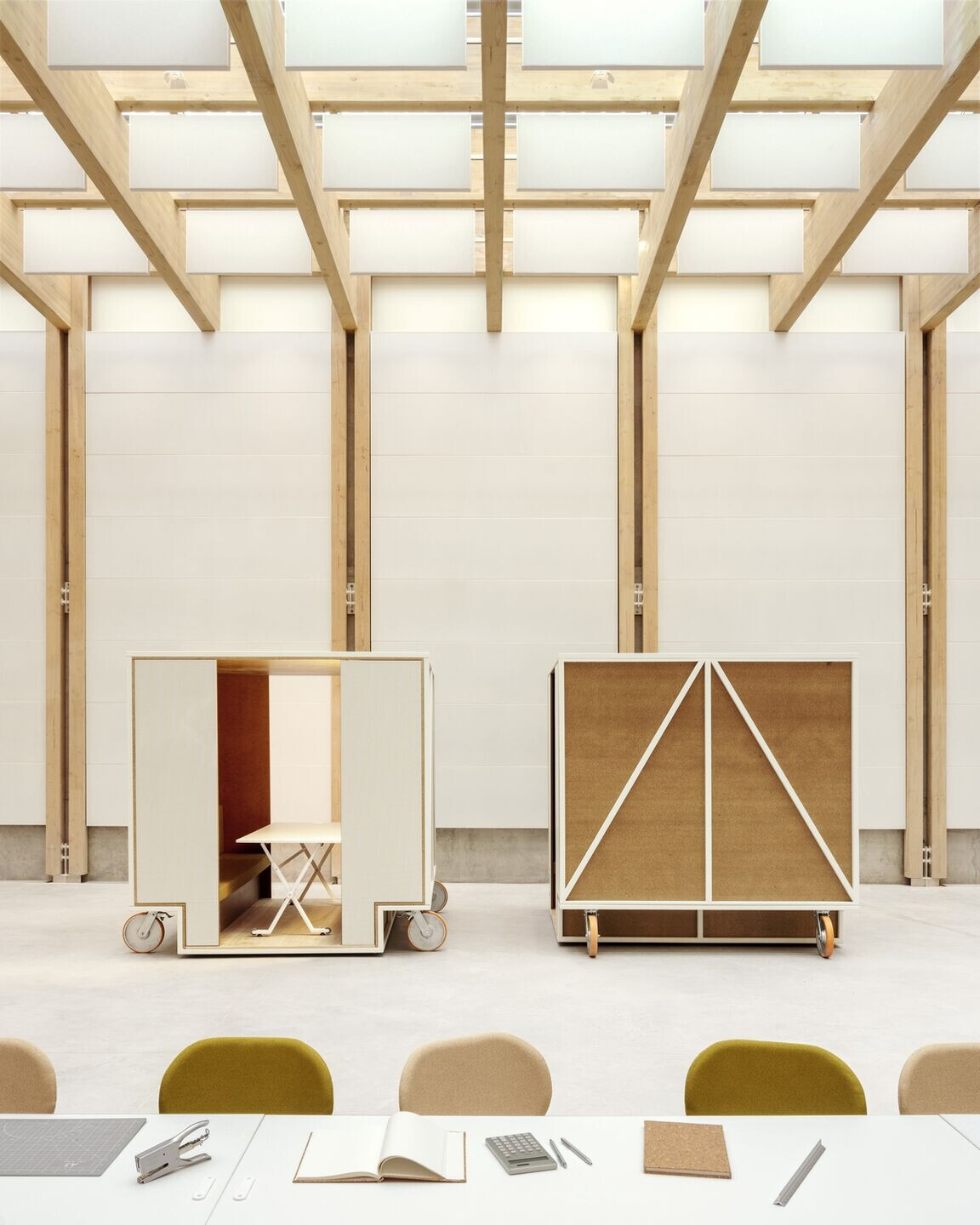
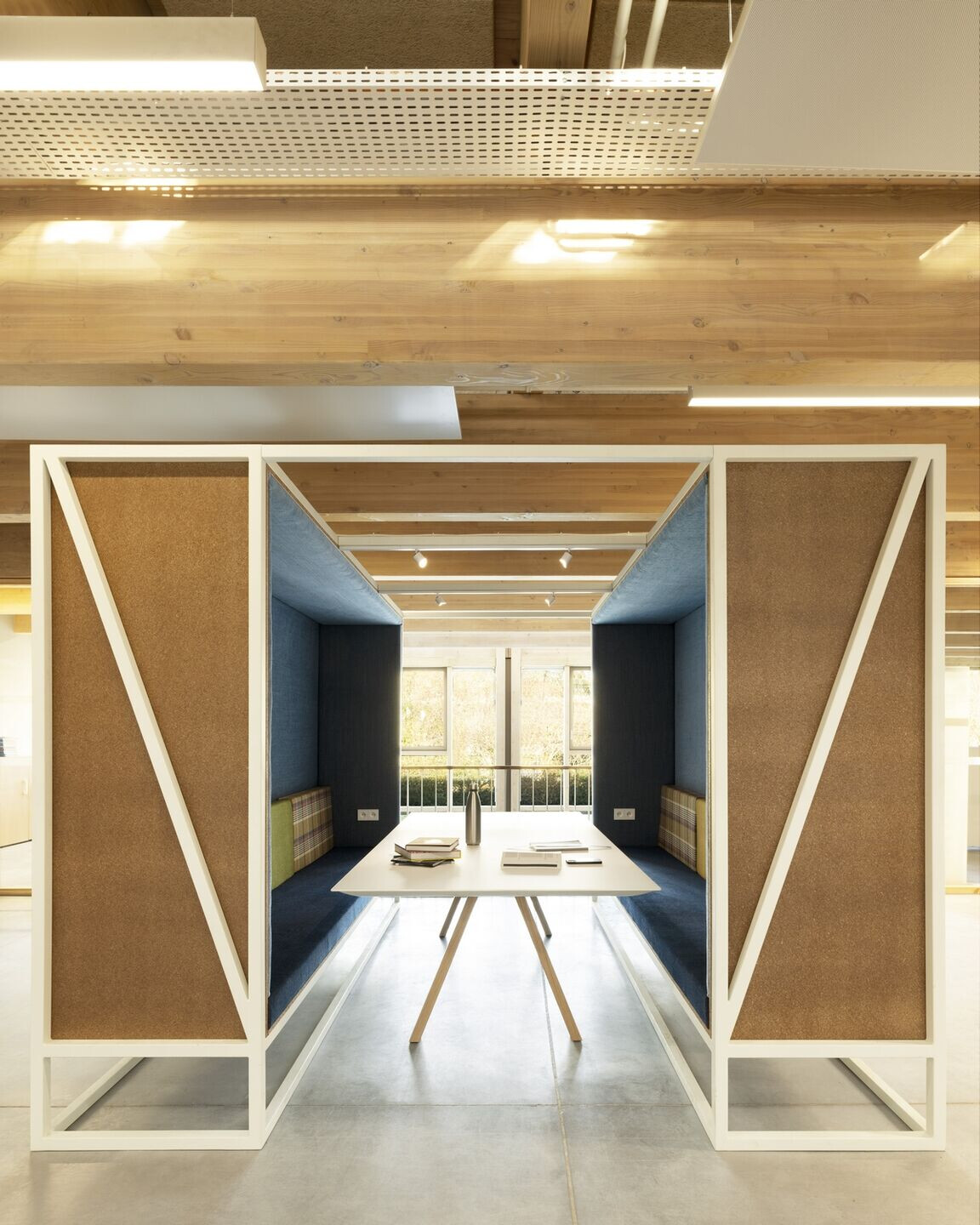
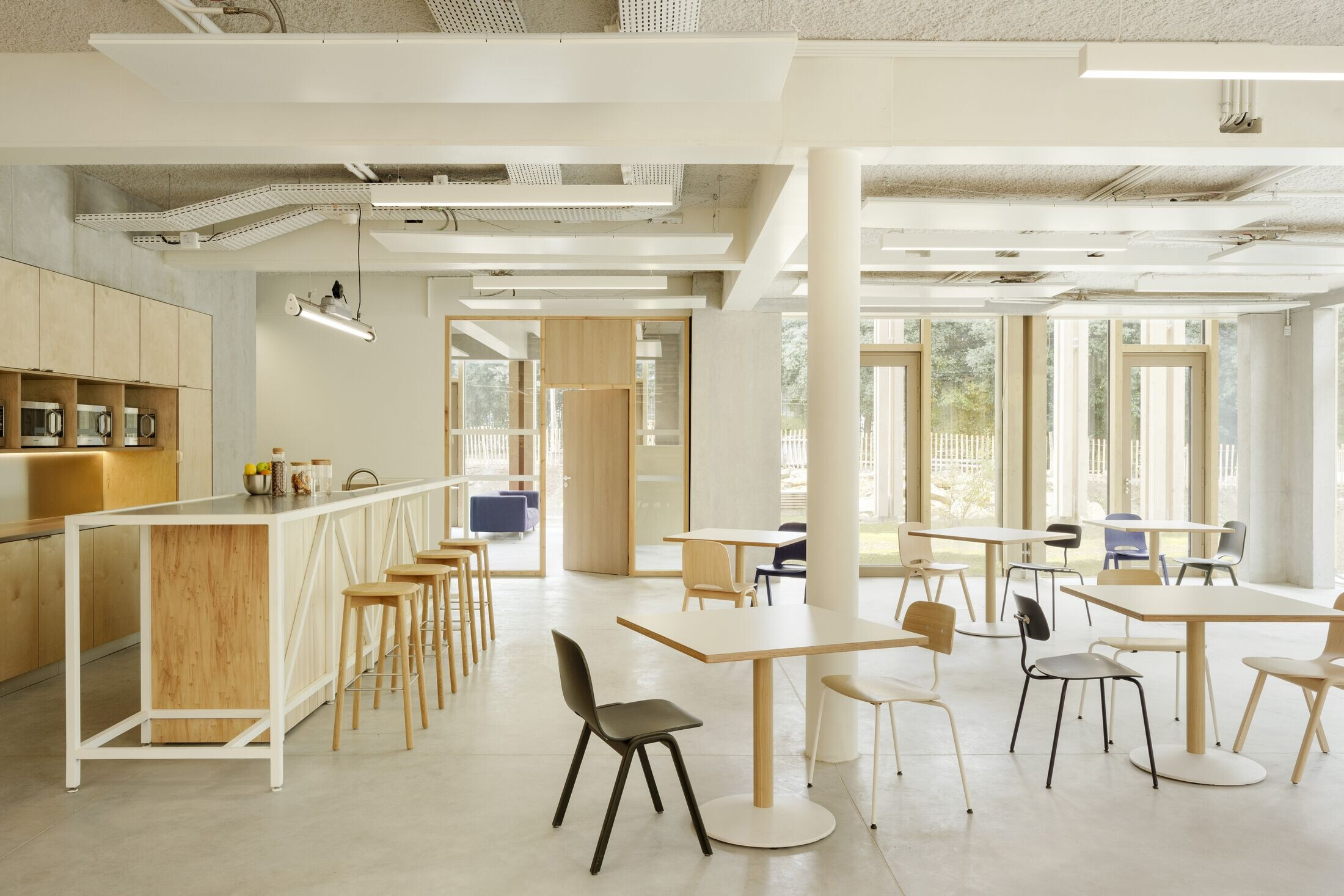
Workspaces are organized around the central atrium and maintain continuous visual connections to the surrounding park vegetation. Developed in close dialogue with end users, the interior layout prioritizes flexibility and daylight access. Custom-designed furniture and micro-architectures — accommodating meeting spaces, reprographics, and informal gathering areas — structure the plan without introducing rigid partitions.
The absence of complex mechanical systems reduces operational energy demand and long-term maintenance requirements. By relying on passive regulation, a robust envelope, and simple technical systems, the building limits operational emissions over its lifespan while maintaining stable indoor comfort.
Adaptability and circular design
Adaptability was a central design parameter. The 12-meter structural spans and atrium-centered organization allow the interior layout to be reconfigured through simple re-partitioning. Several micro-architectural elements are movable, enabling adjustment without structural intervention.
Circularity is addressed through both material choice and reuse strategies. Prior to construction, a reuse assessment enabled a substantial portion of furniture from the teams' former premises to be reintegrated into the new building. Additional elements were redistributed through reuse networks, while some structural furniture was designed and fabricated on site by La Villette’s teams using recycled scenography components from previous exhibitions.
Rather than relying on technological complexity or symbolic sustainability gestures, the project demonstrates how architectural form, structure, and use can collectively support pragmatic and durable environmental performance within a sensitive urban park context.