A Chic Tribute to 1970s Architecture and Mediterranean Landscape in the Heart of Jerusalem.
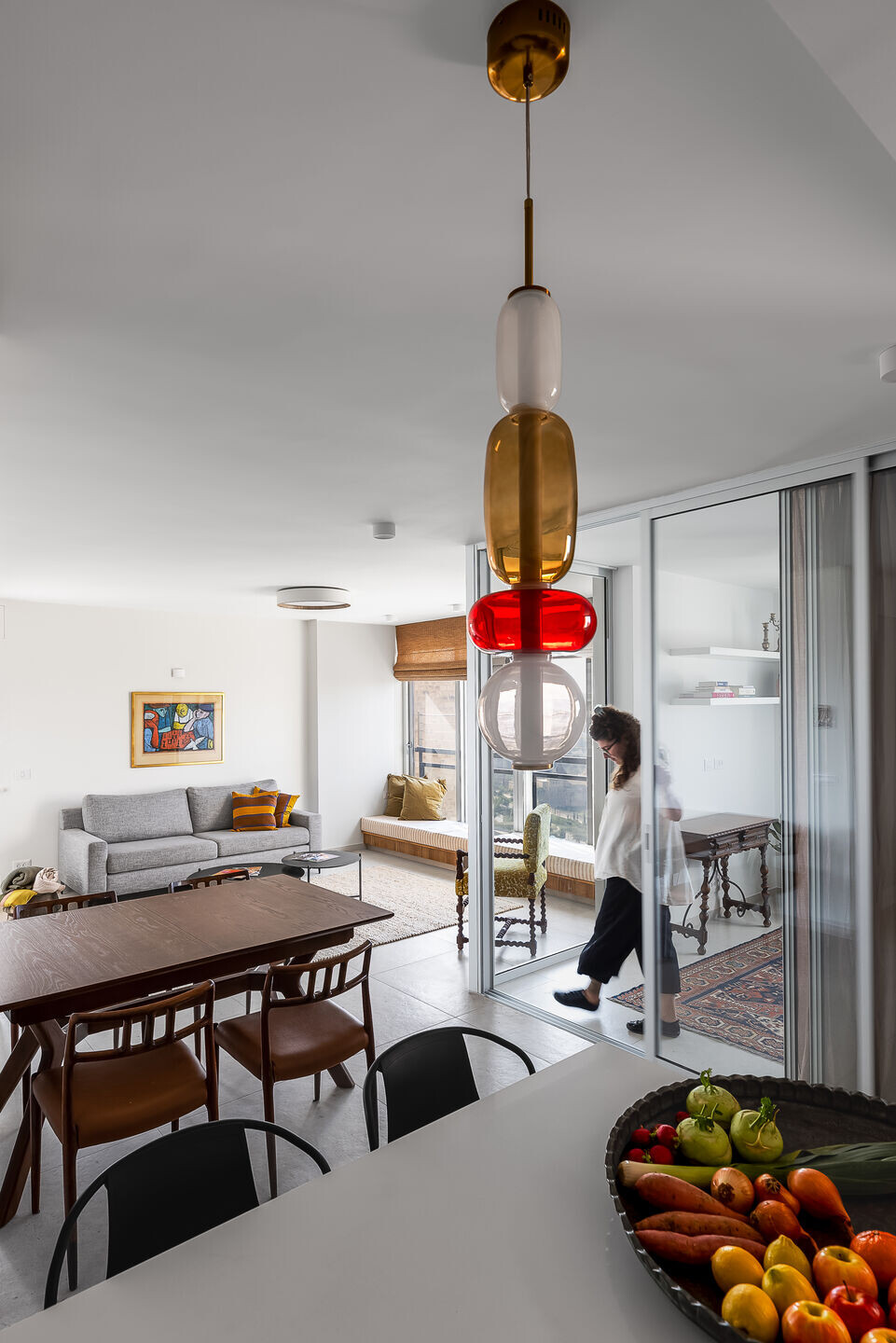
A high-end renovation breathes new life into a Jerusalem apartment, blending modern comfort with an homage to its 1970s architectural roots and unique surroundings. Overlooking the Israel Museum and the Valley of the Cross, this thoughtful redesign transforms an apartment long untouched into a modern yet homey space.
The 100 sqm apartment was purchased by an Anglo family in blueprints back in the day out of a deep sentimental connection to the country and was used over the years during their visits to Israel. Located in one of the first residential towers ever built in Jerusalem, the property had remained in its original state for decades. Today, most of the family's children have permanently settled in Israel, and the owners—now a couple of invested and active grandparents—decided to transform the Israeli family home into a contemporary, inviting retreat.
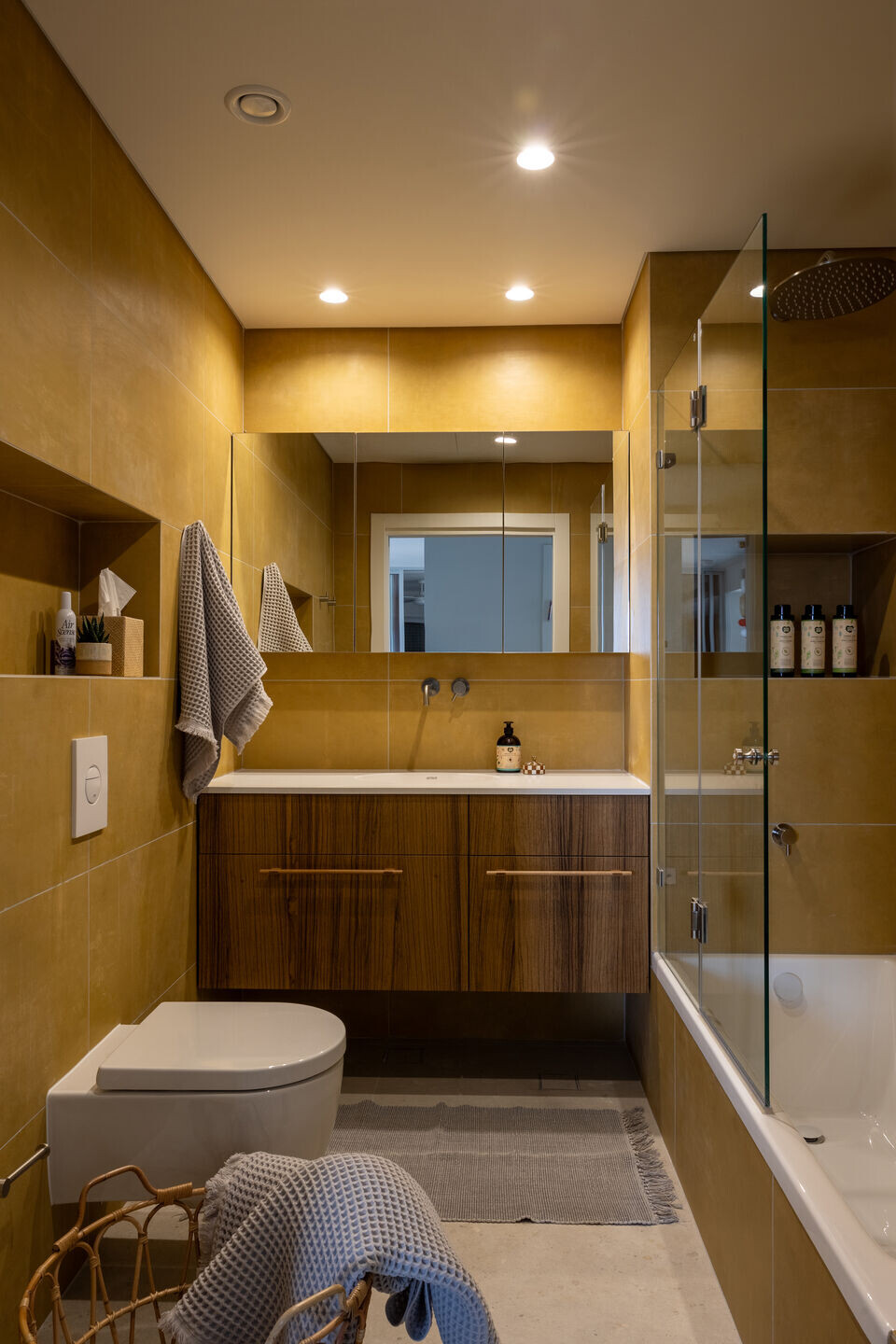
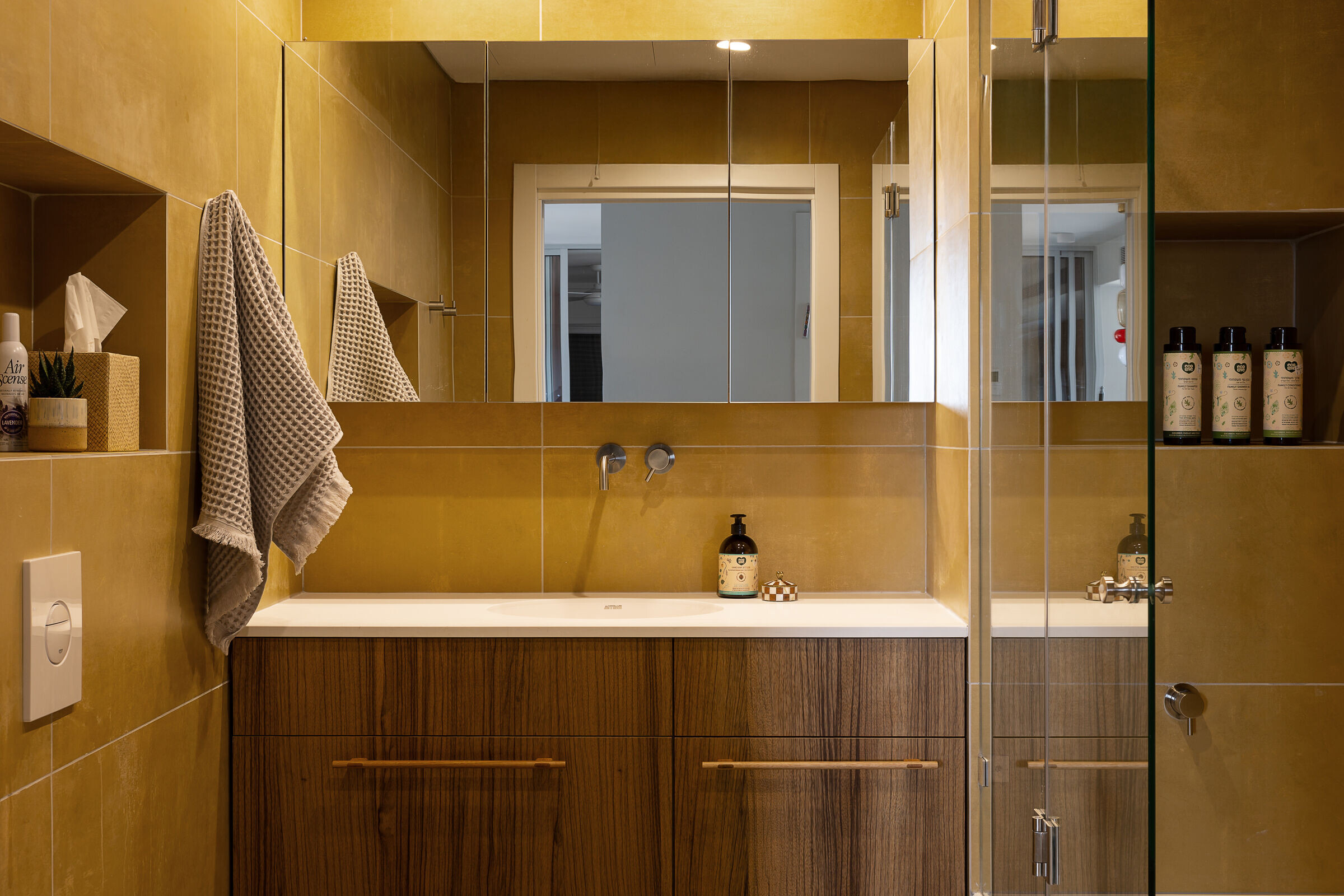
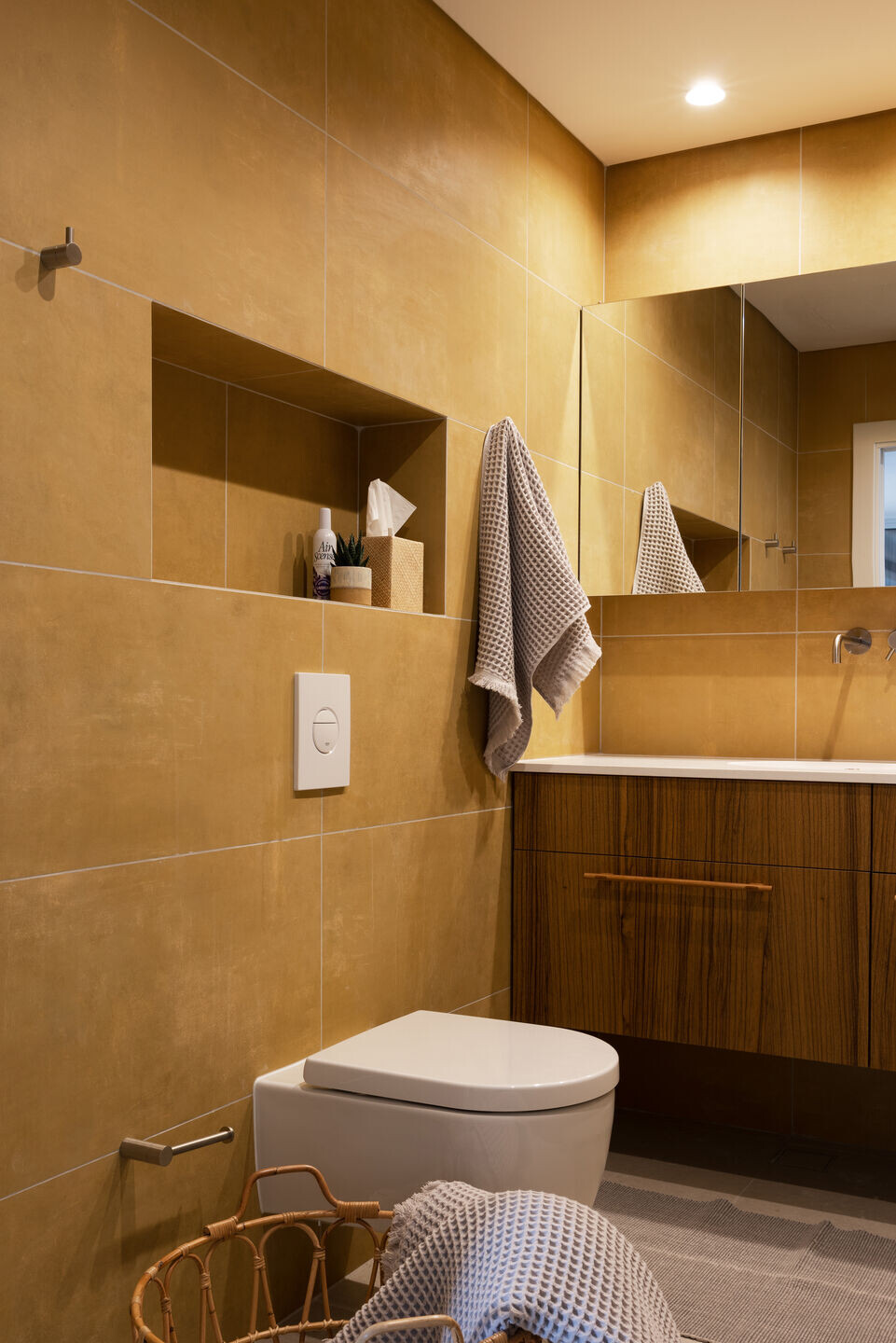
The mother-of-pearl mosaic touches on the building's stone façade, mustard-colored tiles, and Formica wall panels of the lobbies are some of the classic 1970s architectural features that became sources of inspiration for the transformation.
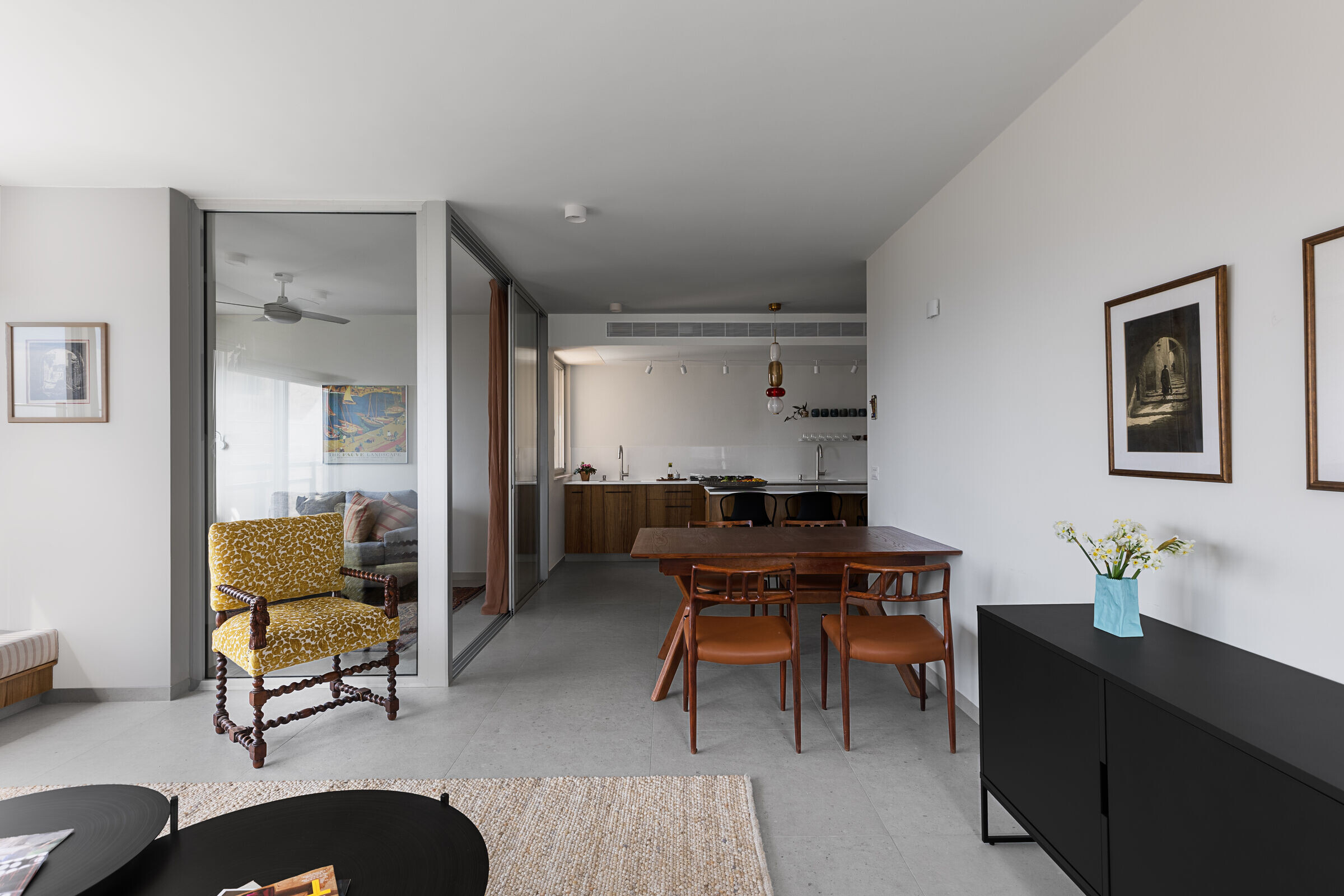
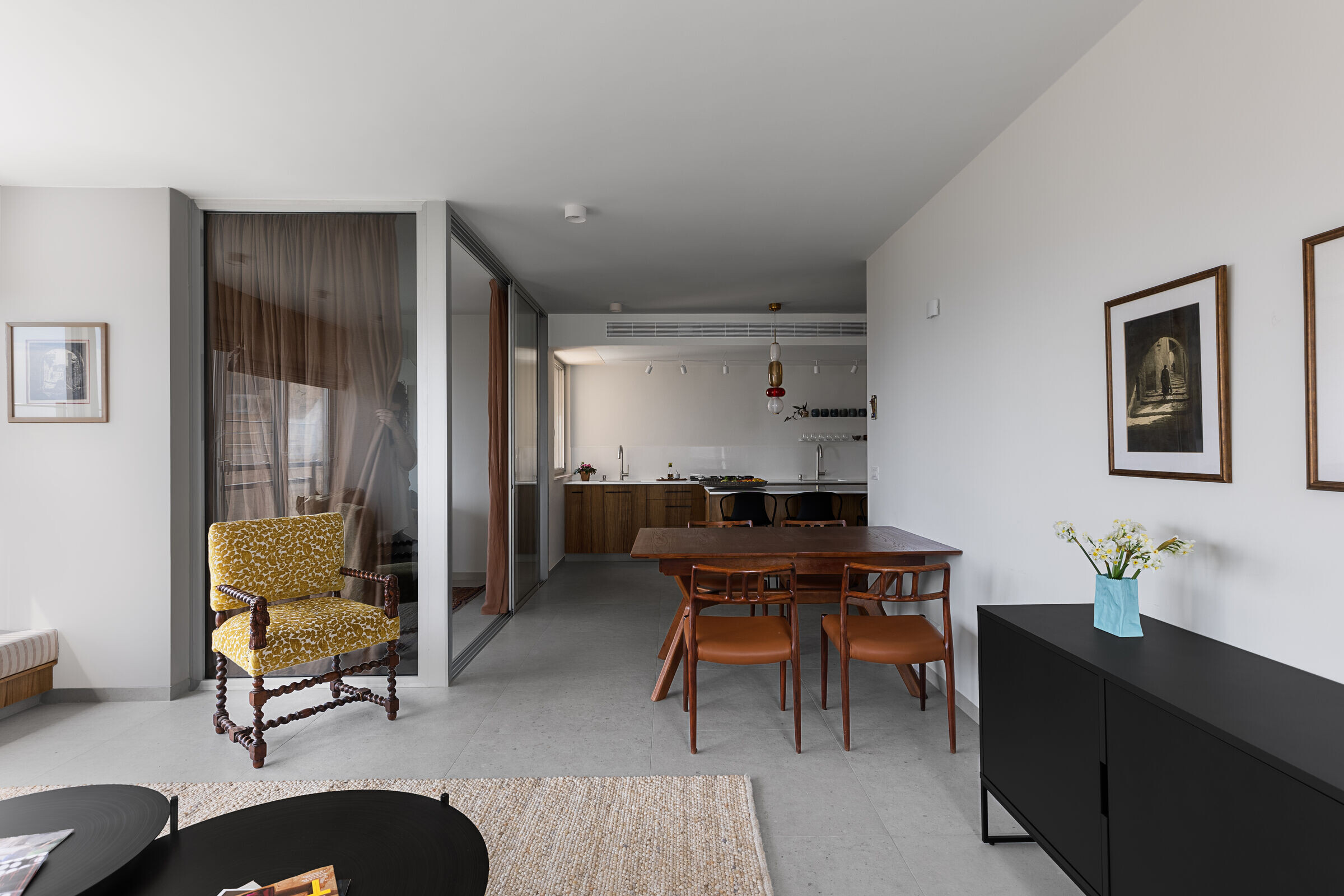
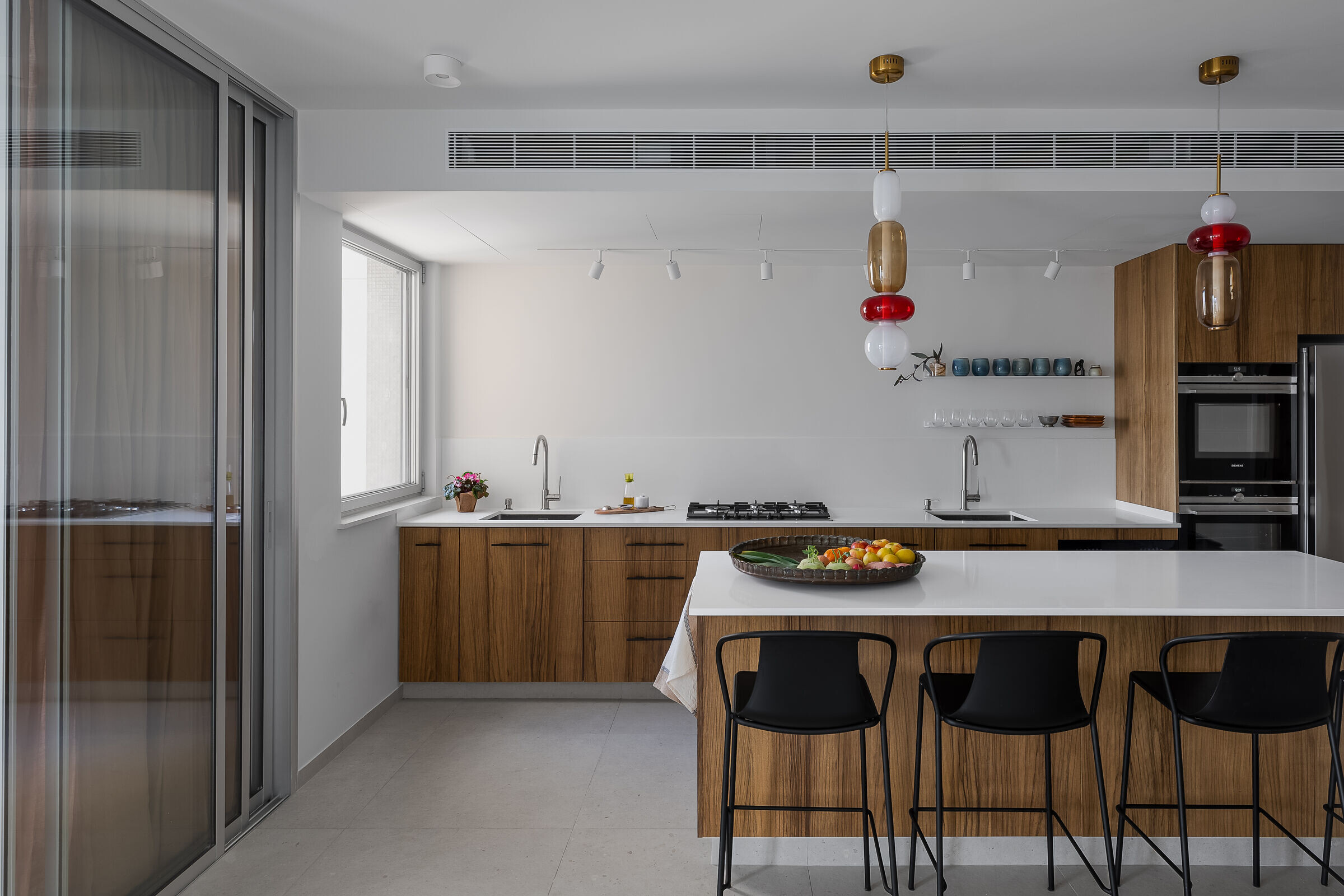
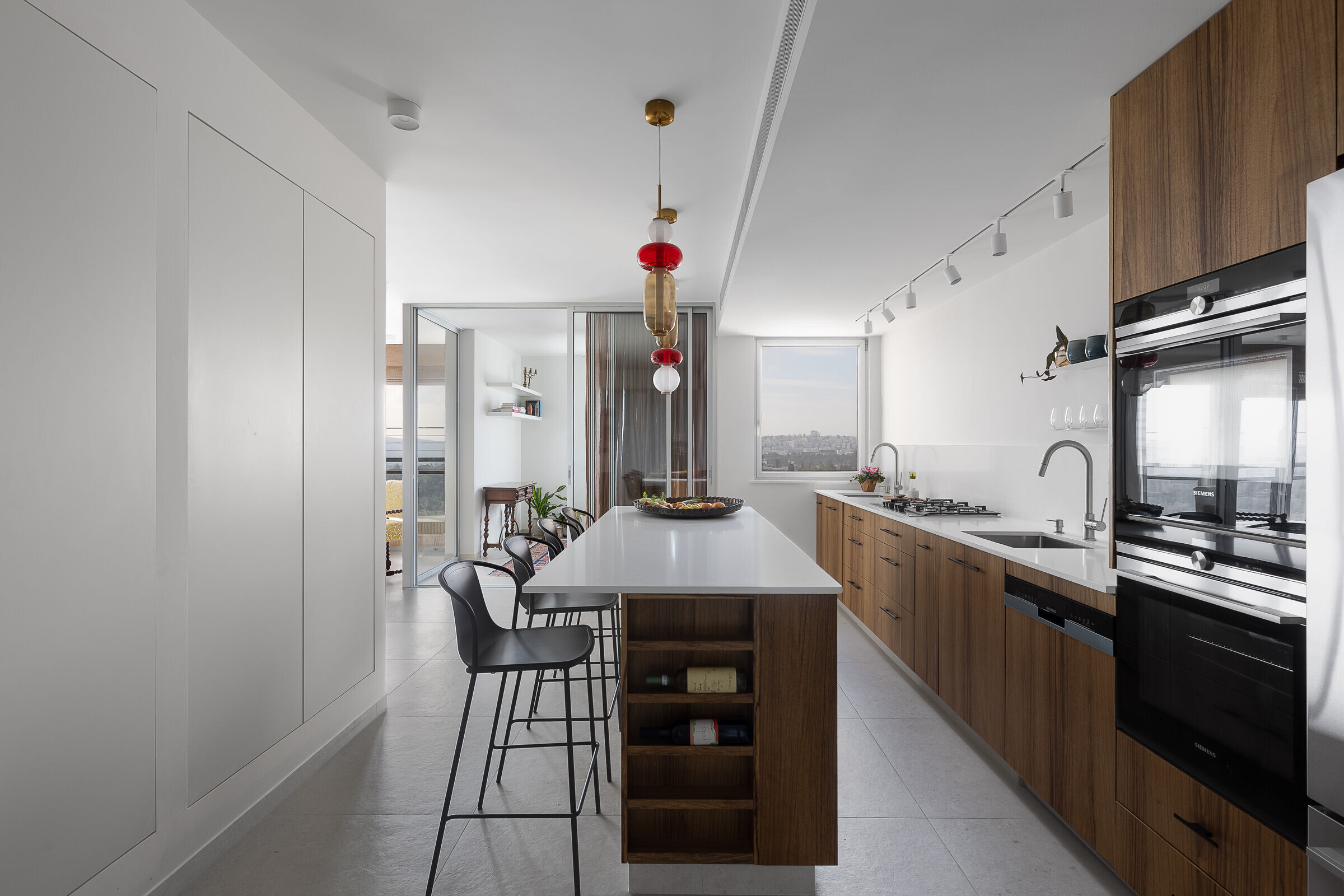
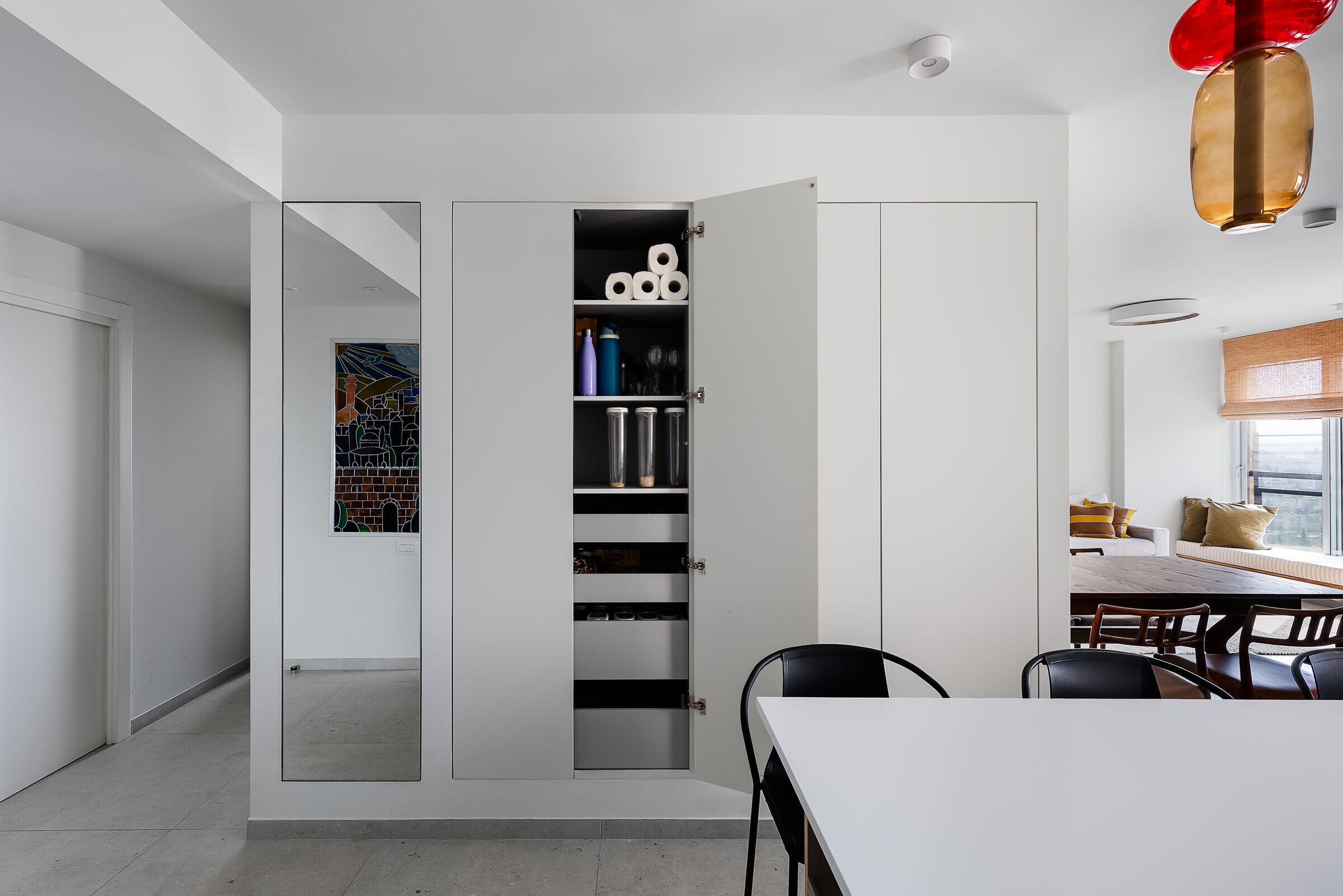
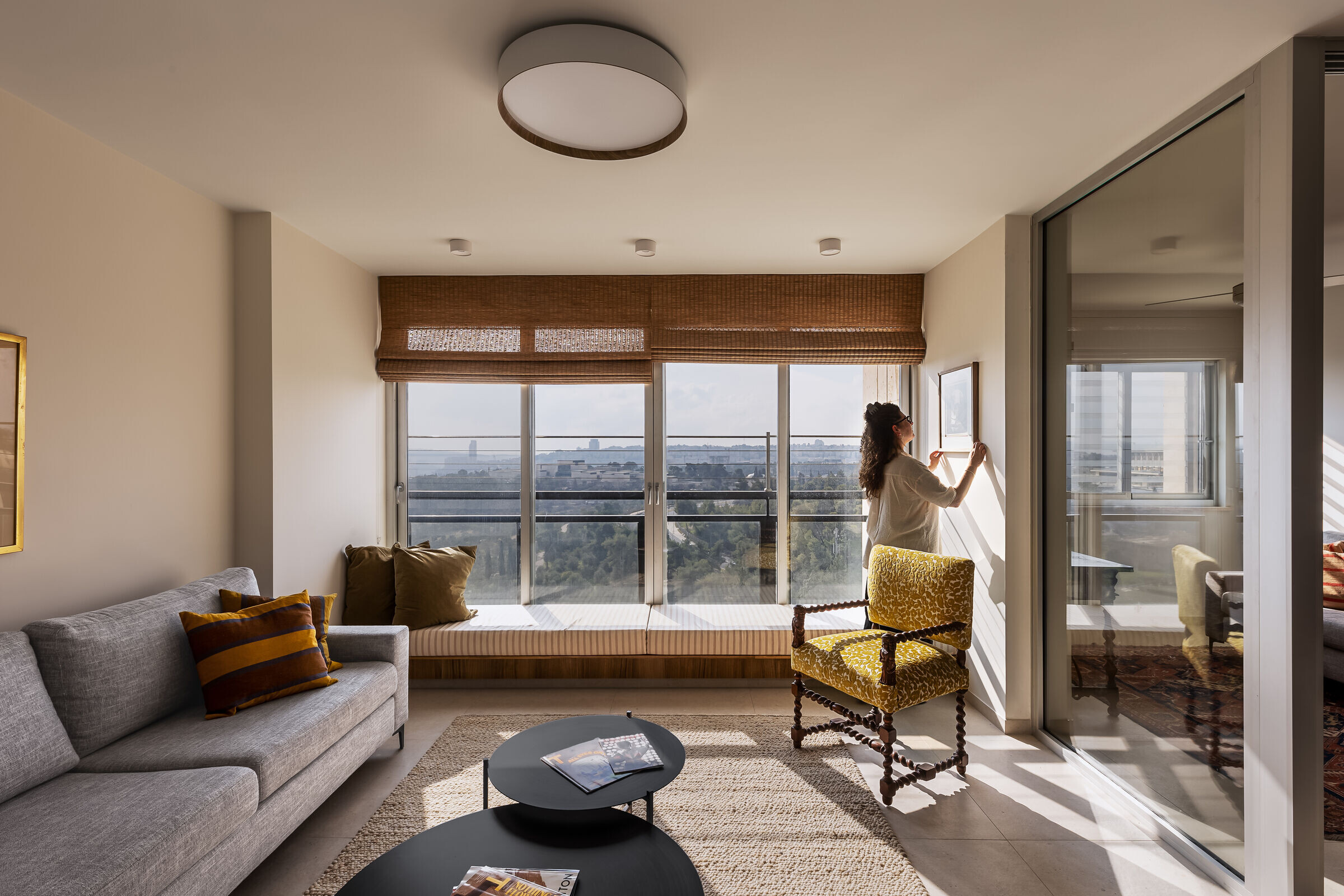
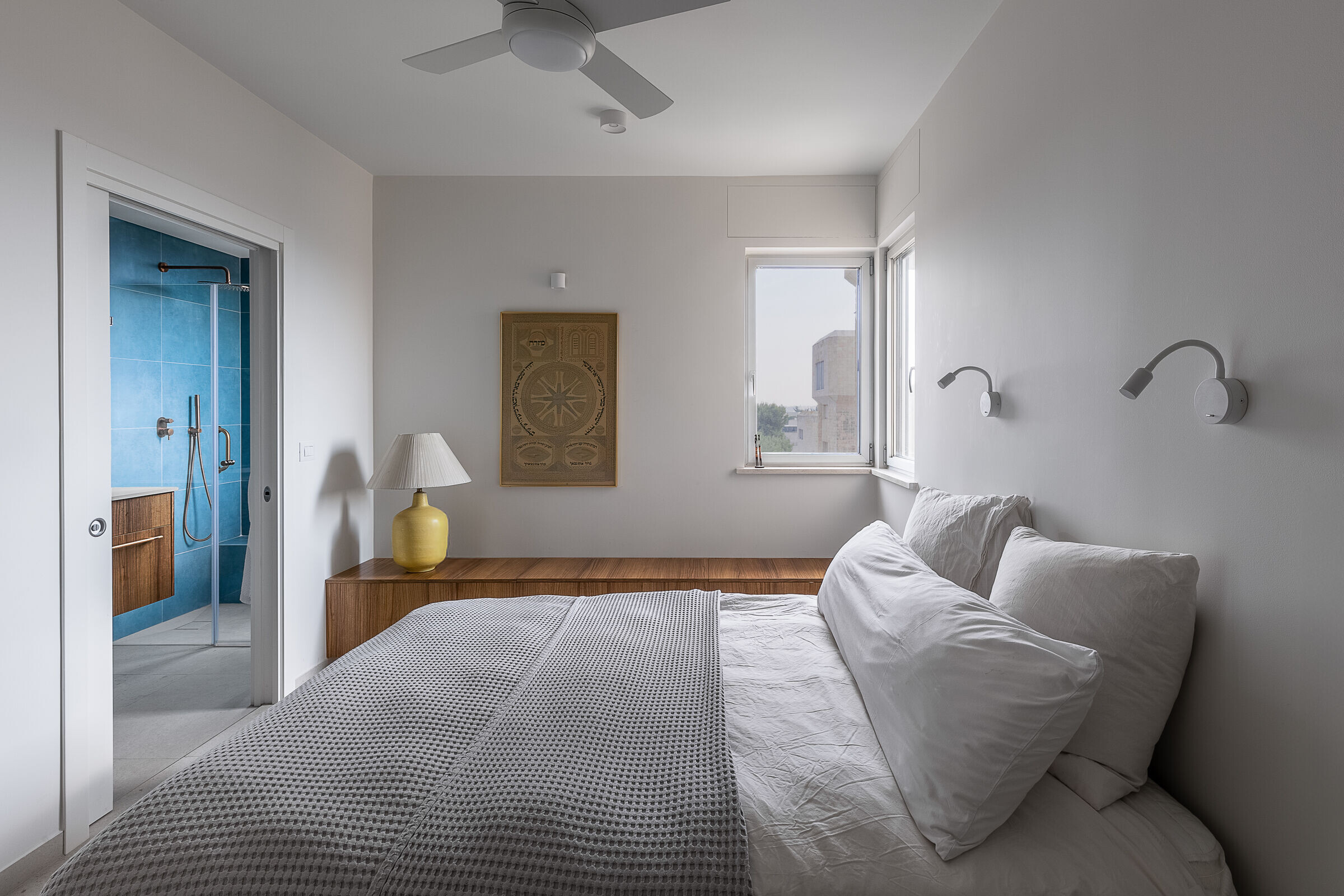
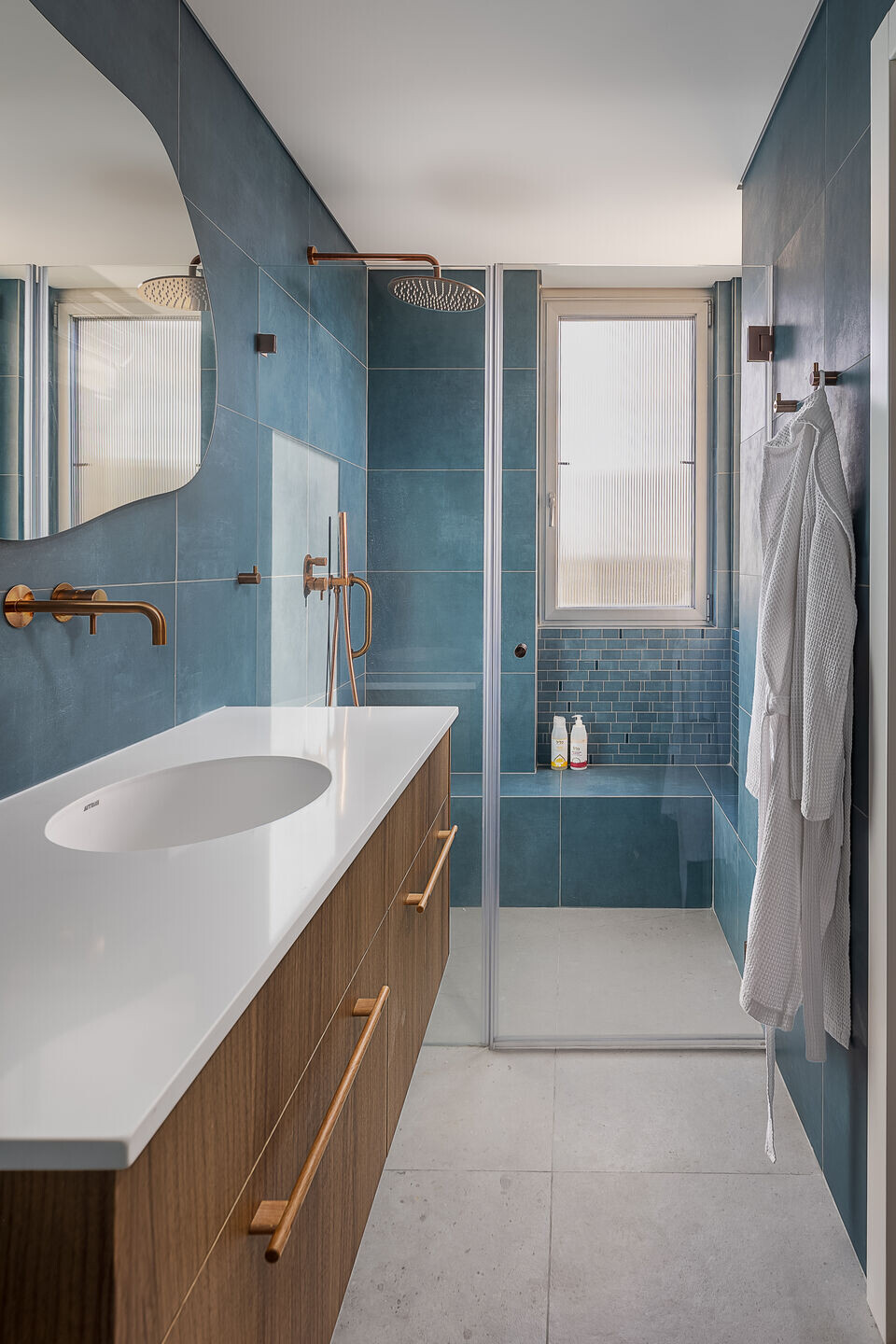
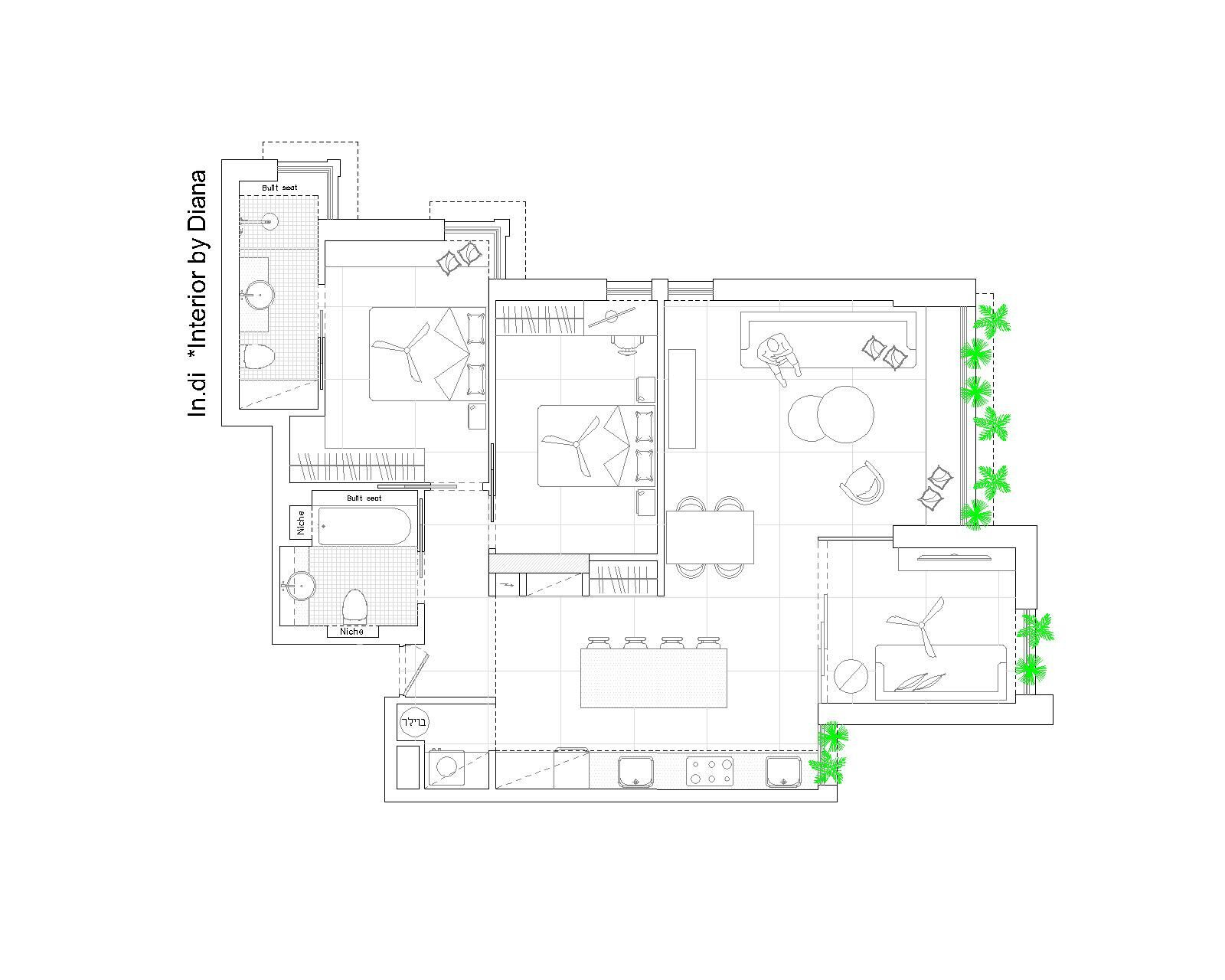
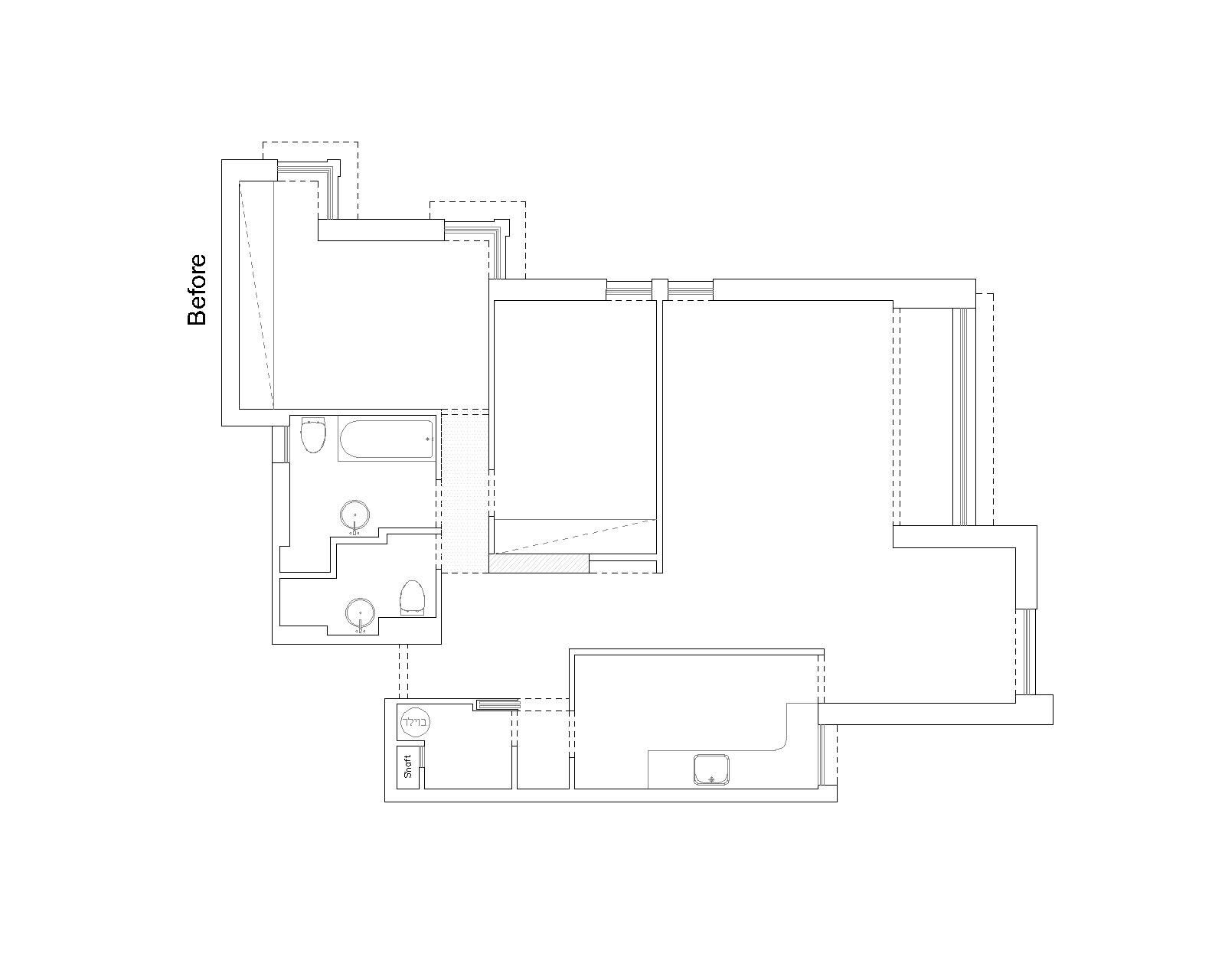
The new floor plan maximizes the space’s potential, adapting the layout to suit a contemporary lifestyle while ensuring accessibility. An airy open space was created, incorporating a modular den that easily converts into an extra guest room when needed. One of the striking features of the redesign is the unparalleled view of the Mediterranean landscape and of the Museum, now enjoyed not only from the living room divan (a traditional low Middle Eastern seating area) but from under the shower as well!
The project was conceived prior to October 7th. When significant obstacles arose within the construction industry in Israel, however, once it was possible to resume a certain degree of routine, the project became a testament to resilience during challenging times, celebrating the power of life and the daily collaboration between people of different religions in Jerusalem.
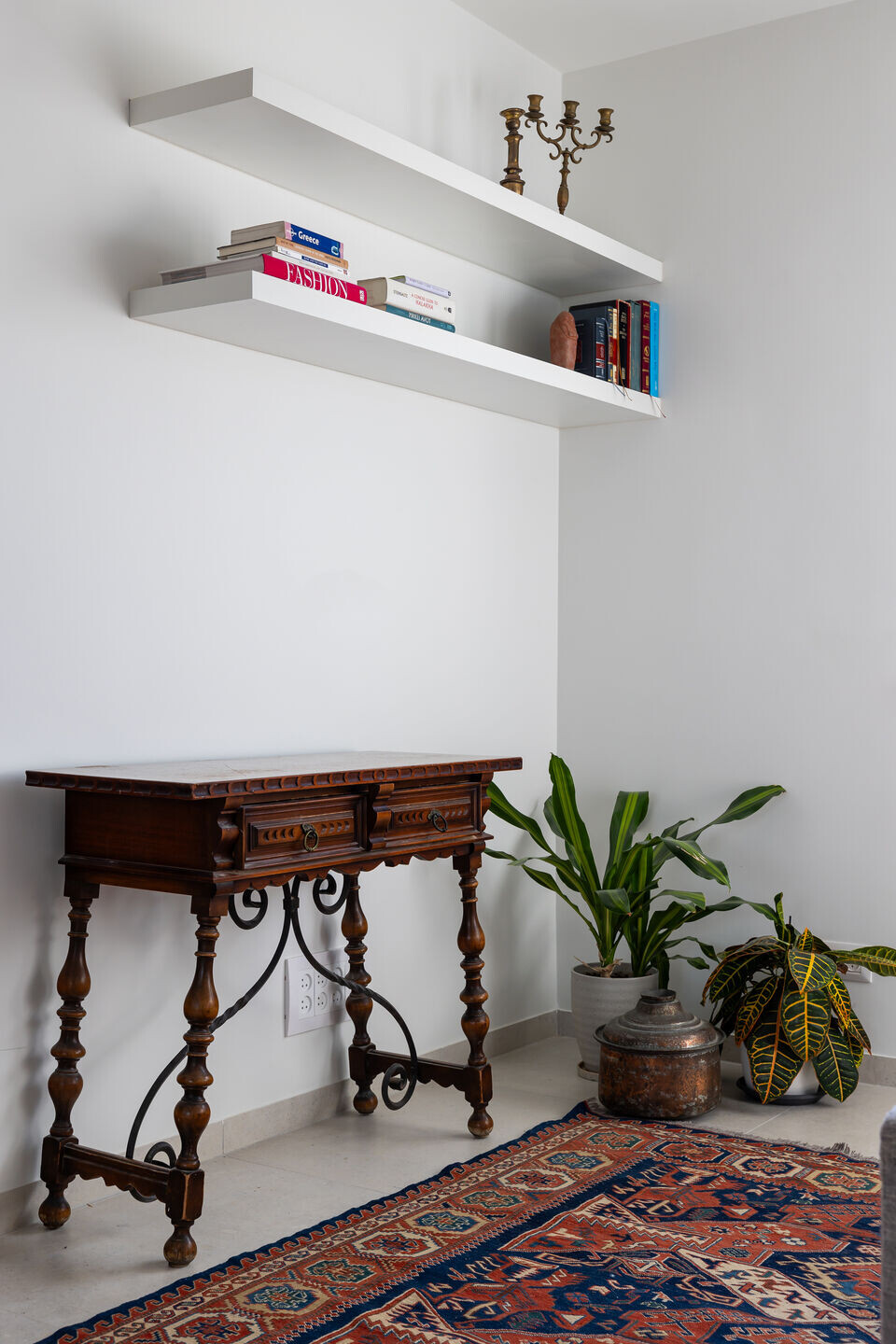
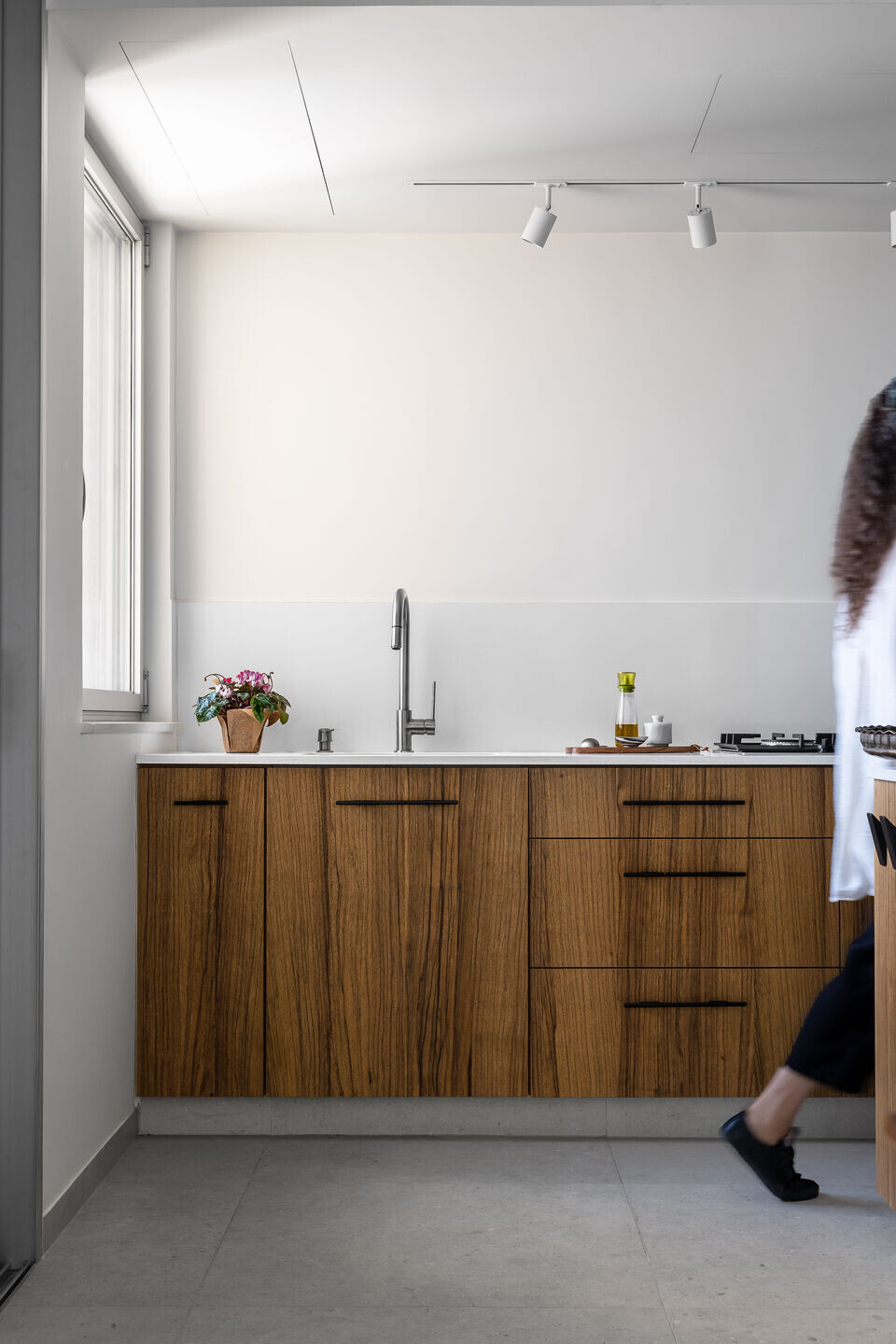
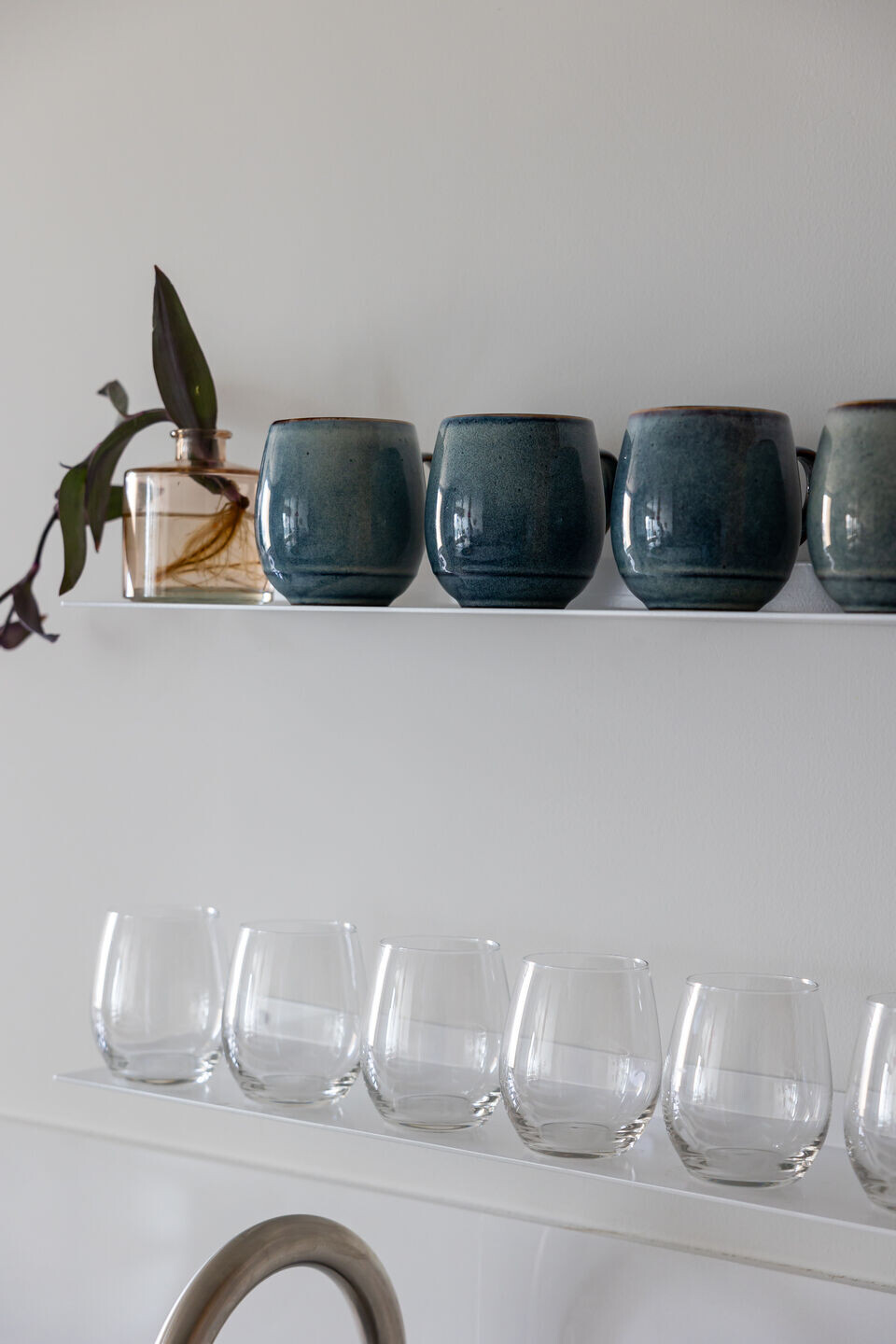
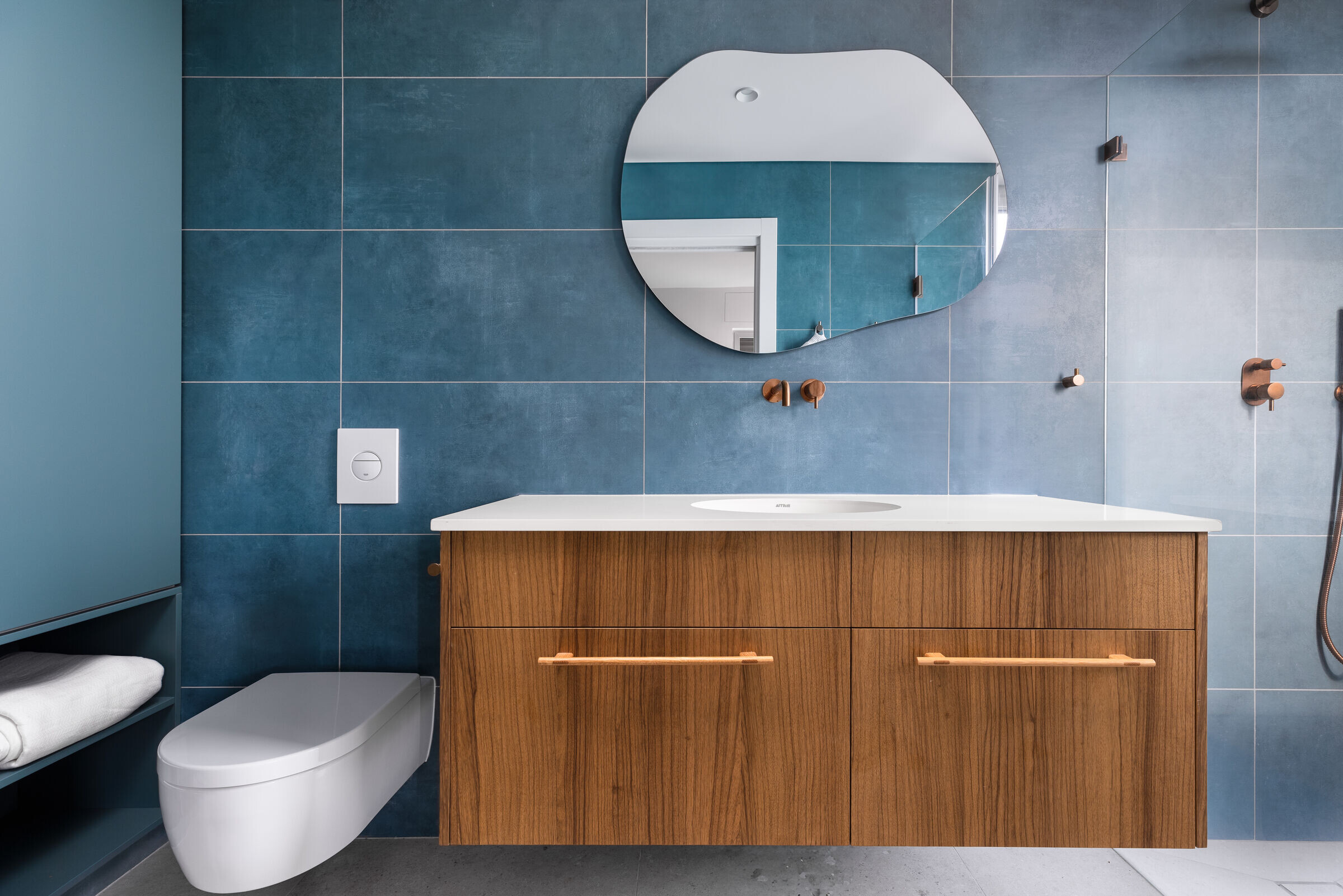
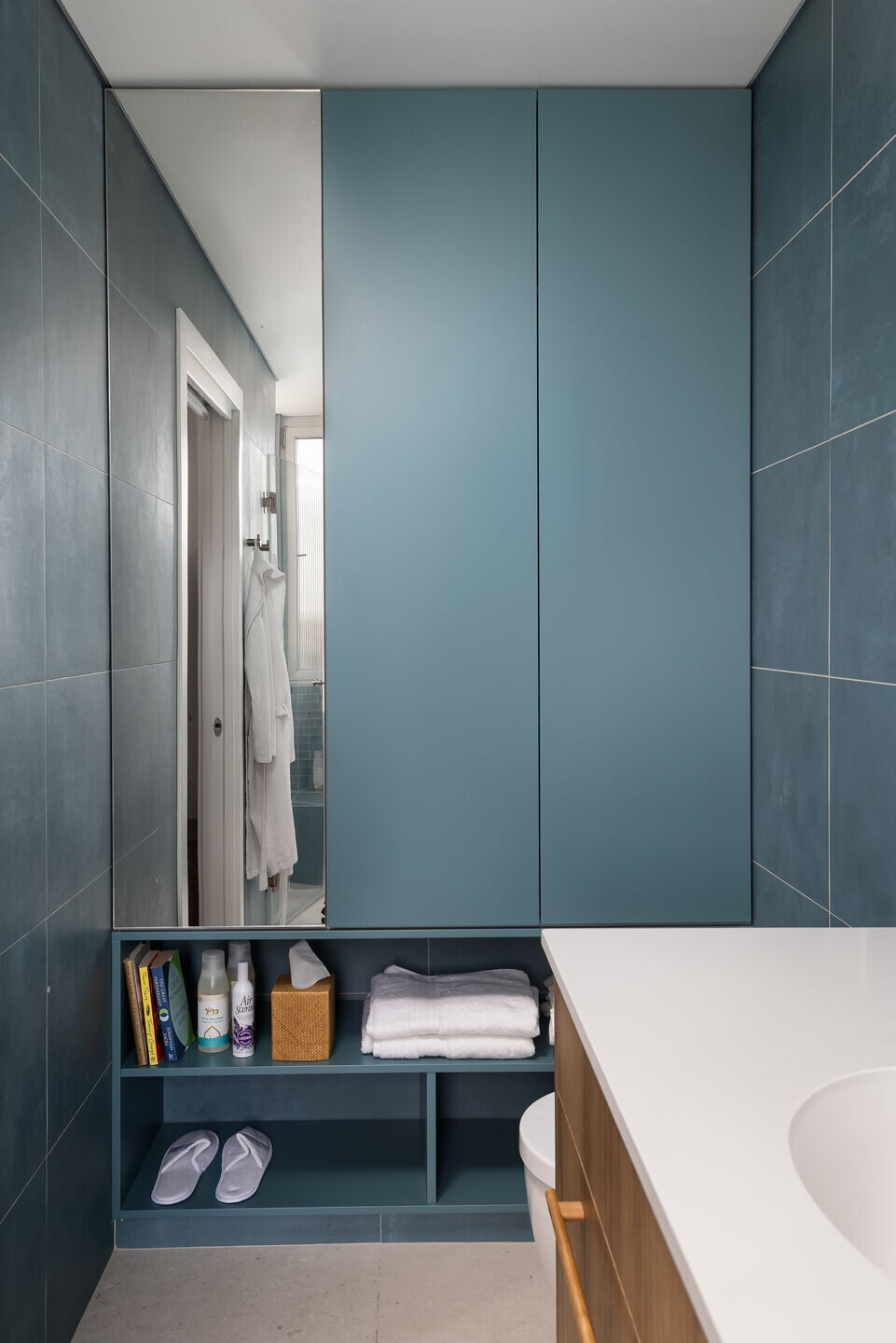
The design incorporates cherished family heirlooms and features natural textiles, bare aluminum, minimalist lighting, and colorful plaster-like tiles in the bathrooms—paying subtle tribute to the apartment’s original aesthetic and to its historic and geographical context, elegantly tying past and present together.