

Set within a protected conservation zone on Poland's Baltic seafront, this 1920s fisherman's hut has been reimagined by Supremati as a holiday apartment — a quiet counterpoint to the new restaurants, spas, and hotels reshaping the surrounding coastline.
The clients, based in the Polish capital, sought a retreat shaped by the sea rather than the city: a place where their children might form the kind of unhurried coastal memories that stay with a person for life. Supremati completely reimagined the original layout, working the modest footprint hard to draw more from every square metre — most notably by carving out a private en-suite for the primary bedroom, a comfort the existing plan did not allow.


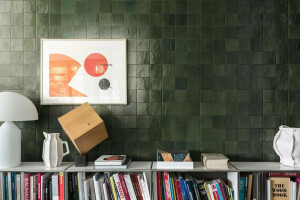
Material decisions were led by provenance and reuse. The flooring was reclaimed from a local barn and relaid throughout the apartment, while all joinery and internal doors were made bespoke by a Polish joiner working in regional craft traditions. In the kitchen and primary en-suite, deep blue Zellige tiles from Marazzi anchor the spaces with depth and hand-glazed irregularity; elsewhere, tiling is sourced from Polish manufacturers including Paradyż, keeping the supply chain close to site.
The palette takes its cues from the surrounding seascape: sandy beiges, muted greens, and the particular grey-blues of the Baltic. Textures are tactile and unhurried — natural stone, lime-washed surfaces, woven jute — composing interiors that feel rooted in place rather than styled onto it. Mirrors are detailed with jute rope, a quiet nod to the building's fishing-village origins.


Furnishing follows the same logic. Pieces are predominantly timber, fabrics are cotton and other natural fibres, and rugs are woven from seagrass. Decorative objects are either sourced second-hand or bought from Ceramika Bolesławiec, the Polish maker long known for its hand-painted stoneware — a tradition that brings regional character into the apartment without recourse to mass-produced finishes.
The result is a project shaped by restraint: a heritage structure preserved, a coastal vernacular honoured, and a family retreat that trades urban polish for something quieter and more lasting.


