

In Tilburg, southern Netherlands, Amsterdam-based architectural studio Common Affairs has transformed an old city office building using circular design principles. Combined with the use of bio-based materials, the Stadswinkel on Tilburg’s Koningsplein (King’s Square) is one of the first circular and bio-based transformations of an office building in the Netherlands.

An example of circular adaptive reuse
A Stadswinkel (City Shop) is a municipal service centre in the Netherlands that provides residents with access to a range of local government services and information.
In 2018, Tilburg’s municipality set ambitious goals for the sustainability and circularity of its building stock. The original Stadswinkel was a somewhat nondescript and beige monolith, housing Tilburg’s library and a number of municipal functions. Common Affairs was tasked with transforming the large, characterless building into an example of circular adaptive reuse. The building’s transformation was designed with maximum reuse in mind, ensuring that every element can be repurposed in the future. Moreover, any new materials in the project were recycled or made from renewable resources.
The newly transformed building now provides a bright and welcoming central space where residents and businesses can meet city officials in a relaxed setting.


Promoting circular and sustainable building practices
The “Circulariteits Prestatie Gebouwen” (Circularity Performance Buildings) is a set of guidelines aimed at promoting circular and sustainable building practices. The framework was developed by W/E advisors, a Dutch research and consulting firm that specialises in making the built environment more sustainable. In the framework, a building’s circularity is based on five measures: 1. Utilising available materials and resources. 2. Employing renewable raw materials. 3. Minimising environmental impact. 4. Designing conditions that promote longevity. 5. Ensuring future reuse and recyclability.
The Stadswinkel’s transformation, in line with the Circulariteits Prestatie Gebouwen, incorporates several sustainable interventions. The building’s existing structures and materials were used wherever possible. All new materials are bio-based and recycled. A highly insulated outer skin and energy-efficient installations minimise the building’s environmental impact. A high degree of design flexibility promotes longevity. The building is designed for future disassembly and all materials have been recorded in a material passport.
Following these various measures, the renovated Stadswinkel achieved an impressive overall Circulariteits Prestatie Gebouwen score of 8.7 out of 10.


A contemporary city house
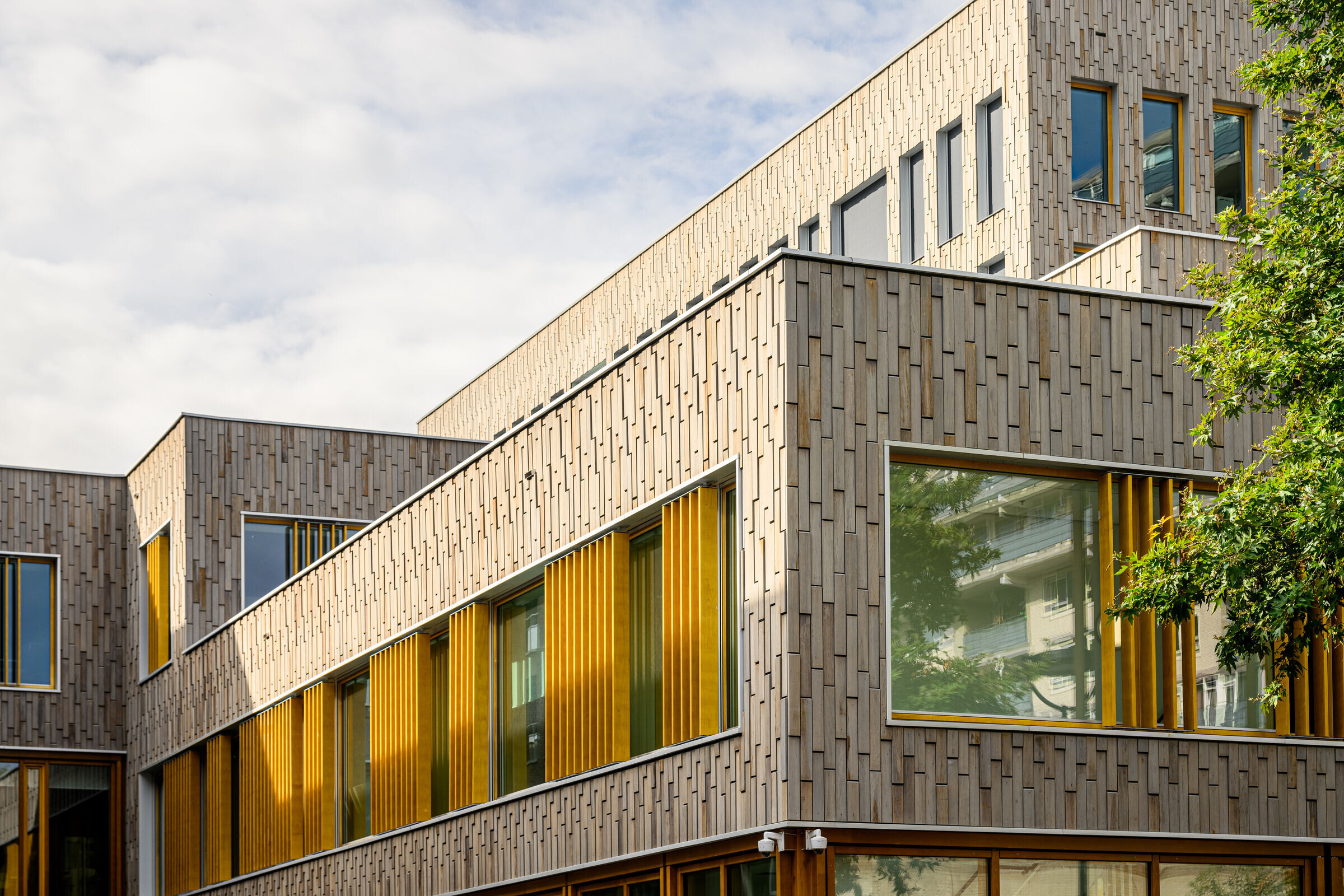
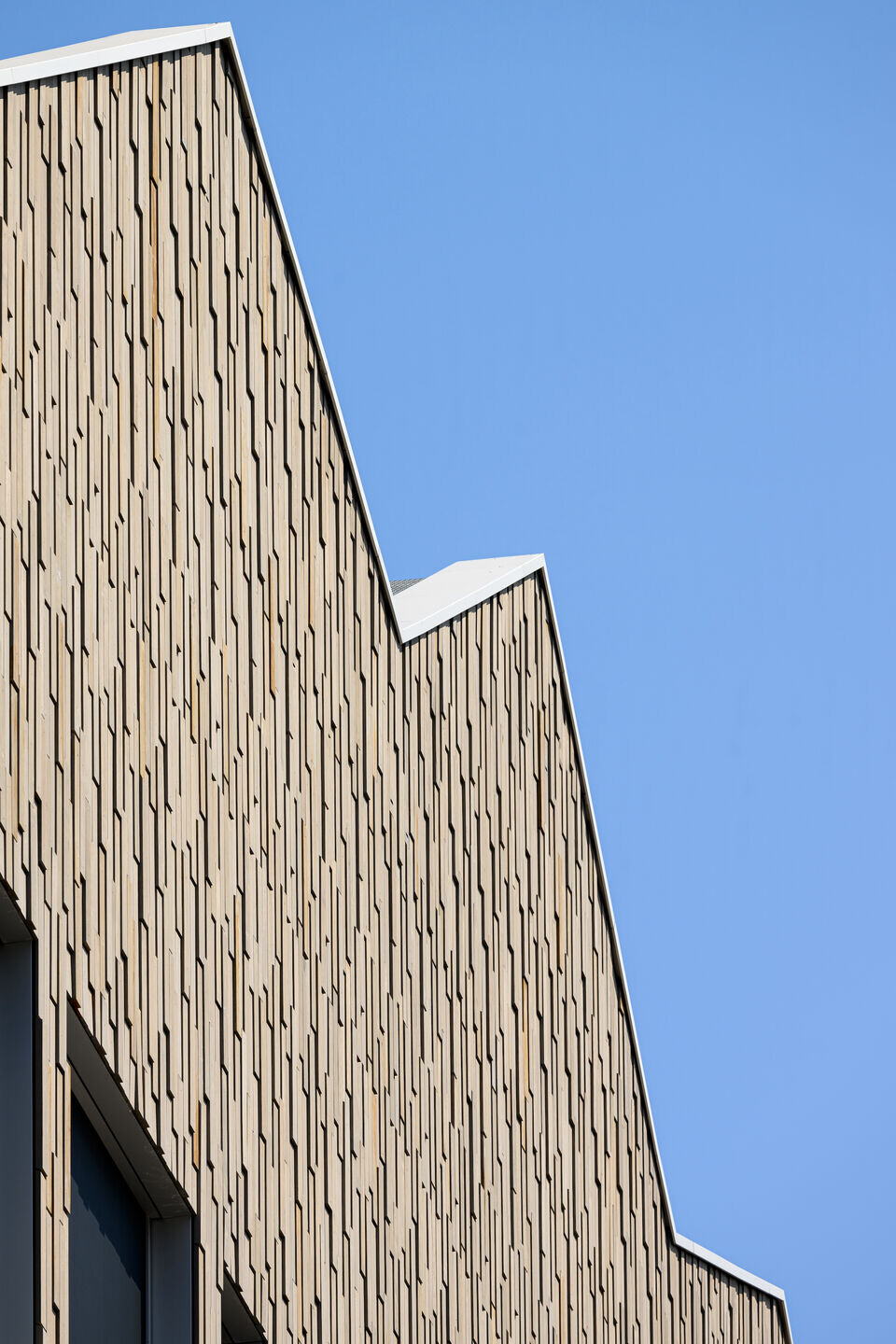
The Stadswinkel’s exterior has been reinvigorated with the addition of a decorative and functional wooden facade and crown. The highly insulated wooden facade comprises 90,000 screwed slats of varying thicknesses. The wooden window frames and curtain walls are finished with a clear varnish, providing a visual contrast. The transformation was designed to ensure everything can be completely dismantled in the future. Sealants and expanding polyurethane foams were therefore prohibited. To integrate the installations neatly and place the photovoltaic panels at an ideal angle, the building was given a canopy. The addition of a wooden crown transforms the former beige monolith into a contemporary city house.

A warm and welcoming space
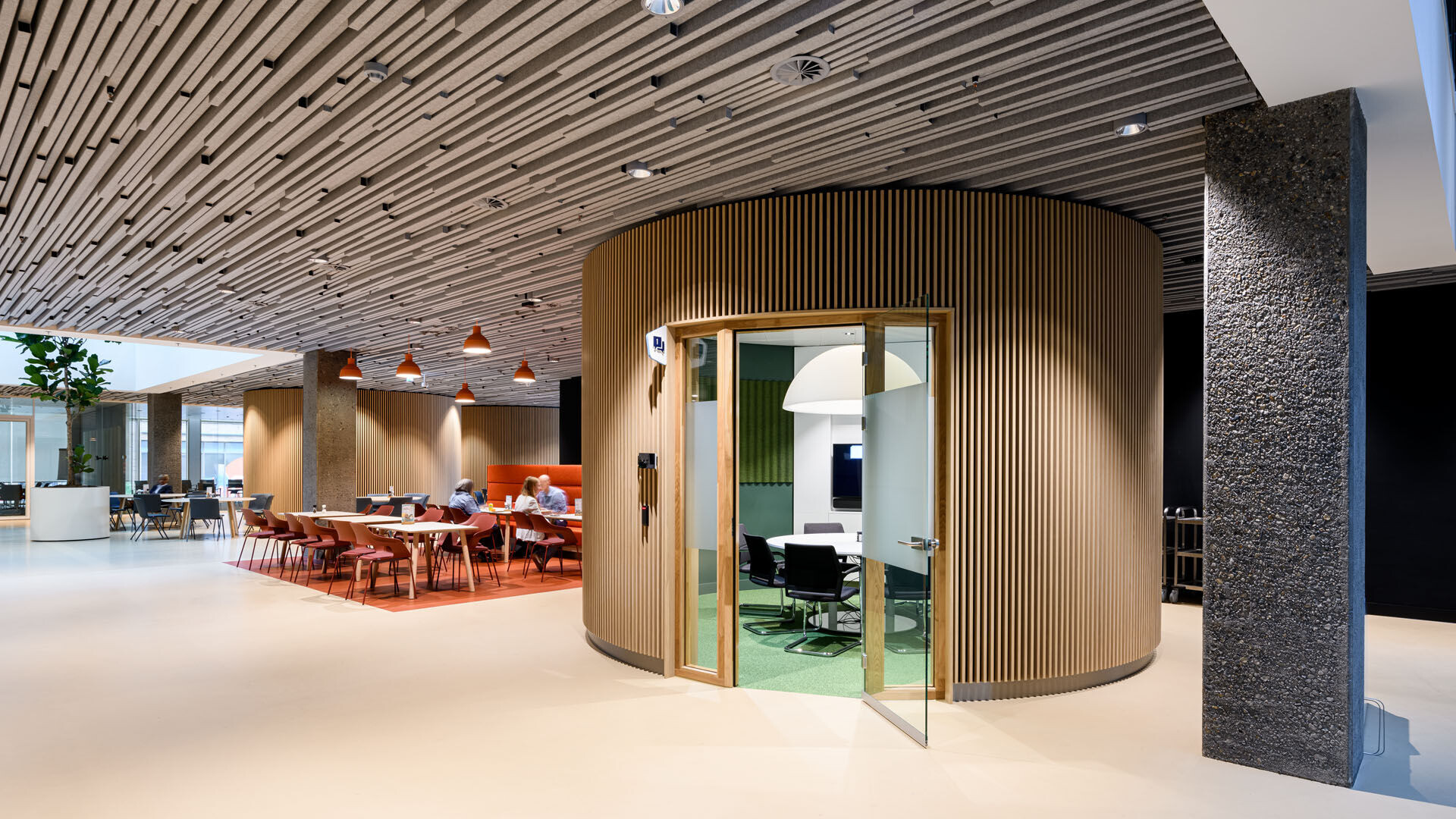
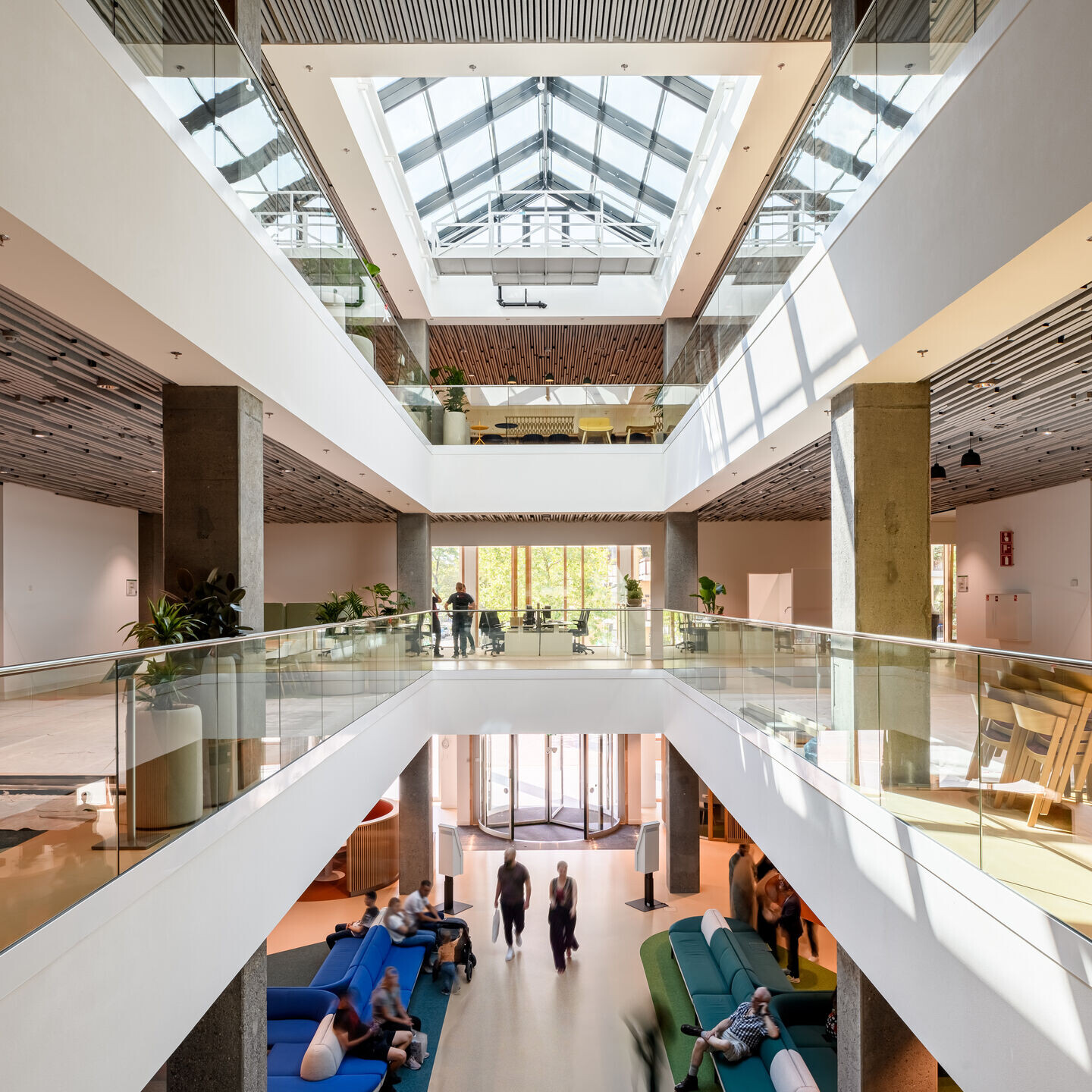
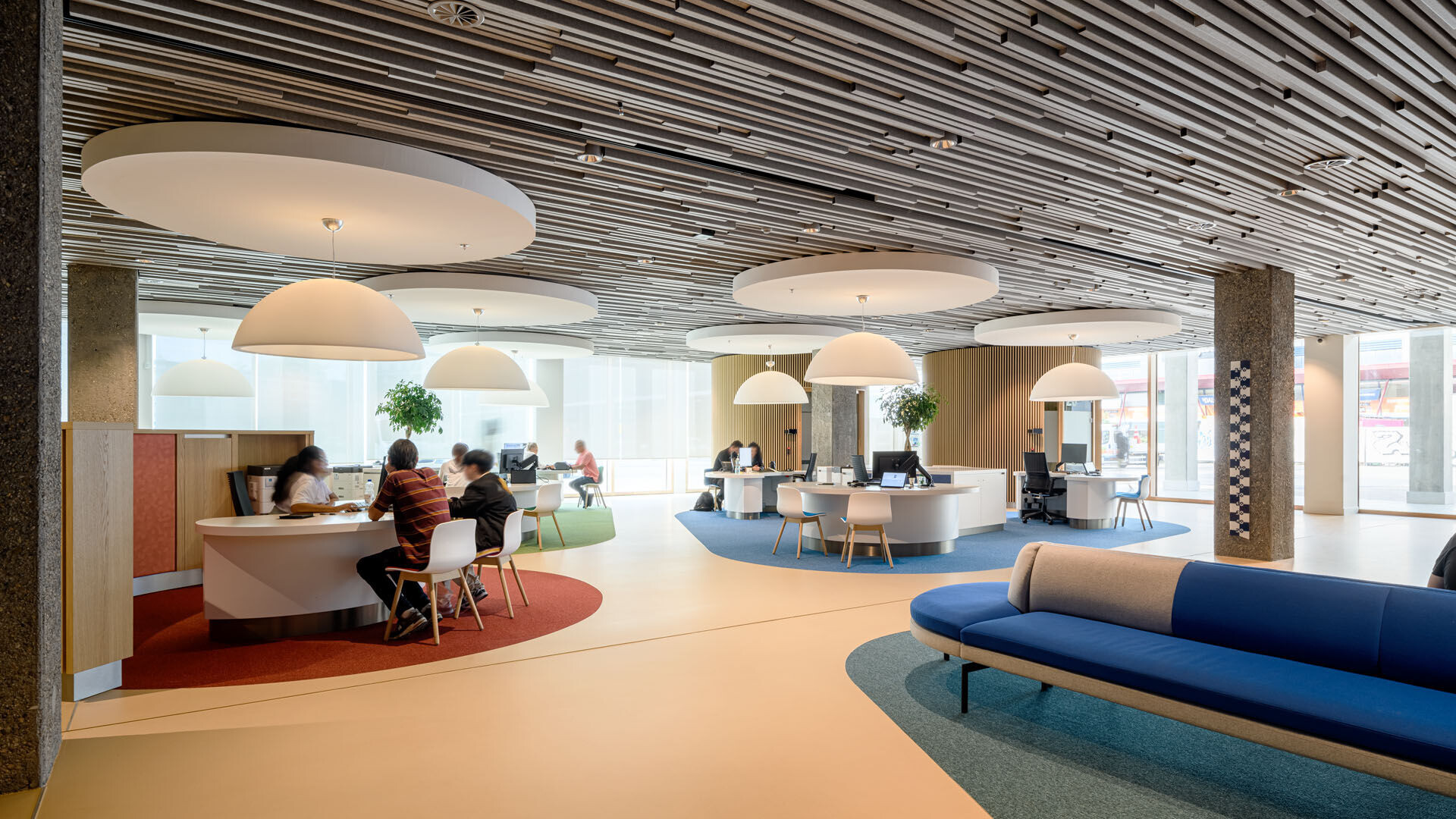
Open, bright, and airy, the Stadswinkel’s interior now accommodates many of the Municipality of Tilburg’s functions. The building’s ground floor is entirely accessible to the public and houses a customer service centre, a cafe, restaurant, and conference centre. Common Affairs incorporated new voids, lifts, and stairways to create a light and welcoming space. The building’s office floors also enjoy a visible connection with the public area.

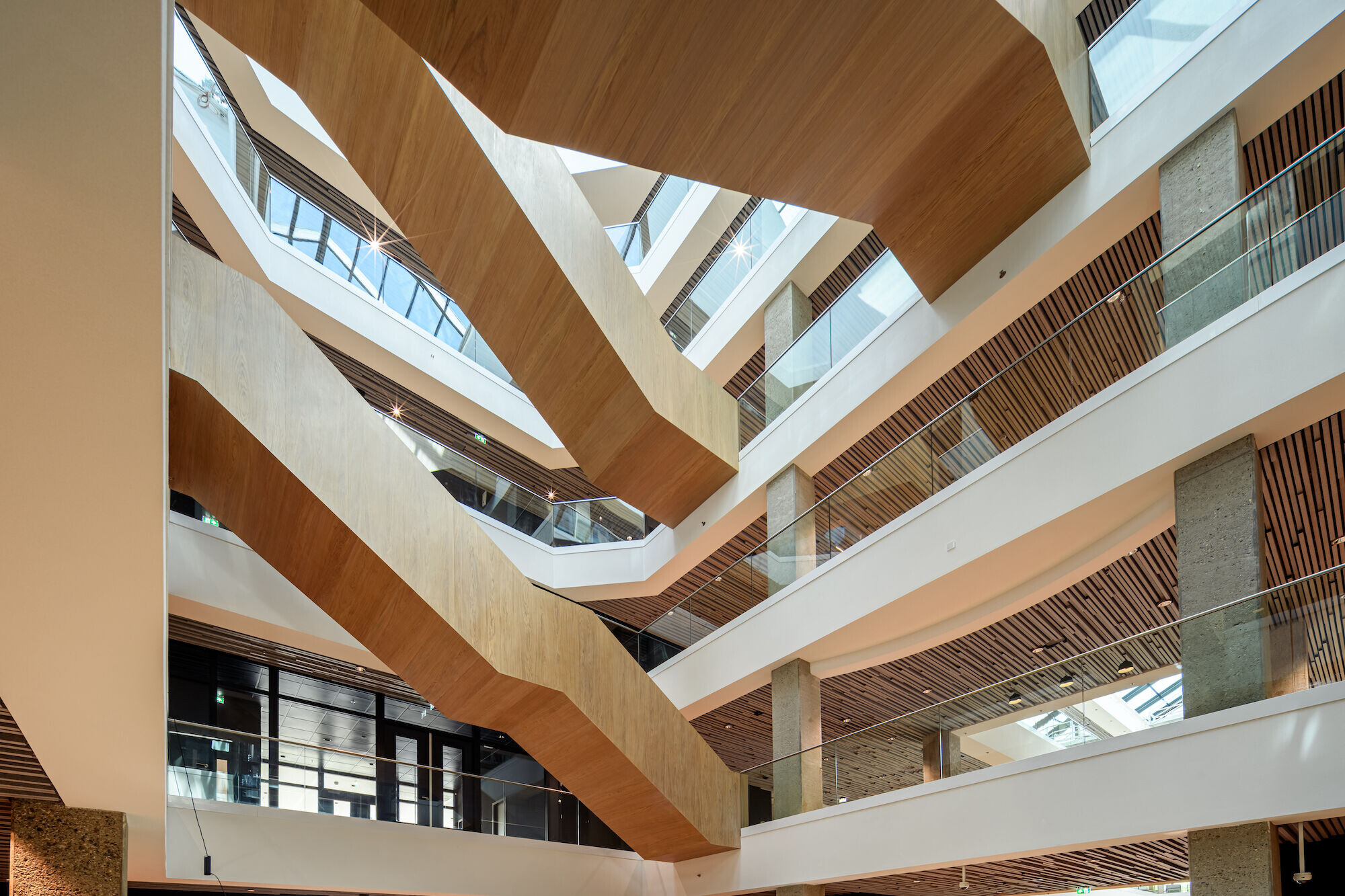

Wood is used throughout the interior, adding to its warmth and vitality. Bio-based materials include a poured floor covering made from vegetable oil, linseed oil, wood and cork powder, and natural pigments. Cabinets are made from a formaldehyde-free sheet material that consists of wheat straw and recycled wood. A large number of desks were restored in collaboration with a social workshop. Examples of the project’s recycled elements are carpet tiles made with waste from fishing nets and ceilings made using recycled PET bottles.