Depot Boijmans Van Beuningen is the first publicly accessible art depot in the world

Applied products
View all applied products

Depot Boijmans Van Beuningen, the first publicly accessible art depot in the world designed by MVRDV, has completed construction. Located in Rotterdam’s Museumpark, the depot features a new type of experience for museum visitors: a sturdy engine room where the complete collection of 151,000 objects is made accessible to the public. In addition to the various storage and care areas, the depot has a restaurant and an award-winning rooftop forest at a height of 35 metres. The construction completion paves the way for interior furnishings and the long process of moving the museum’s complete collection into their new storage facility. 
photo_credit Ossip van Duivenbode
Ossip van Duivenbode

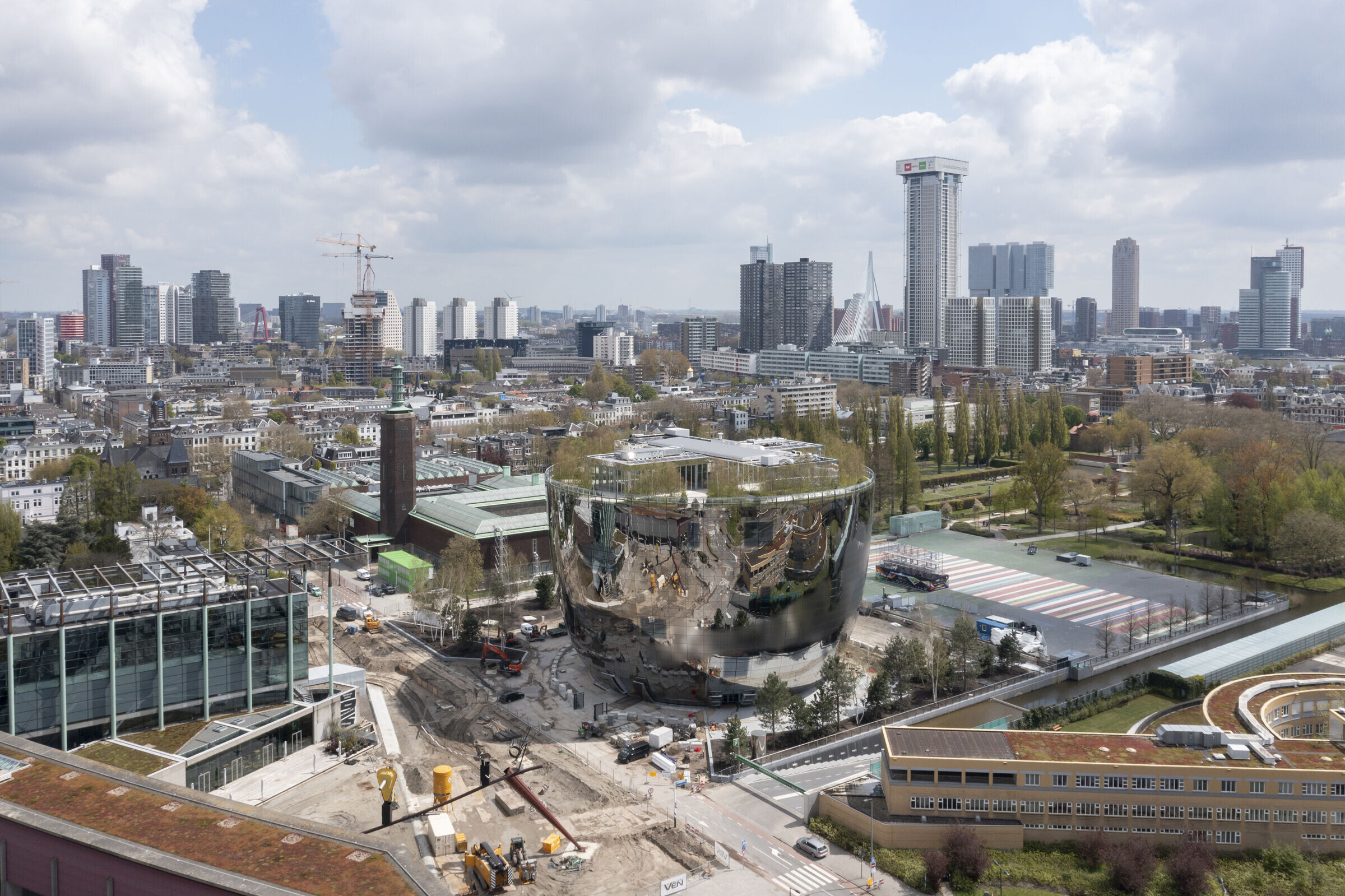
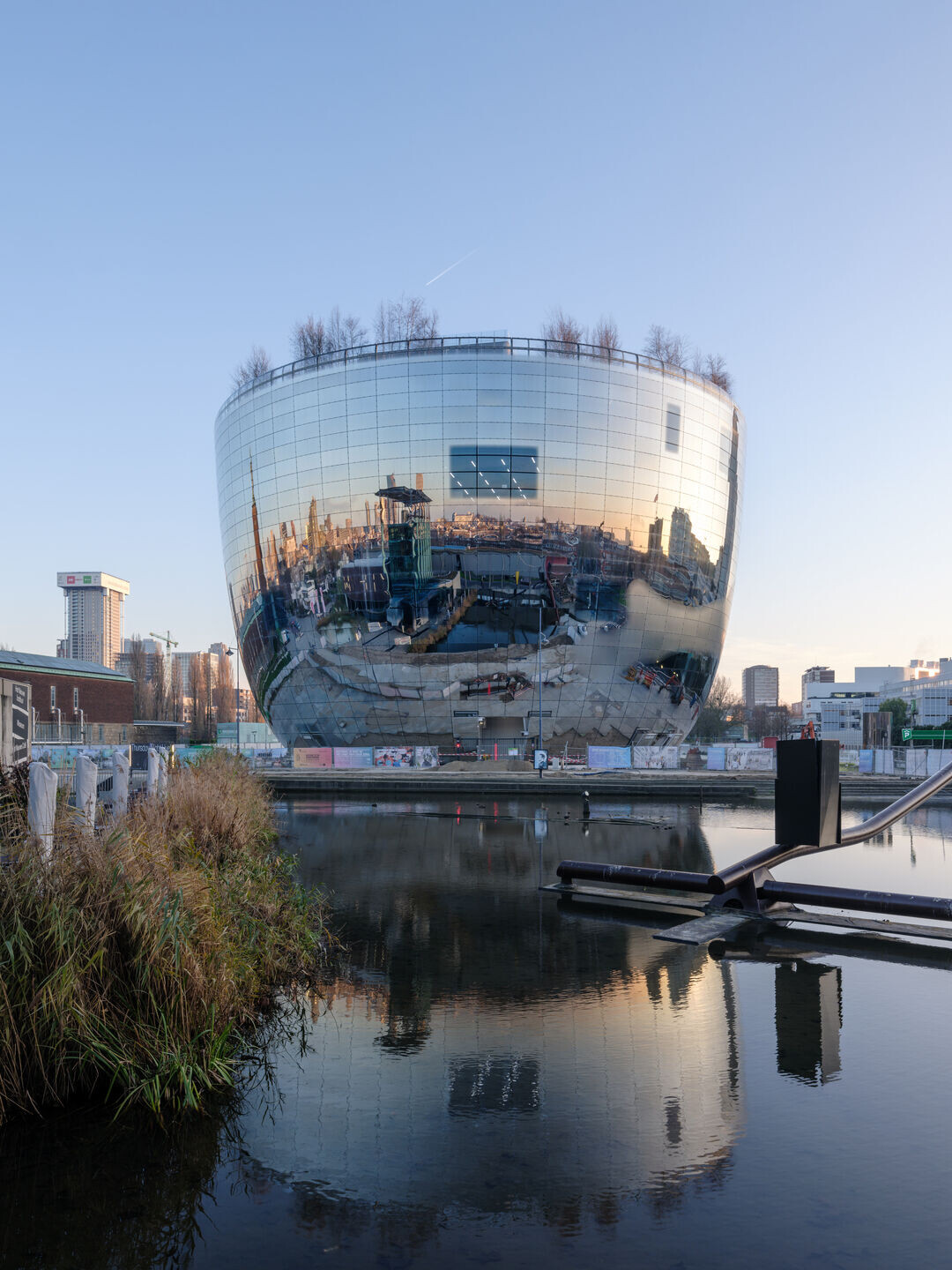
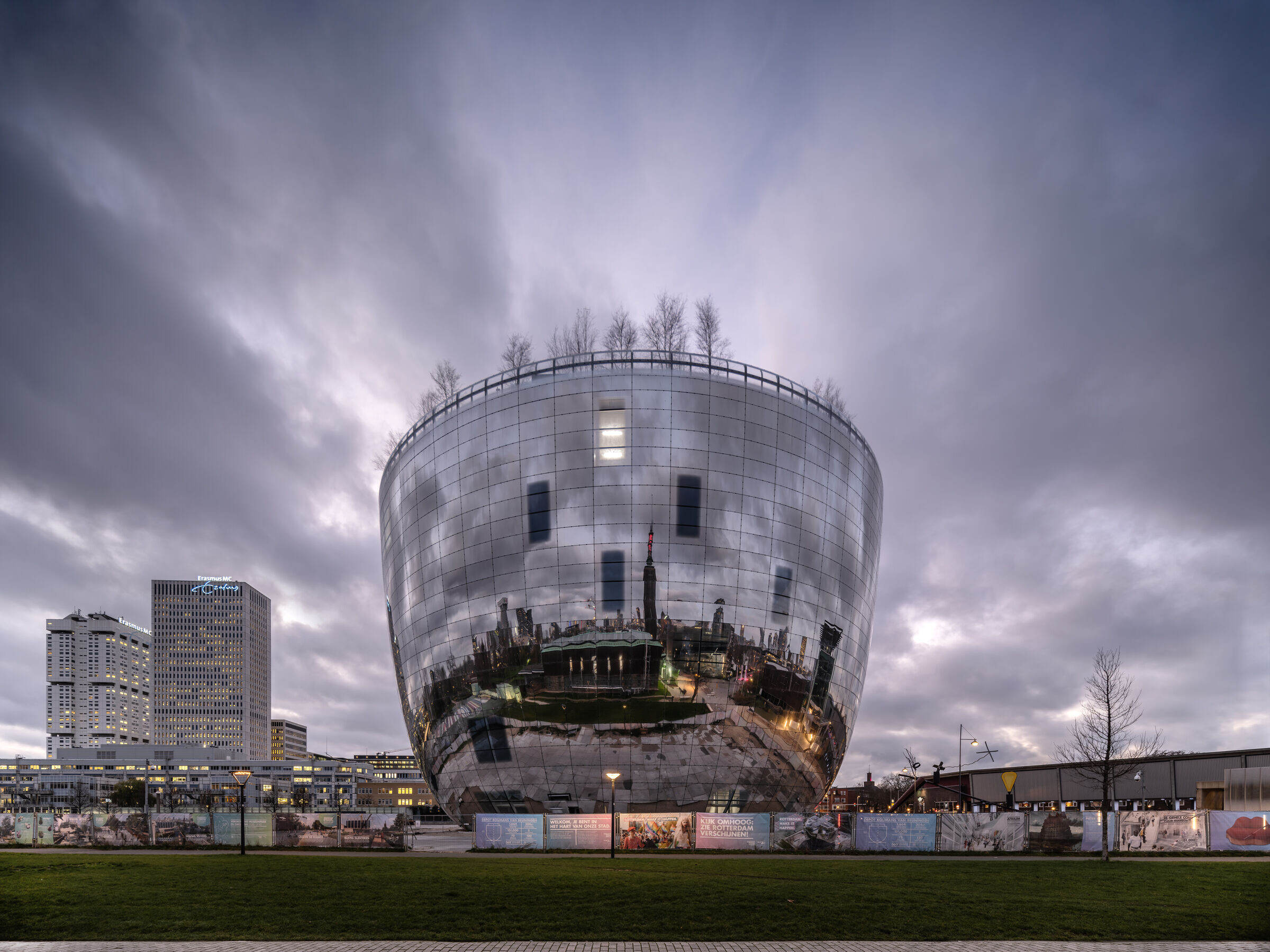
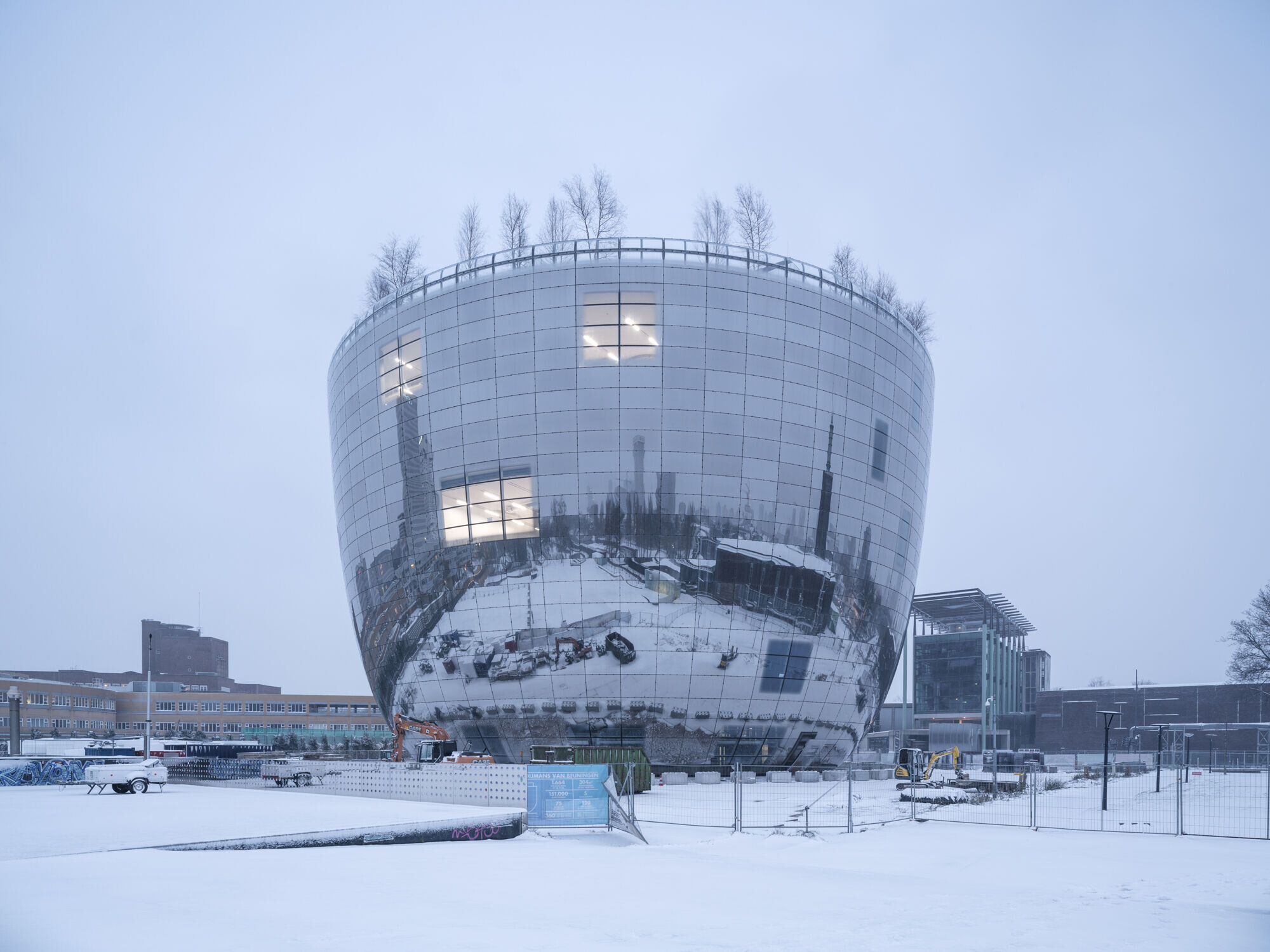
A 39.5-metre-high building ‘in the round’, the depot’s bowl-like form has a relatively small footprint. This form ensures that at the ground level, existing views into and routes through the Museumpark remain unimpeded and reduces the impact on underground water buffers, while an expansive rooftop public space with a restaurant provides access to inspiring views of Rotterdam. Comprising 6,609 square metres of glass subdivided into 1,664 mirrored panels, its reflective façade wears the trappings of whatever surrounds it: people passing by, Museumpark’s leafy grounds, the clouds, and Rotterdam’s dynamic city skyline. Thanks to this reflection, the building is already fully integrated into its surroundings, despite its not insignificant size of 15,000 m2. It enlivens its surroundings while establishing strong relationships with the park and the neighbouring buildings. 
photo_credit Ossip van Duivenbode
Ossip van Duivenbode

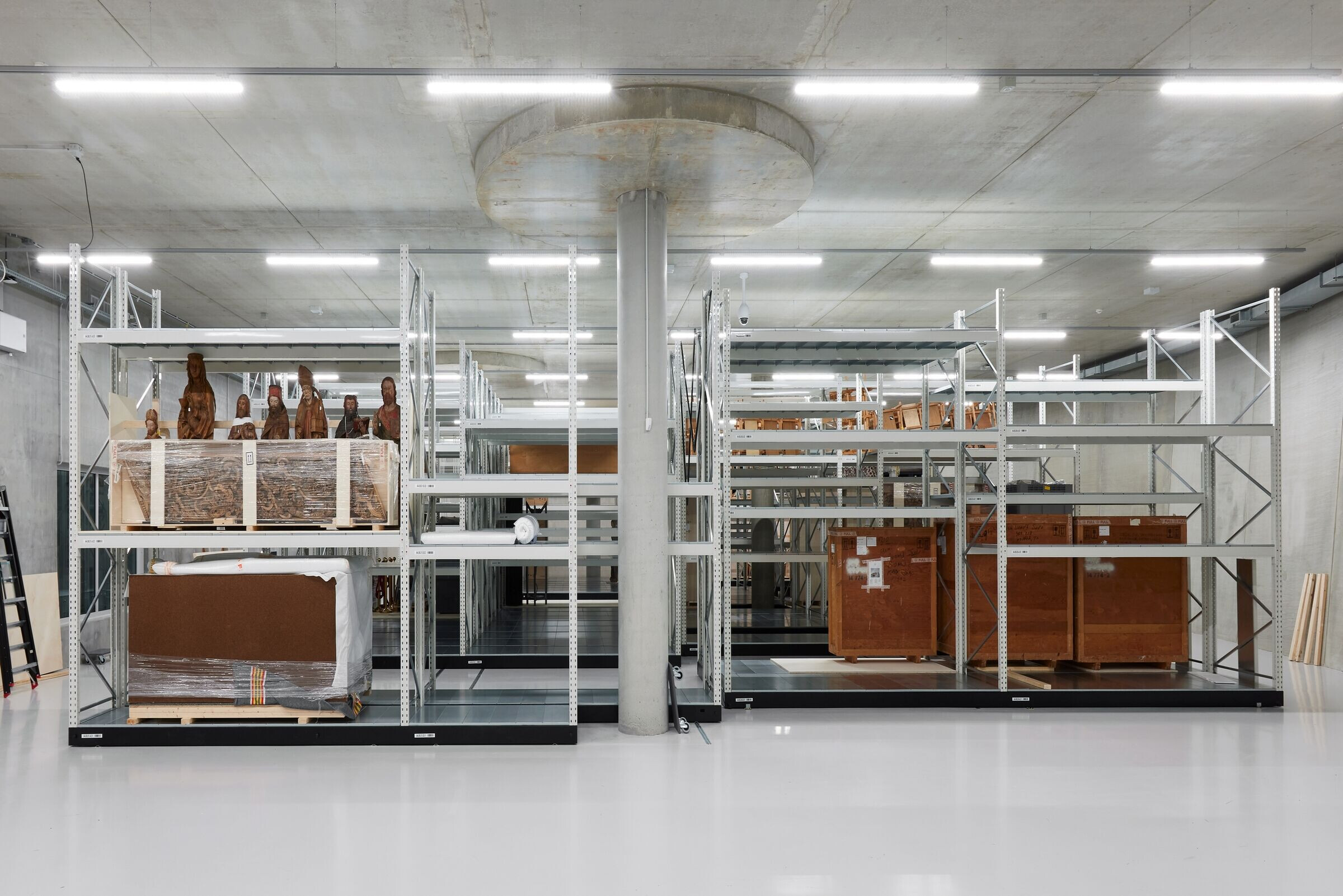
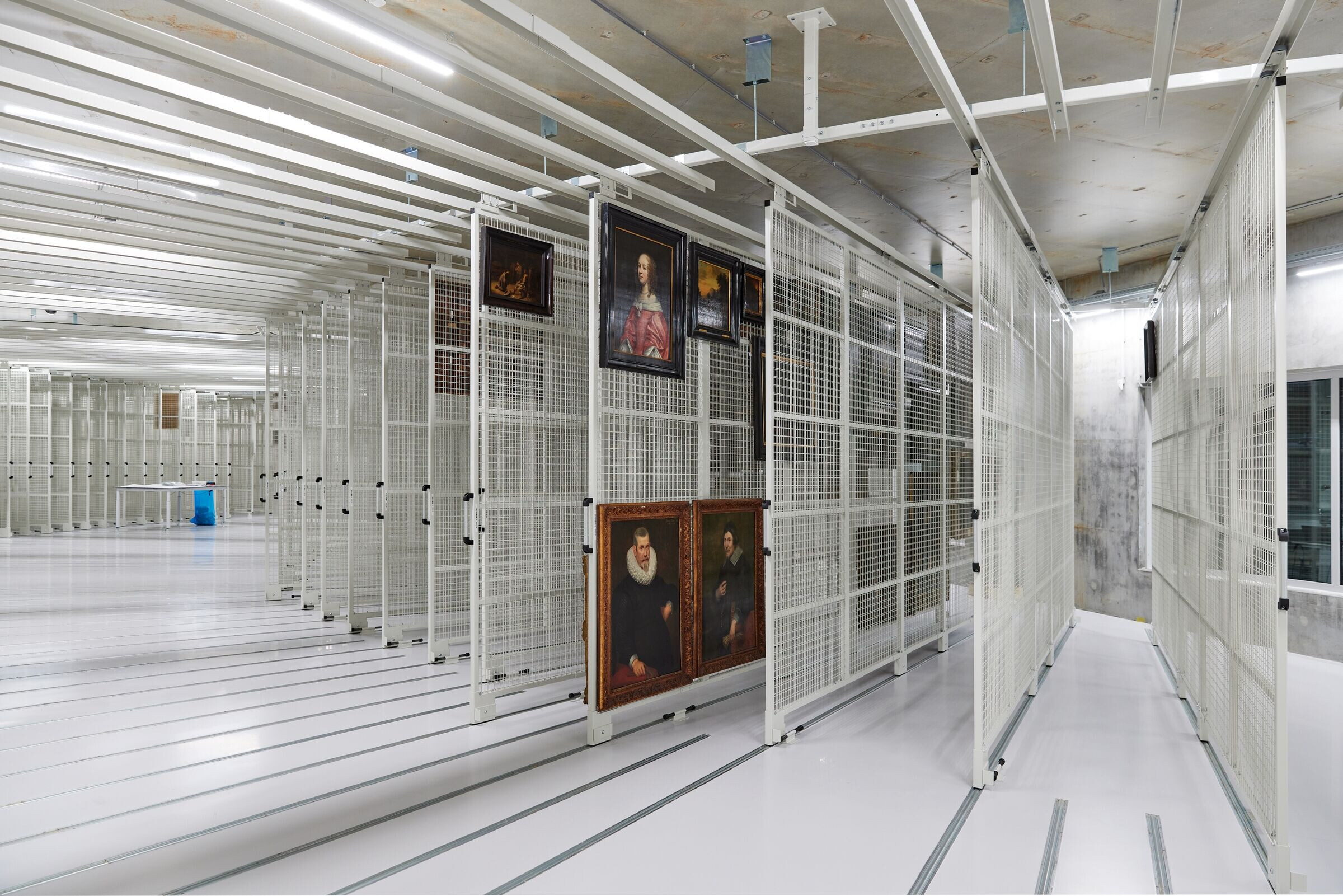
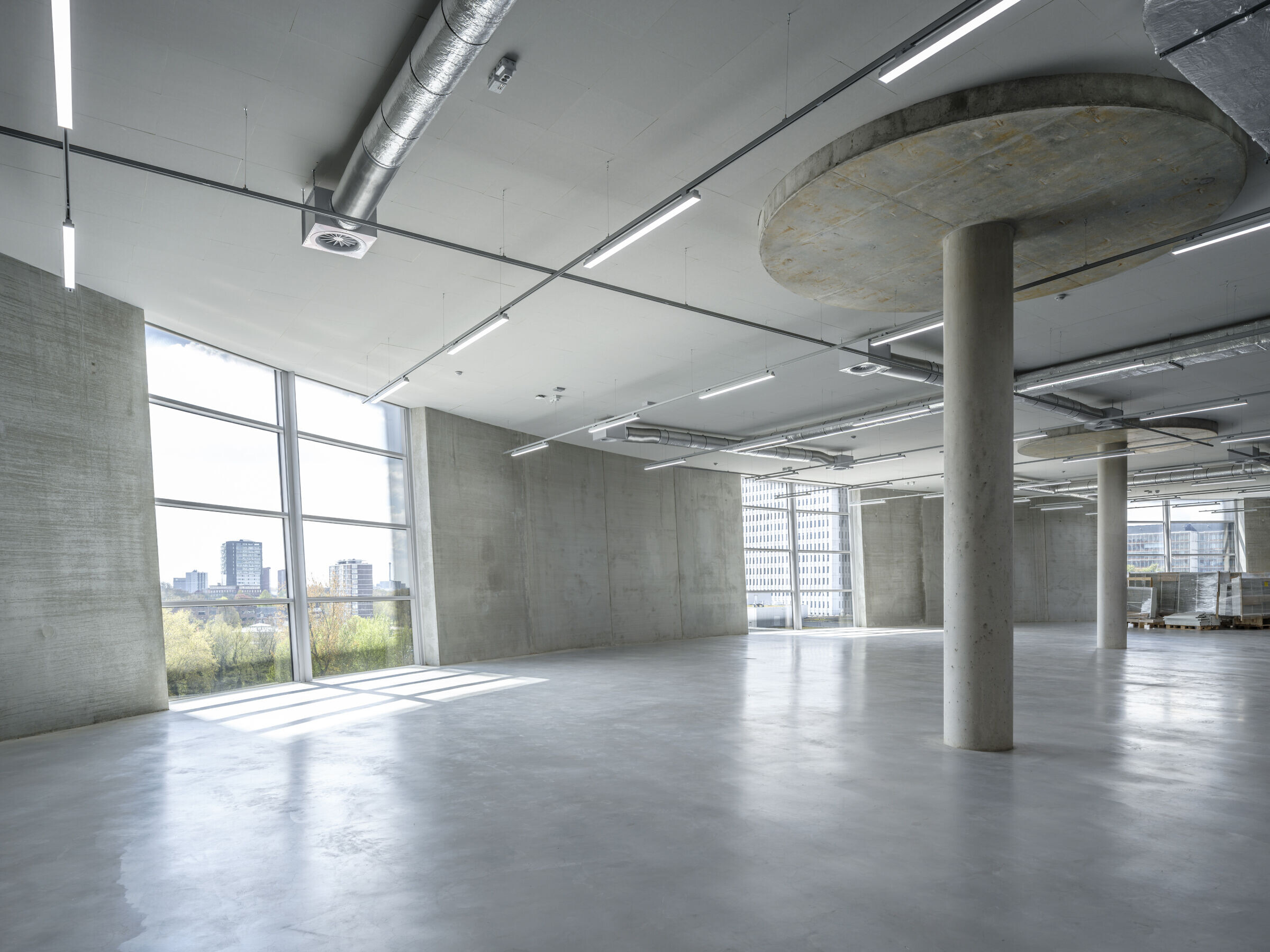
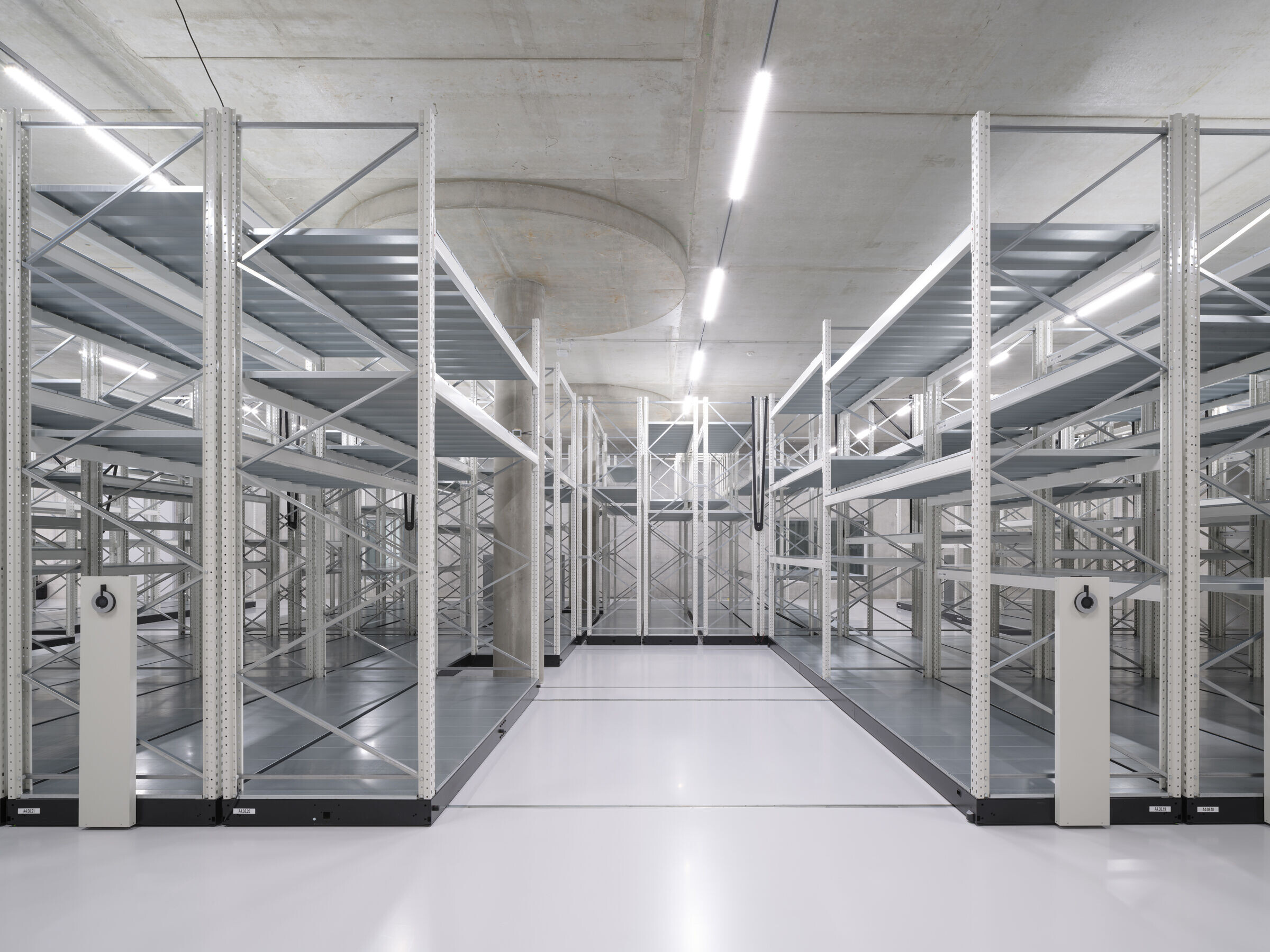
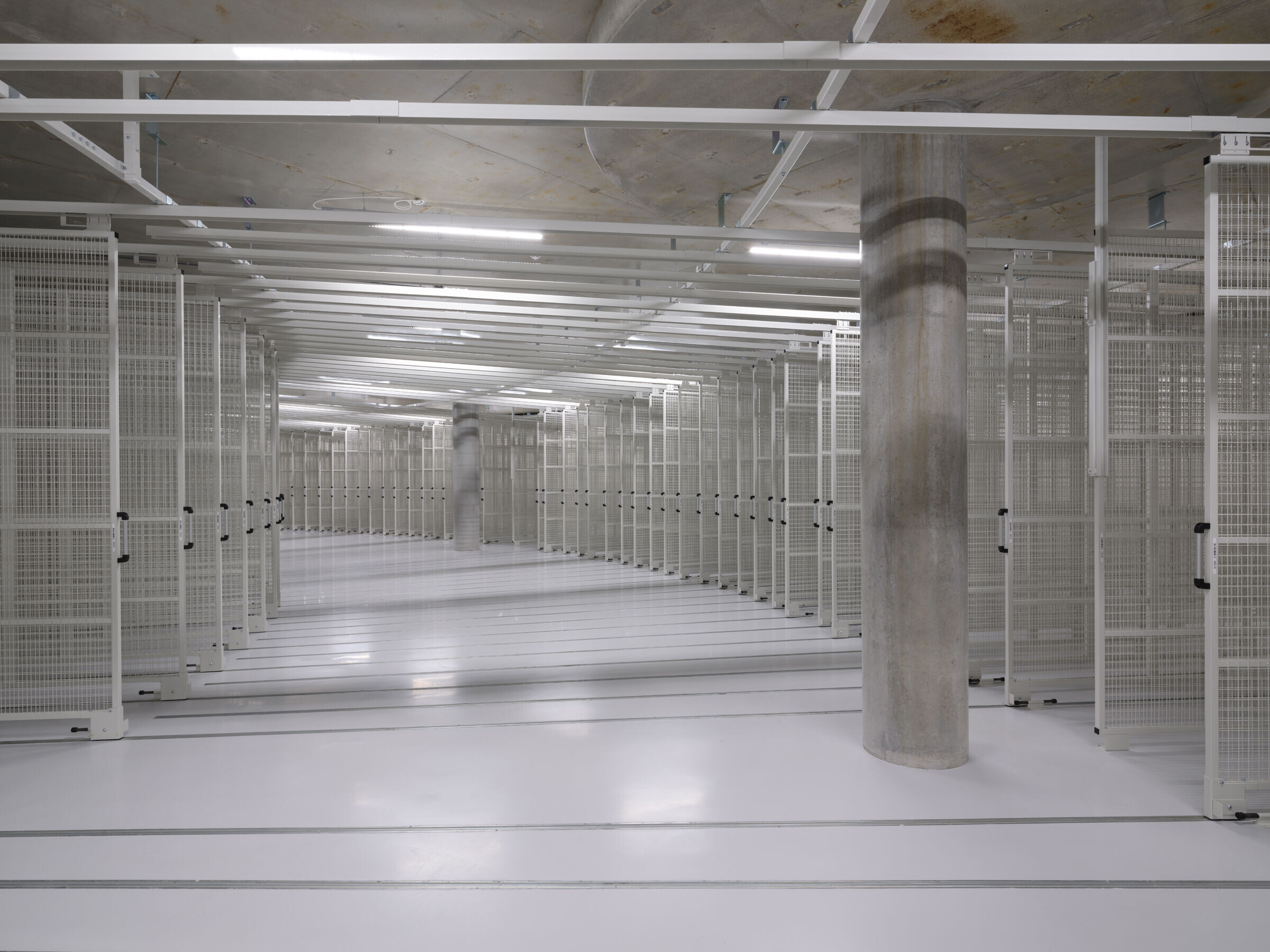
In the depot, artefacts will be stored and exhibited according to their climatic requirements, as opposed to movement or era. Each storage space is climate controlled and organized into five different climate zones, arranged according to works of art produced with different materials: metal, plastic, organic/inorganic, and photography. 
photo_credit Ossip van Duivenbode
Ossip van Duivenbode

Winy Maas, founding partner of MVRDV: “With this construction completion, now the museum and the users can start to inhabit the building and fill its spaces with priceless art. Although it will take another year before the real opening, the completion is a special moment for all: the museum, the city of Rotterdam, Stichting De Verre Bergen and of course for the contractor BAM, the many construction workers and subcontractors who persisted during the difficult circumstances we all faced due to the pandemic. The depot design is daring, and its success comes from the direct dialogue with all parties involved – from the person calculating the exact curvature of the mirroring panels and the construction worker who put up the glass vitrines to the company that co-designed our rooftop forest.” 
photo_credit Ossip van Duivenbode
Ossip van Duivenbode

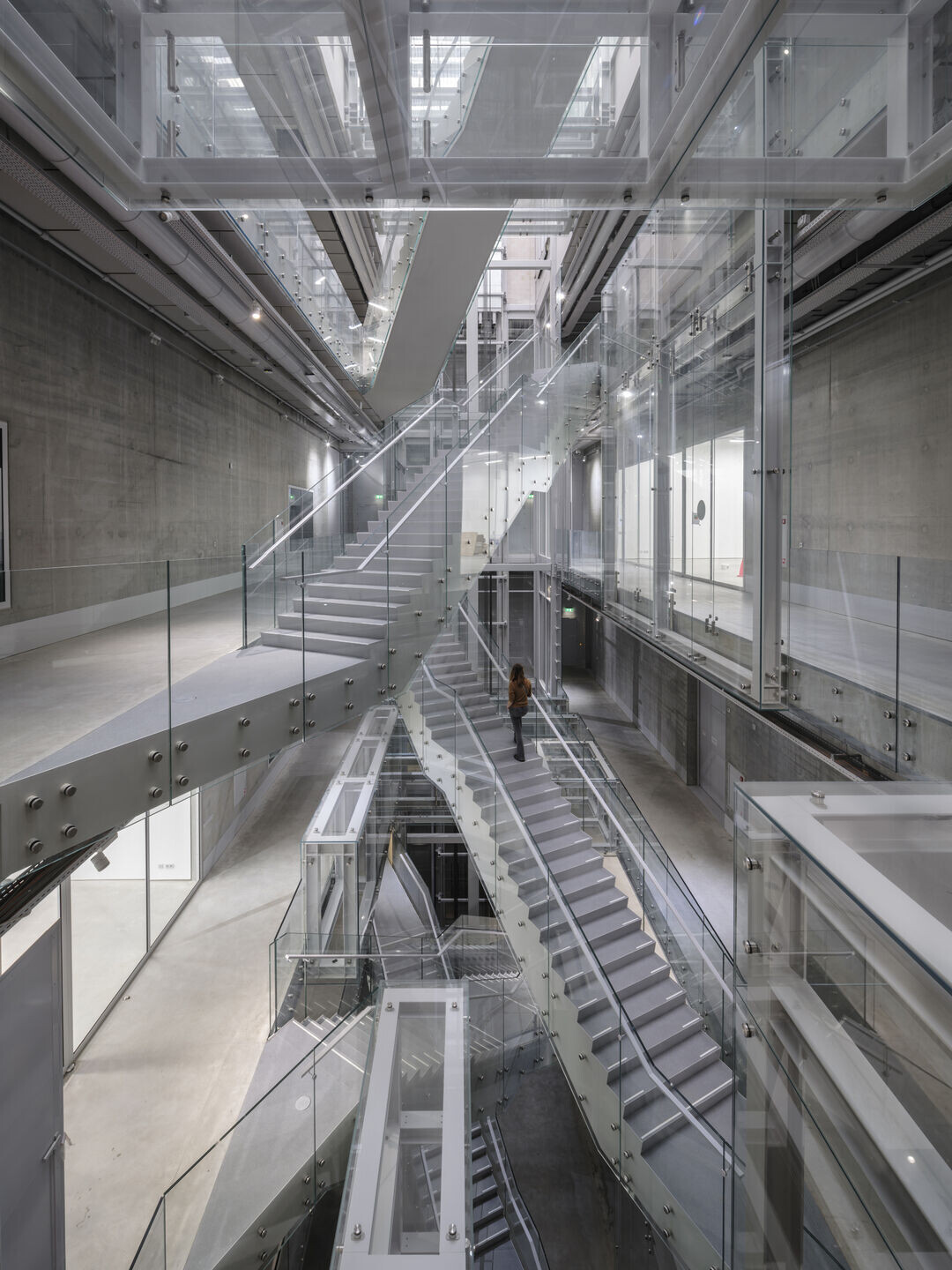
The building’s eyecatcher is the atrium with crisscrossing staircases and suspended glass display cases showing exhibitions of works selected by museum curators. This atrium will lead visitors to exhibition rooms and curators’ studios, offering them a unique behind-the-scenes experience and the chance to learn how a world-renowned museum maintains and cares for its art collection. Art is displayed throughout the building, beginning in the ground floor lobby and continuing along the entire route through the building, extending even to the rooftop restaurant. Outside this restaurant, a rooftop forest at a height of 35 metres will provide another public attraction, accessible via an express elevator from the ground floor, and populated by 75 multi-stemmed birch trees standing several metres tall. The rooftop offers visitors breath-taking vistas across the city of Rotterdam. 
photo_credit Ossip van Duivenbode
Ossip van Duivenbode

Sjarel Ex and Ina Klaassen, directors Museum Boijmans Van Beuningen: “This is a working building in which the most important consideration is what the building can do: to look after our collection while still being open to the public. Next year the entire collection of Boijmans Van Beuningen will once again be visible on one spot for the first time since 1935. We are convinced that making thecollection accessible shows how much we care and how well we take care of it. This is something that the inhabitants of Rotterdam will be proud of; something that they want to see with their own eyes, because they partly own this enormous artistic treasure.” 
photo_credit Ossip van Duivenbode
Ossip van Duivenbode

Depot Boijmans Van Beunigen is a collaboration between Museum Boijmans Van Beuningen, the Municipality of Rotterdam and the De Verre Bergen foundation. The depot was designed by MVRDV, and made possible by BAM Bouw en Techniek. In Autumn 2021 it will open its doors for the public. From September 25th to 27th 2020 a sneak preview is organized for the inhabitants of Rotterdam. All 7, 500 (free) tickets for this event were reserved within three hours
photo_credit Ossip van Duivenbode
Ossip van Duivenbode
photo_credit Ossip van Duivenbode
Ossip van Duivenbode
photo_credit Aad Hoogendoorn
Aad Hoogendoorn
photo_credit Aad Hoogendoorn
Aad Hoogendoorn

Project credits

Architects
Photographers
Door systems, facade systems
Entrance solution
Interior Partitioning doors
Wayfinding and visitor experience

Project data

Project Year
2021
Primary Building Material
Concrete
Glass
Building Area
15000 m2

Depot Museum Boijmans: Innovative exterior, innovative interior

Applied products
View all applied products

In Rotterdam, a shiny new building has been erected: Depot Museum Boijmans. The 40m-high building is completely covered in mirroring panels that reflect the city around it. The building will be used to store art from the neighbouring art museum and will be open to public.

Practical and aesthetical solution

In this building, the combination of practical use of space and aesthetics are well combined. A large part of the building is used for storage and is divided in sections. Large interior doors were required that would provide a secure and practical partitioning function without blocking the ventilation shafts and ceiling lights. The Compact folding door proved to be the best option here.

Compact door without overhead tracks

This Compact sectional door folds its panels into a compact package above the door opening. No overhead tracks are needed, offering free space on the ceiling for installations and lights. The doors were manufactured with all glass panels, top to bottom, and can be opened and closed with a security pass.

Brand description

Rolflex Netherlands BV is the developer and producer of the Compact folding door. The Compact folding door is a sectional industrial door which folds up as it opens, the panels are stacked above the door opening. This unique door is delivered worldwide through a network of resellers. The Compact folding door has many advantages: no tracks on the ceiling, limited space needed. This is the ideal solution in challenging spaces, e.g. with cranes, installations, windows or a sloped roof. The door is available in different variations, from sandwich panels to full transparent panels. Additional features like a wicket door are optional. The Compact door is simply fitted on a steel frame and only needs a flat surface for fitting at the sides. The door is available in any colour.

Wayfinding and visitor experience in Depot

Depot Boijmans Van Beuningen is the world’s first publicly accessible art depot. Inside the iconic building, visitors are immersed in what goes on behind the scenes of a museum and experience what maintaining and caring for an art collection with great diversity actually entails. Silo developed the visitor experience for the utility building, emphasising discovery and collection.

Caption

Work building behind the showroom
Depot is not a museum but a functionally designed work building for preserving, restoring, packaging and transporting artworks. In some spaces, you are welcome; in others, you are triggered to peek inside. The idea that you are ‘behind the scenes’ during your visit is translated into an integral concept for interaction, digital screens, wayfinding and signage, and designed as an extension of the architecture.

Caption

Operations control centre
In the entrance zone, where visitors gather for guided tours, hangs an enormous digital dashboard, as you would expect in the control room of a warehouse. It displays not only visitor information but also a cross-section of the building and data about the collection and climate zones in the building. Live camera feeds show what is currently happening in the building.

Caption

“You get the feeling of having accidentally walked into the staff entrance of a museum.”

Rene Toneman, Creative Director Silo

Caption

Signage as an extension of the architecture
In the atrium with its spectacular zigzagging stairs, the emphasis is on the art objects you see behind the large windows of the depots and inside the thirteen floating glass display cases. Coding and functional identification for rooms are derived from the building plans and subtly applied as if printed into the concrete. The illuminated directional signs in the entrance area and on the 6th floor have also been carefully integrated into the concrete, glass and grey interior: neutral, modular and functional.

Caption
Caption
Caption
Caption


Brand description

Hello! We are Silo, experts in spatial branding.

We create immersive offline experiences in an increasingly online world. Our strategic thinkers and passionate designers specialise in distinctive work that aligns with brand, surroundings, and people. We make unique wayfinding designs, powerful spatial concepts, or branding identities that seamlessly translate from digital to physical. All designed and made in close collaboration with our clients and partners.

It’s all about finding the magical balance between use and emotion, as we believe that a physical experience is not merely about function but rather a deeper connection through inspiration and wonder.

Products applied in Commercial

Door technology in the Boijmans art warehouse in Rotterdam

Door technology in the Boijmans art warehouse in Rotterdam
© Hystrix
Applied products
View all applied products

A comfortable way to experience art: customised door technology in the Boijmans art warehouse


The Boijmans Van Beuningen museum has created a complex art storage facility in the Netherlands in Rotterdam. Reliable door technology from GEZE, specifically tailored to customer requirements, fulfils high energy efficiency and fire protection stipulations while managing flows of visitors.


Ease of access with a high standard of design: sliding door systems for the Boijmans Van Beuningen art warehouse


The Boijmans Van Beuningen art warehouse is an innovative building: a public art storage facility where important artworks are made accessible to the public, an enormous undertaking subject to the highest security precautions Here, visitors can view more than 150,000 artworks on 6 floors and in 5 different climactic zones. The art warehouse is sorted based on the artworks’ storage, humidity, and room temperature requirements – not based on art history periods, for instance. This means the Boijmans Van Beuningen art warehouse offers all new opportunities to rediscover artworks.

photo_credit © Hystrix
© Hystrix

Sliding doors can realise a diverse range of usage requirements.


Guiding visitor flows and increasing security at the Boijmans Van Beuningen art warehouse


In addition to the complex requirements for storing artworks, managing flows of visitors while ensuring their comfort and safety were significant challenges. Sliding doors ensure comfortable and secure access in the façade and inside the art warehouse. Because they function quietly and have a space-saving, understated design, automatic sliding door systems integrate optimally into the sophisticated architecture while granting barrier-free access, allowing all visitors to enjoy the artistic treasures.


Automatic sliding doors offer several advantages:

  • Automatic doors ensure good movement of visitors.
  • They also improve energy efficiency by keeping warm air inside or outside, depending on the climactic conditions/season.
  • Sliding doors improve building safety by allowing the doors to be opened in only one direction.
  • Automatic door systems can be connected to the fire protection concept and emergency exit protection.
 
photo_credit © Hystrix
© Hystrix

The Slimdrive SL sliding door system integrates cleanly into the mirrored surface of the exterior façade.


Customised sliding door solutions for restaurants and rooftop gardens


There is a restaurant with a landscaped rooftop patio on the roof of the warehouse. The areas are open to the public each evening. Our Slimdrive SL-RC2/WK2 automatic linear sliding door systems impress in this application with their low height, clear design lines and excellent function, even with high foot traffic.


Increased security and visitor management in staircases


The challenge for the sliding door system used inside the building was to ensure the right flow of visitors. Our solution: the access to the staircase in the shop and the access to the upper floors are equipped with Slimdrive SL NT door systems. These are equipped with a sensor that has been set so that both sides can be used as exits from the stairwell. A sliding door provides access to the staircase from the shop, in order to properly manage the flow of visitors.

photo_credit © Hystrix
© Hystrix

The Slimdrive SL was custom colour-matched to the interior design of the staircase.


Advantages of the Slimdrive SL NT

  • Can be networked, and integrated into the building automation via open BACnet standard
  • Quiet-running, low-wear direct current drive with a height of only 7 cm
  • Automated error detection and logging
  • Freely configurable inputs and outputs for different functions
  • Integrated rechargeable battery for emergency opening, for instance in the event of a power failure
  • Various mechanical and electrical locks are available
  • Self-cleaning roller carriage
 

Additional advantages of the Slimdrive SL-RC2/WK2

  • Certified burglar resistance according to resistance class RC2
  • The RC2 function is only enabled in night mode
  • Fitted with rod locking and reinforced profile components
 

Door solutions individually adapted to customer requirements


In addition to requirements for security and function, design aspects were also an important focus for the art warehouse project. The Slimdrive SL is the ideal choice in this respect as well: the super streamlined drive design perfectly integrates into the futuristic architecture of the warehouse. The drive units were colour matched to the customer’s individual needs both in the stairwell and on the rooftop patio: they are the same colour as surrounding components and now blend seamlessly into the design.


Art warehouse facts & figures


- Architects: MVRDV

- Total costs: € 90,000,000

- Height: 39.5 m

- Total area: 6,609 m2

- Total floor area 15,541 m2

- Seven floors

- 14 warehouse rooms

- 5 climactic zones

Brand description

GEZE is one of the world's leading companies for products, system solutions and comprehensive service for doors and windows. The specialist for innovative and modern door and window technology has been using its thorough industry and professional expertise to achieve outstanding results that make buildings more liveable for over 160 years. GEZE employs about 3,500 people worldwide. GEZE develops and manufactures products at our headquarters in Leonberg. The company has additional production sites in China, Serbia and Turkey. With 37 subsidiaries all over the world and 6 branch offices in Germany, GEZE offers outstanding proximity to our customers and excellent service.

Products applied in Commercial , Cultural , Educational , +5
Share or Add Depot Boijmans Van Beuningen to your Collections