Two Manhattan West marks the final major office tower within the Manhattan West development, a seven-million-square-foot mixed-use neighbourhood on New York City’s West Side. Developed by Brookfield Properties and designed by SOM, the tower delivers two million square feet of office space on a site long considered nearly impossible to build on. Positioned at Ninth Avenue and West 31st Street, the building sits directly above active rail infrastructure, where buildable land was previously limited.
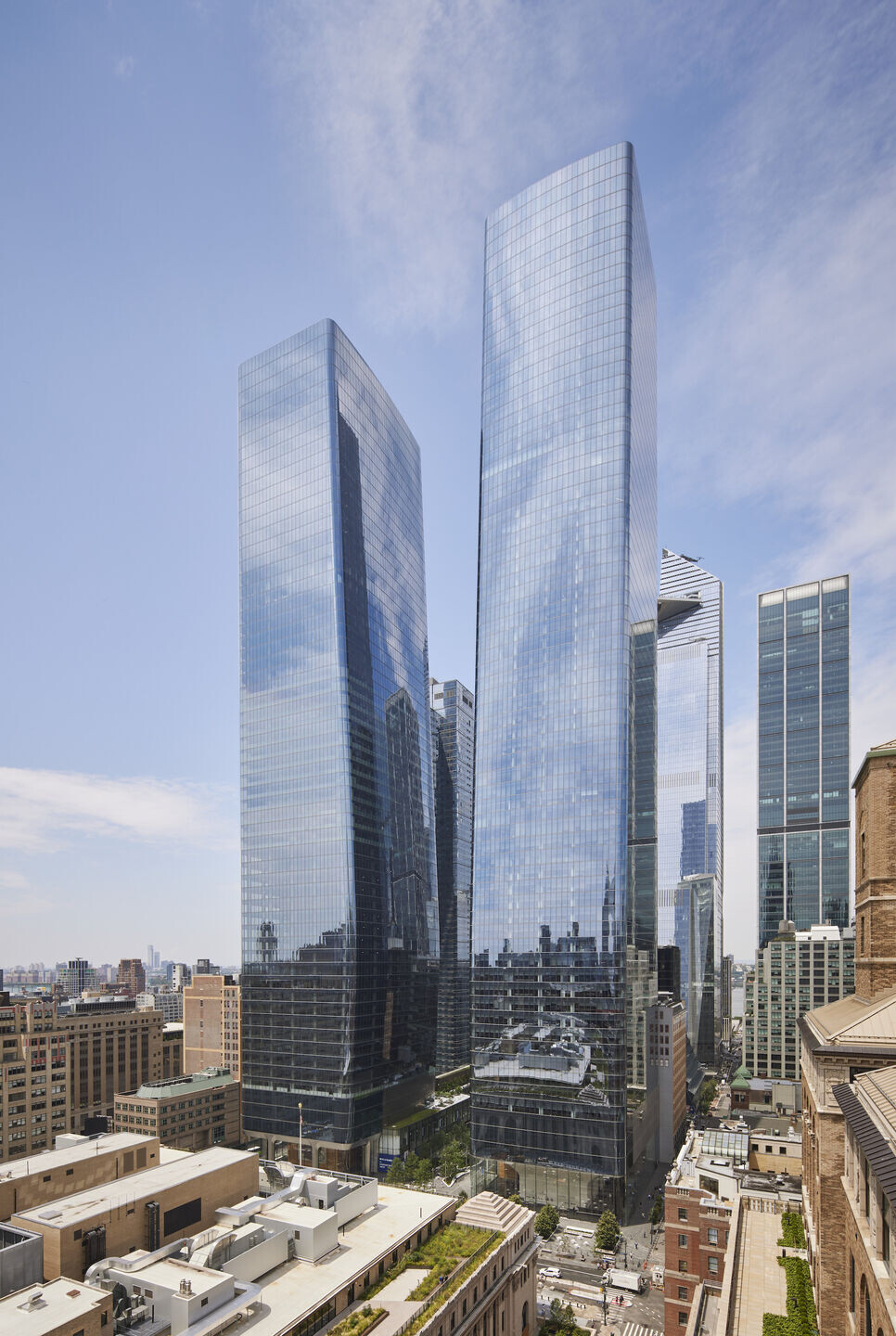
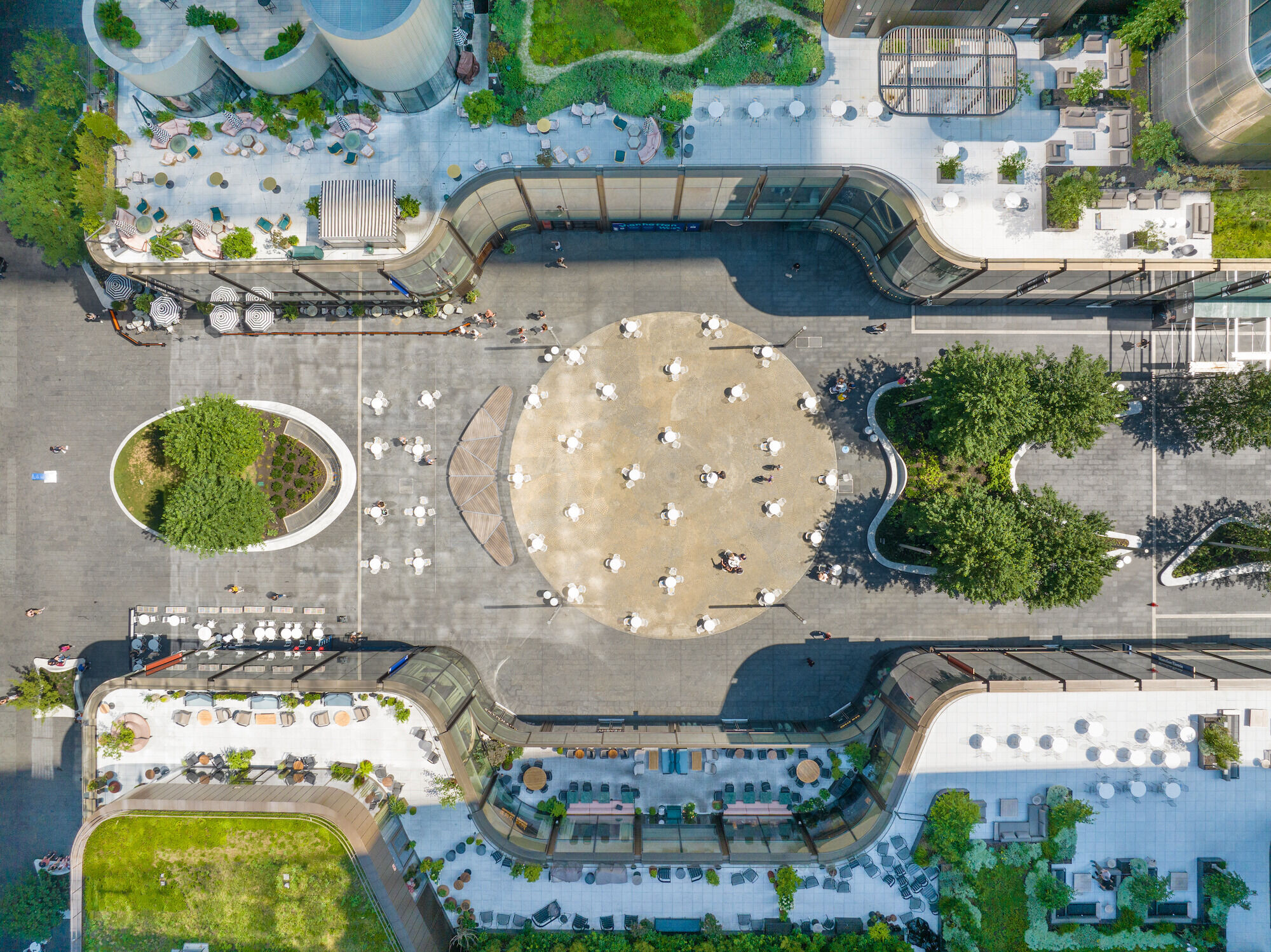
The project concludes a development process more than four decades in the making, transforming a former rail yard into a connected, pedestrian-oriented district. Alongside offices, the wider Manhattan West campus integrates residences, hospitality, retail, and two acres of public space, establishing continuity between Penn Station, Moynihan Train Hall, and the Hudson River.

Building above the city’s infrastructure
Two Manhattan West occupies one of the most technically demanding sites in New York. The tower is constructed above multiple active rail lines, requiring a structural strategy that negotiates limited ground contact. Only half of the central core reaches solid ground, while the remainder is supported by perimeter mega-columns aligned with gaps between the tracks below.
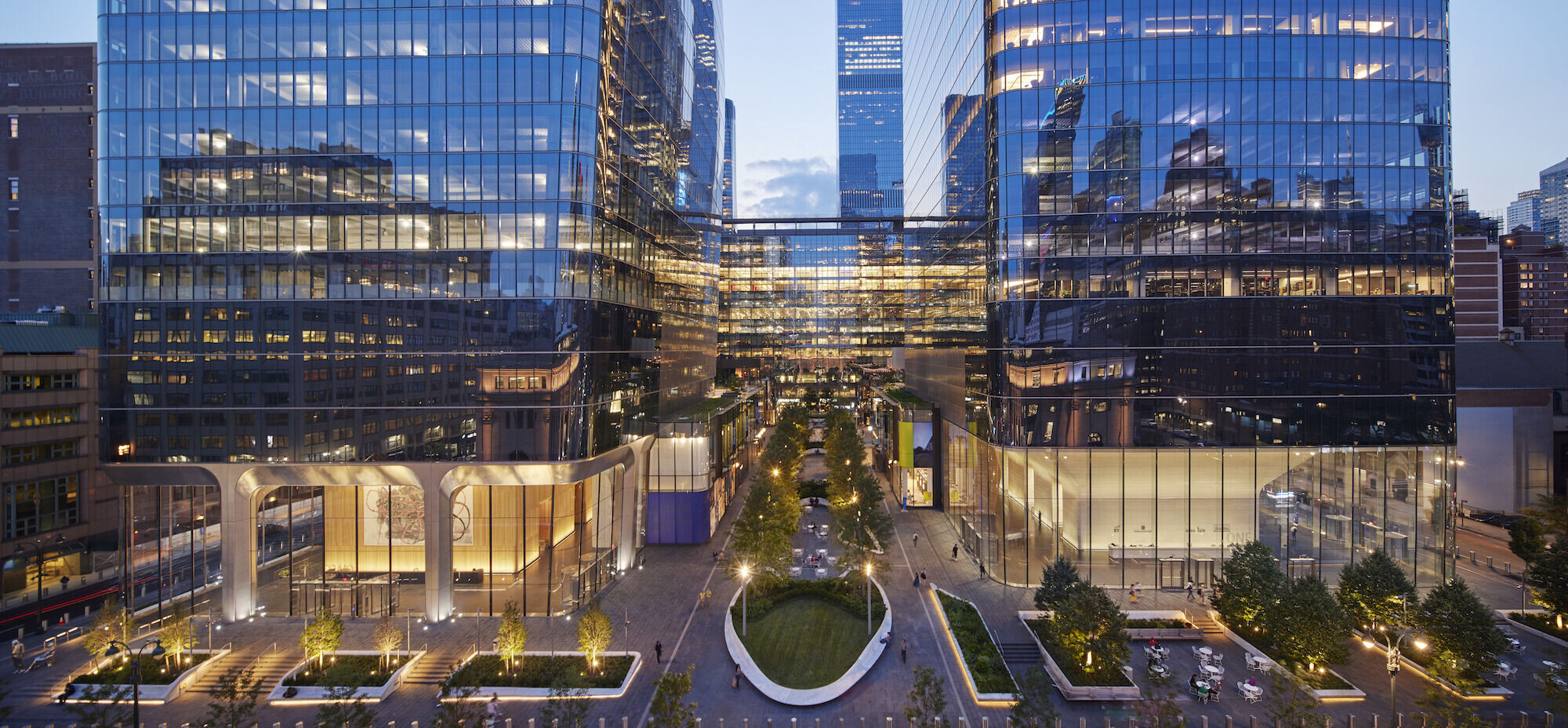
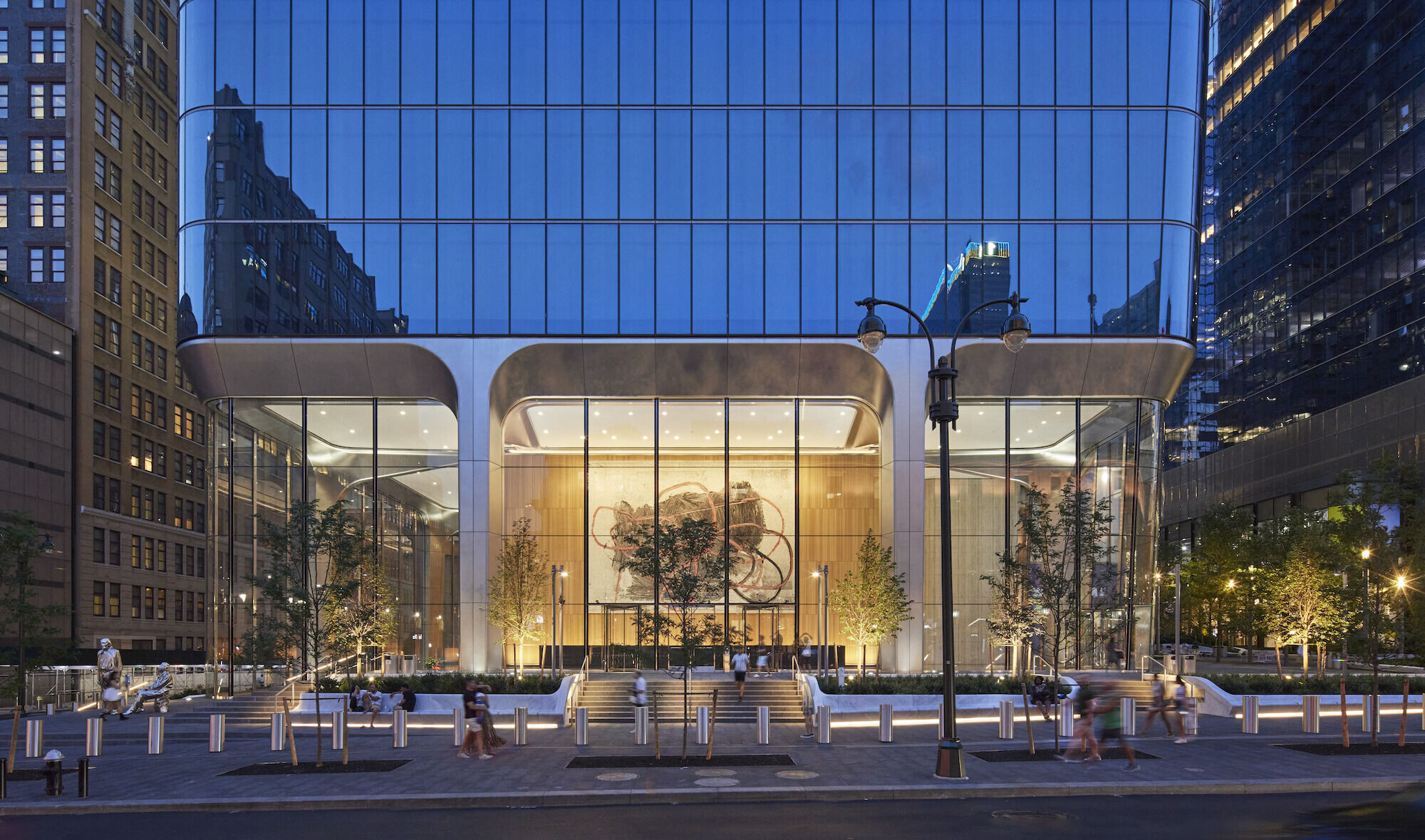
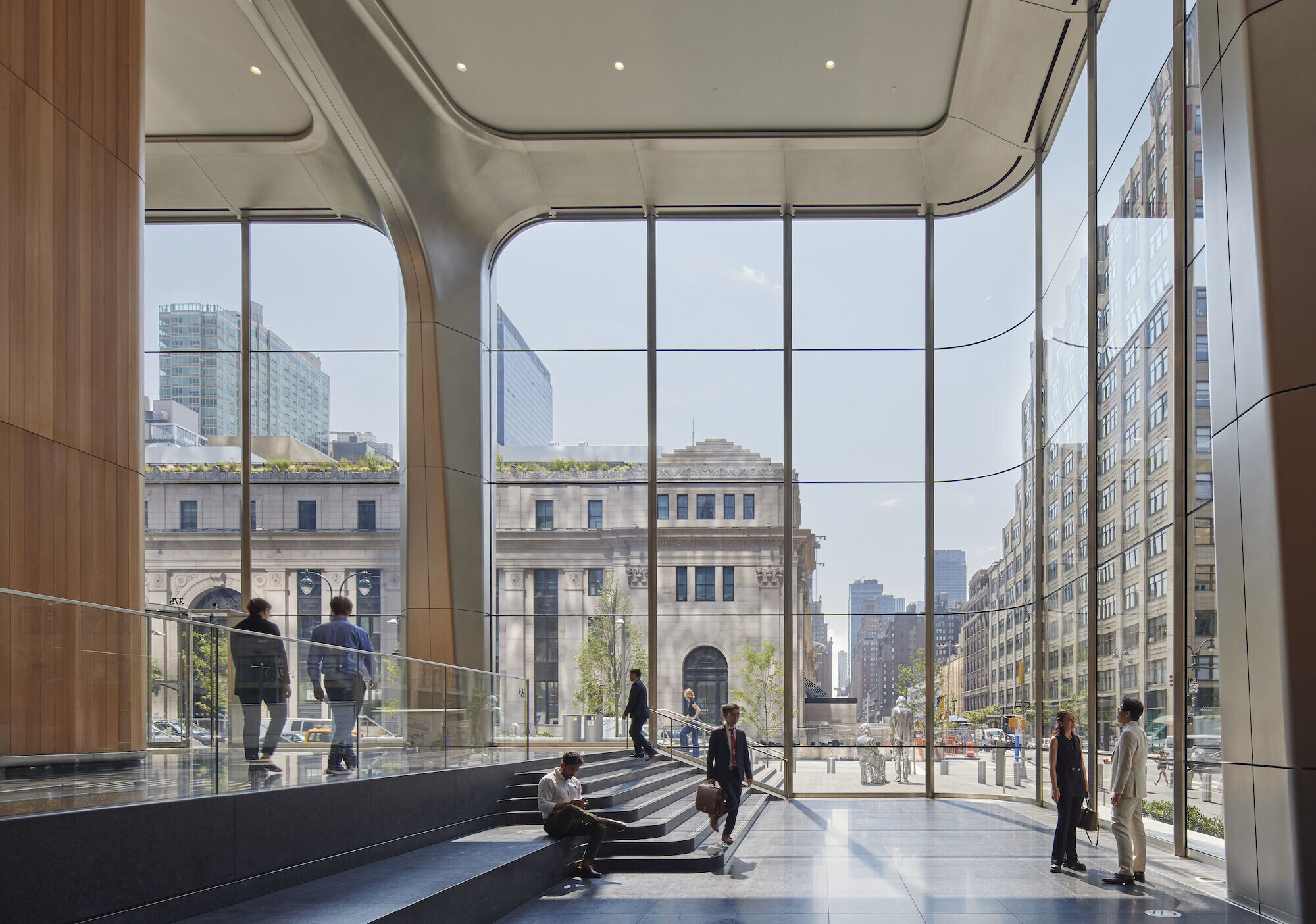
These sculpted columns are both structural and architectural. Visible at street level, they express the engineering logic of the building and make its structure legible within the public realm. The result accommodates site constraints while maintaining flexibility for future use.
A gateway to Midtown’s westward expansion
Together with One Manhattan West, completed in 2019, the tower forms a gateway into the development and the westward extension of Midtown. The two buildings are unified by curved corners, monolithic massing, and high-performance building envelopes. Their forms are restrained, allowing material quality and proportion to define their presence.
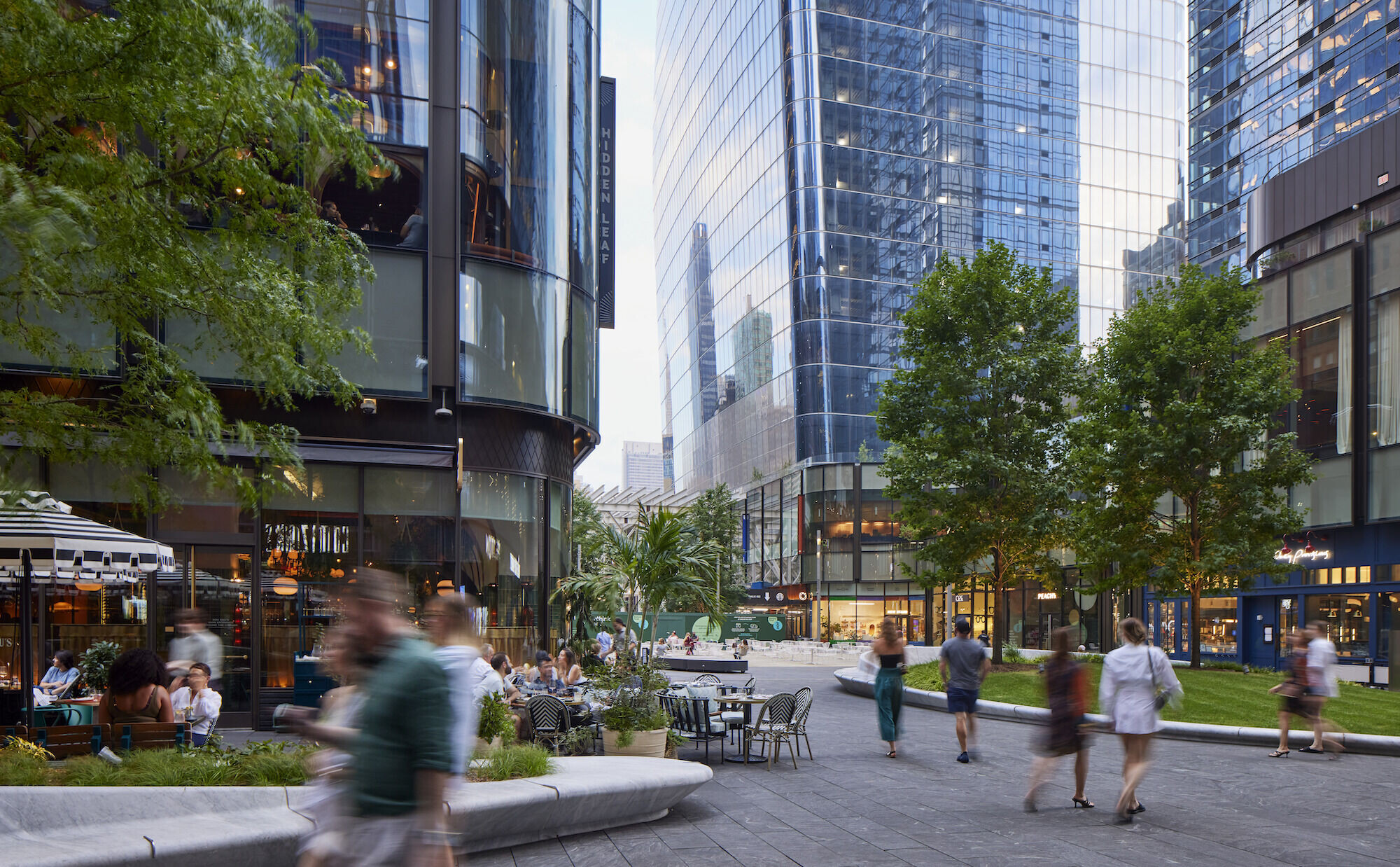
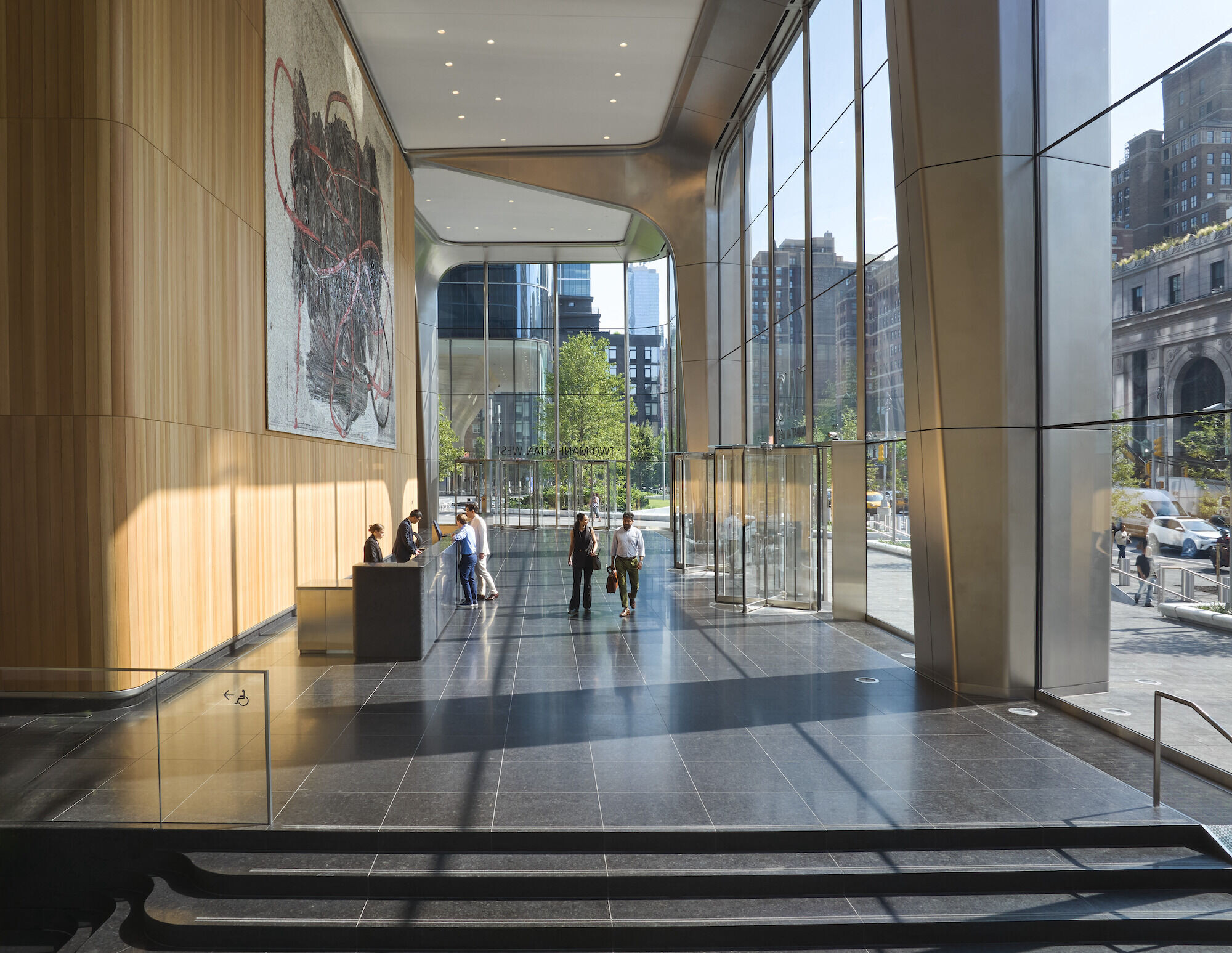
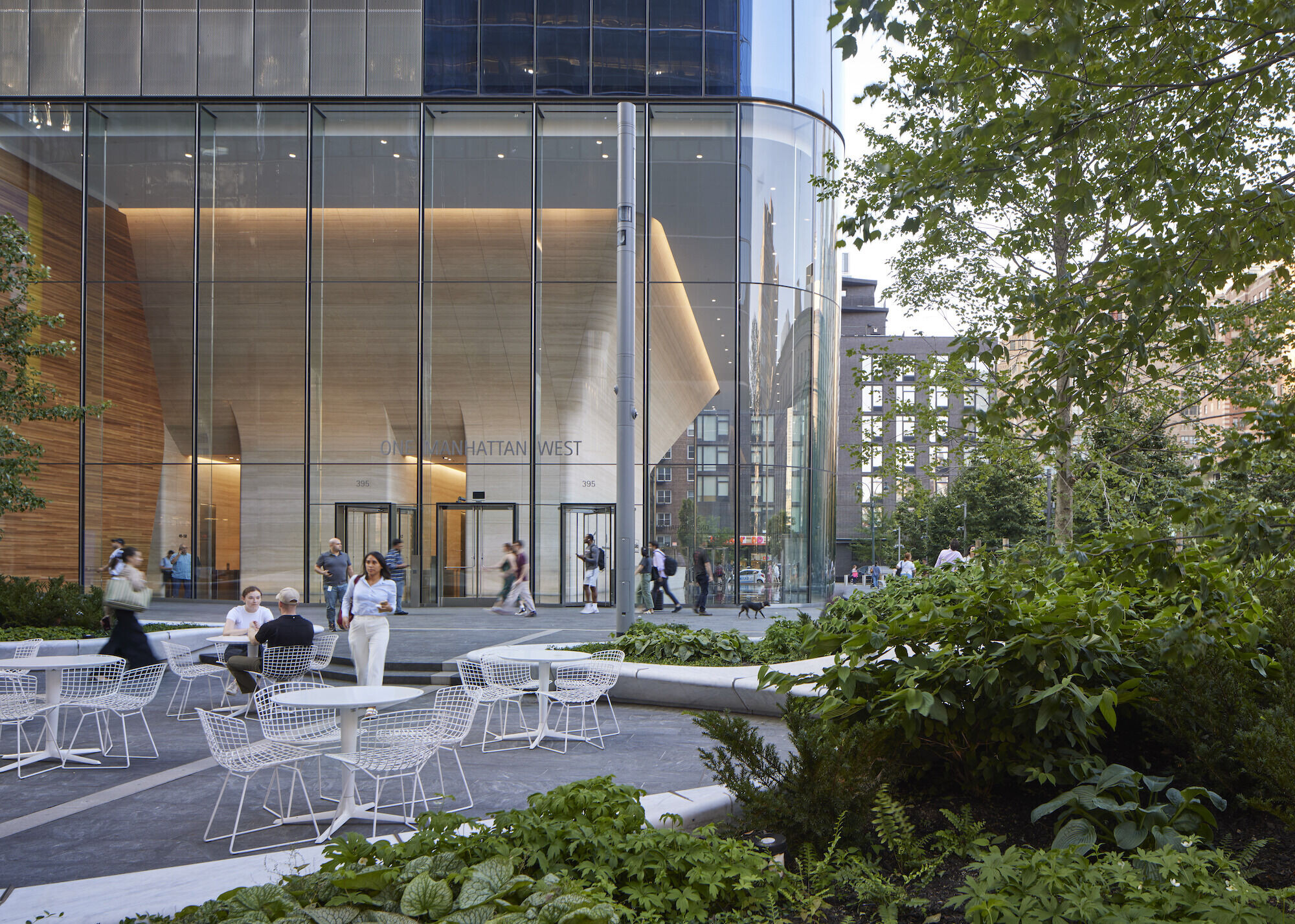
Orientation informs the composition. One Manhattan West curves towards the east, addressing pedestrians arriving from Penn Station, while Two Manhattan West faces Midtown to the north. At ground level, glazing reduces the boundary between interior lobbies and the surrounding public plaza, encouraging movement through the site.
Environmental performance and certification
Two Manhattan West is targeting LEED Gold certification, with a focus on energy efficiency, envelope performance, and indoor environmental quality. The façade minimises heat gain and loss while supporting daylight access, reducing operational energy demand across the building’s lifecycle.
The development’s dense, transit-oriented location supports sustainability goals by reducing reliance on private vehicles. Direct connections to major transit hubs and pedestrian routes encourage walking and public transport.

Public space as urban infrastructure
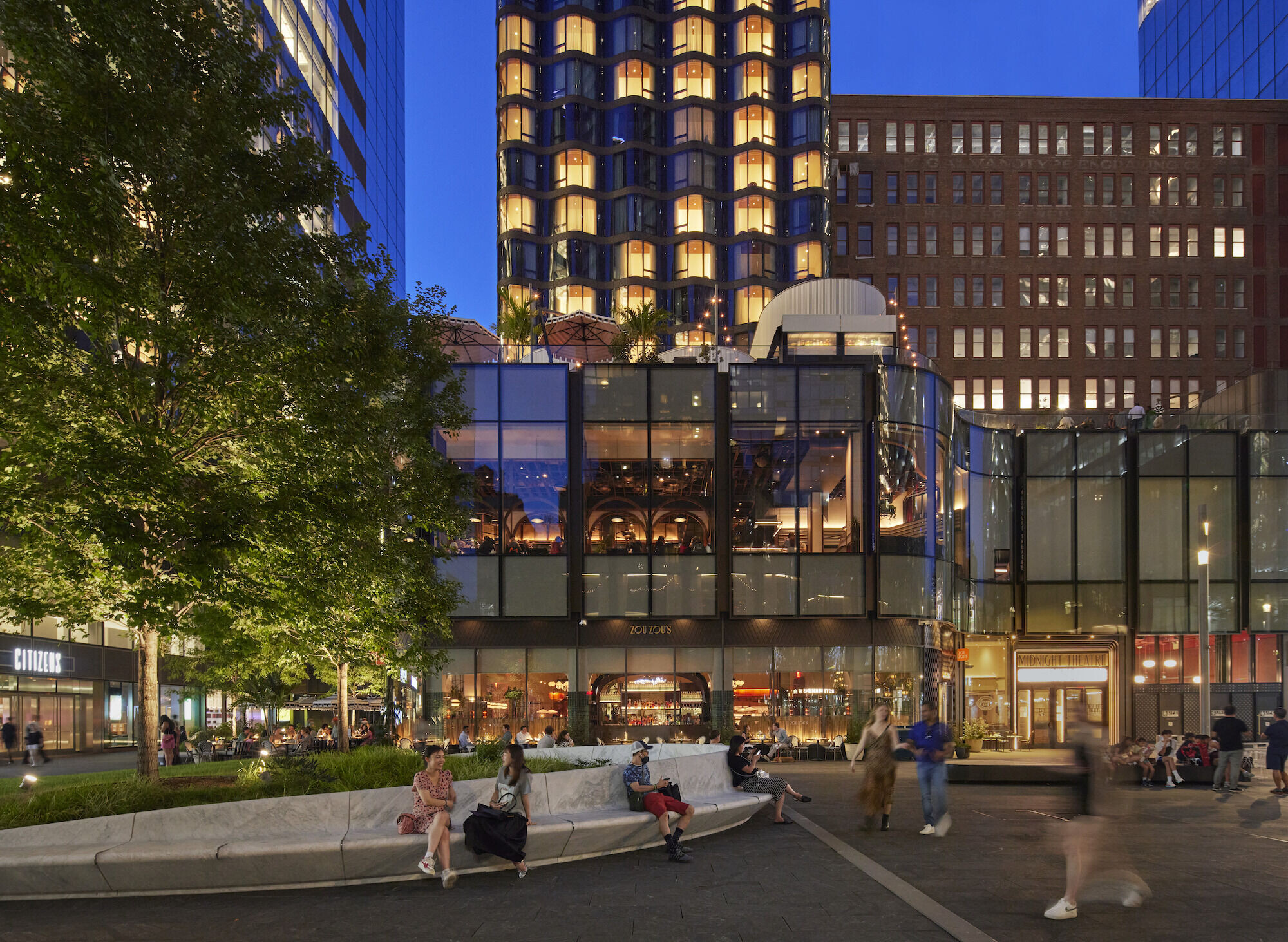
The design of Manhattan West places emphasis on the public realm. Two Manhattan West contributes to a network of plazas, landscaped routes, and pedestrian connections that open a formerly inaccessible site to public use. These spaces link to a broader network of west-side pedestrian pathways, including the High Line–Moynihan Connector, a 600-foot linear park designed by SOM and Field Operations.
The surrounding buildings support continuous activity. A mix of offices, residences, and hospitality, including the Pendry hotel and the Eugene residential tower, contributes to ongoing use throughout the day and evening.