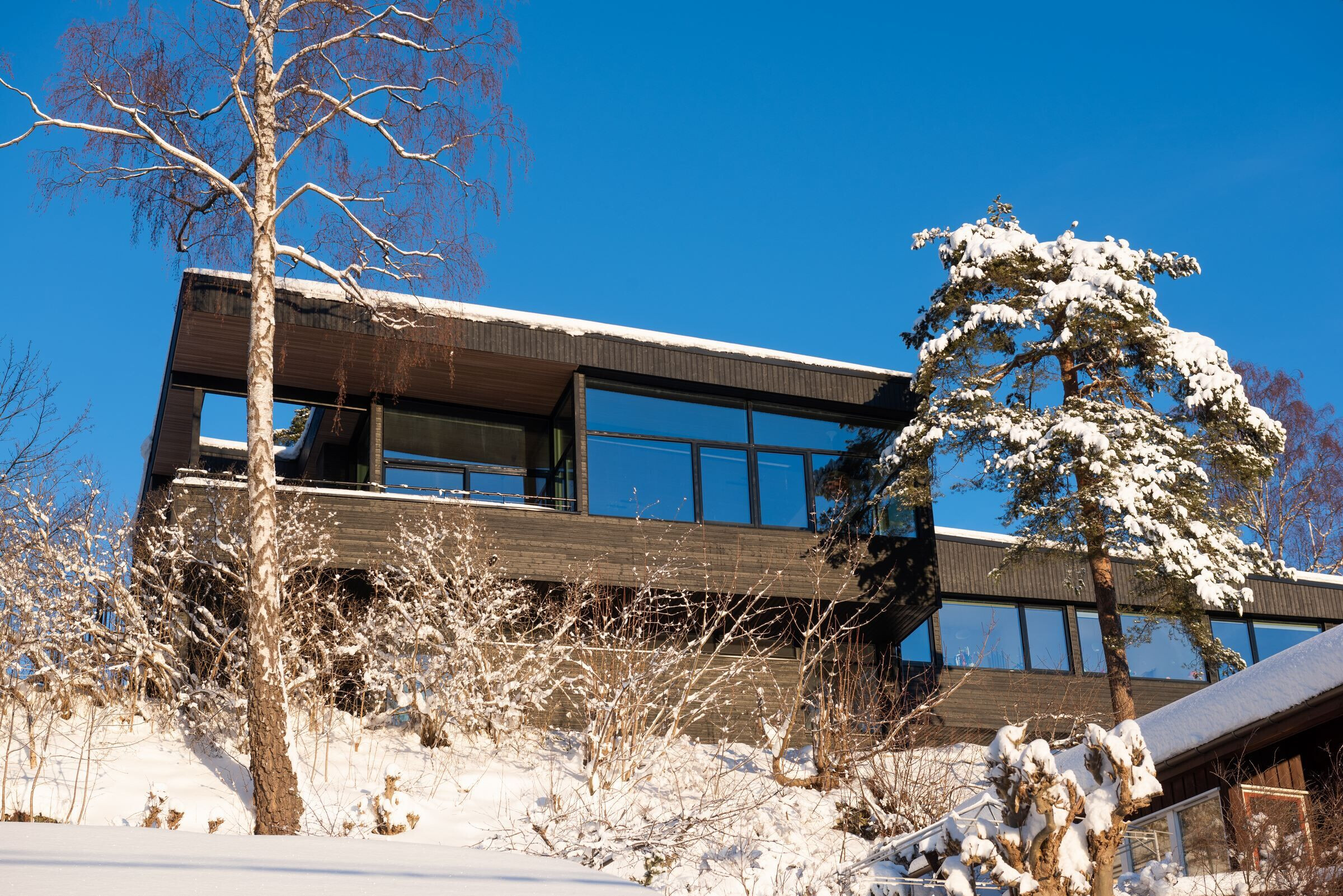


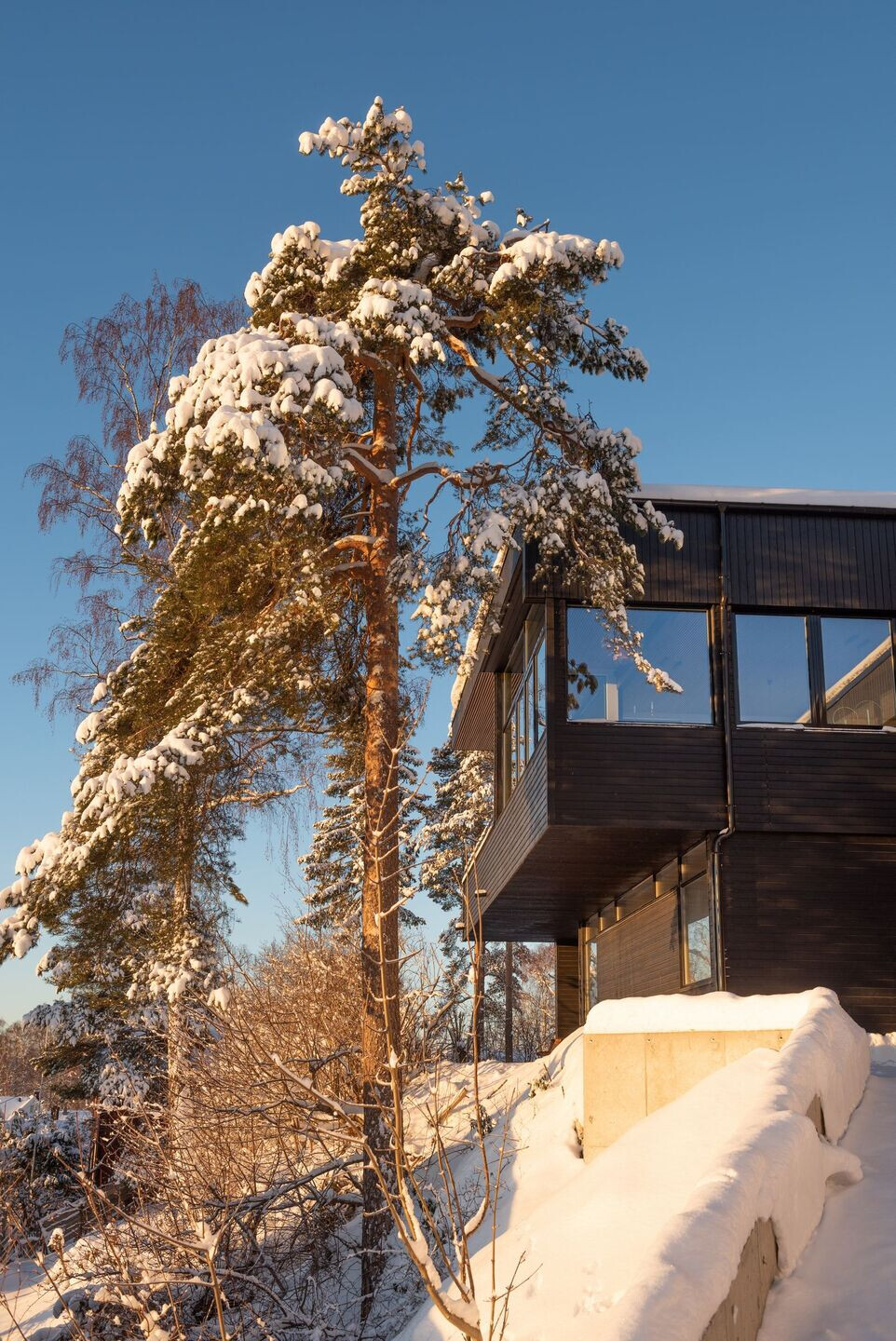
Located in the Jar district, just outside Oslo, this private residence by MORFEUS arkitekter sits on a ridge characterised by mature pine trees and expansive views of the Oslo Fjord. The design prioritises the preservation of the site’s natural features, situating the primary living spaces to overlook the fjord while maintaining a direct connection to the existing canopy.


Deconstruction and circularity
The project replaces a 1912 timber structure that had reached the end of its functional lifespan. But to mitigate waste and promote a circular economy, demolition was carried out through deconstruction. Original components, including windows, doors, and hardware, were reclaimed and donated to restore period-appropriate local housing. This strategy ensured that the embodied carbon and historical value of the original materials remained within the local building stock rather than entering the waste stream.
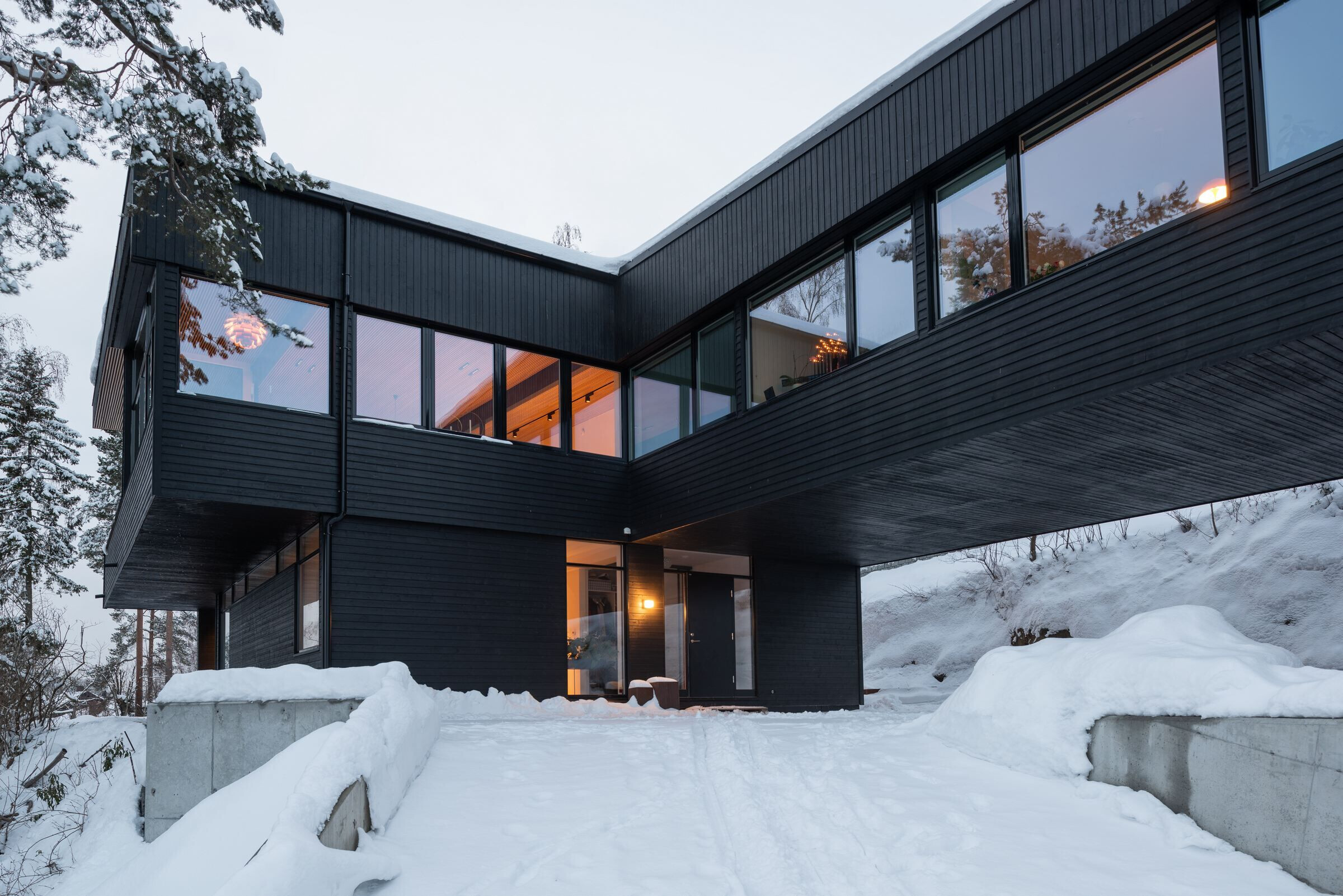
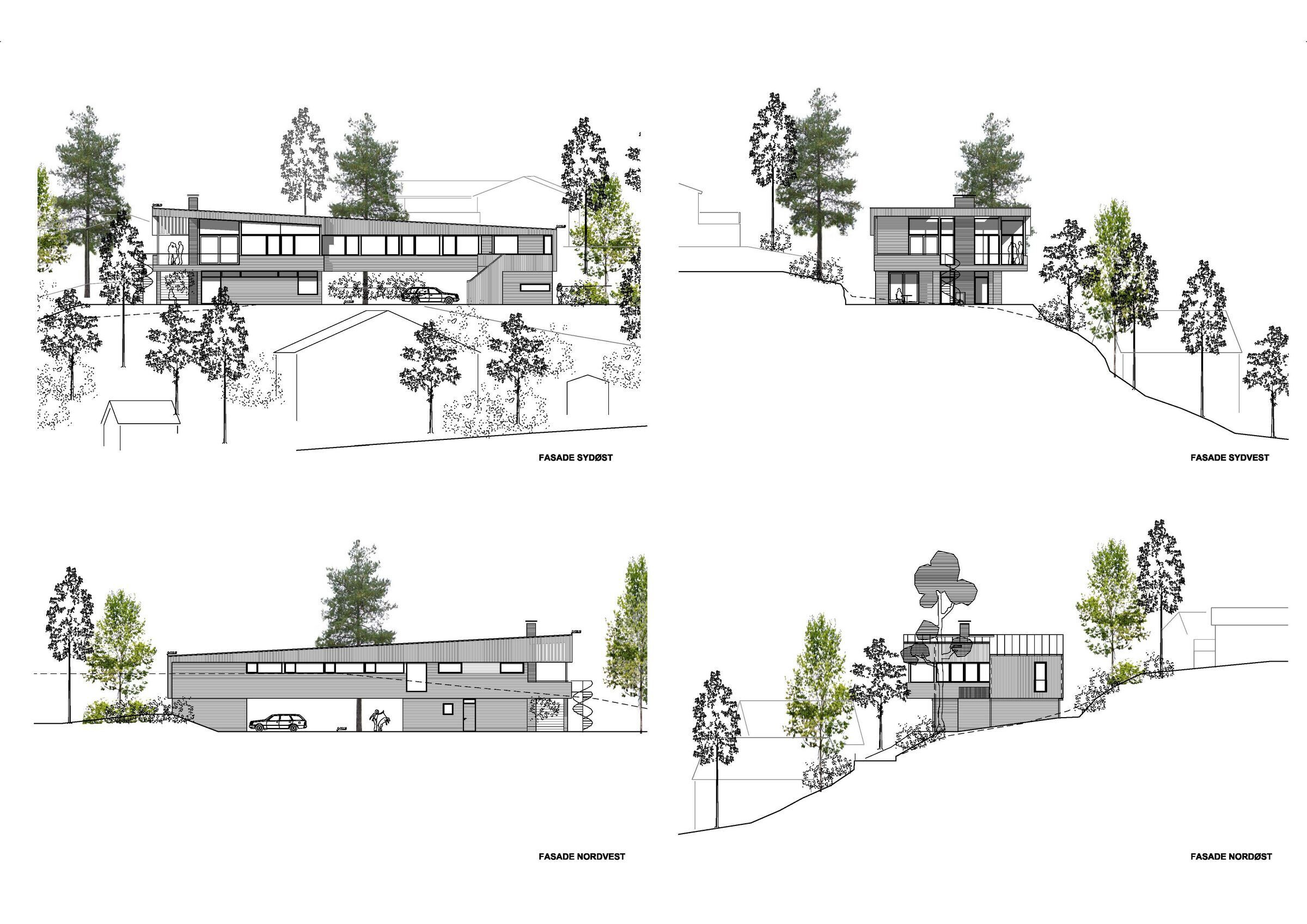
The footprint of the new structure follows the original building line to the west and incorporates the site of a former shed and henhouse to the east. By bridging these two areas with a 12-meter structural span over the existing driveway, the design minimises additional soil sealing. This technical solution enabled expansion of the living area while preserving the established garden and the sensitive root systems of the site's characteristic pine trees.
Solar orientation and community density
The building’s massing is a direct response to the local topography and the solar path at 56 degrees latitude. The roofline slopes upward toward the west, maximising passive solar gain and natural illumination in the living areas during the evening hours. This geometry also serves a communal purpose: by sloping the roof toward the east, the building's scale is reduced relative to neighbouring properties. This ensures continued access to daylight for the surrounding community, addressing the social challenges of modern urban densification.

Materiality and thermal regulation
The primary structure utilises a timber frame, supplemented by laminated timber (glulam) and selective steel members to achieve the necessary structural spans. Inside, the material palette focuses on renewable resources and thermal energy management. Oak is utilised extensively for flooring, ceilings, and a tactile, sculptural central staircase, providing a carbon-sequestering interior finish.


On the ground floor, polished concrete acts as a thermal mass, helping regulate temperature by absorbing and slowly releasing heat throughout the day. These material choices are complemented by large apertures and integrated outdoor terraces, designed to manage the extreme seasonal fluctuations in daylight of the Norwegian climate. This strategy strengthens the biophilic connection between the interior and the exterior, allowing the residence to function efficiently across the contrast of summer and winter seasons.