The existing state care centre in Knittelfeld, Austria, was renovated by Gem. Wohn- und Siedlungsgenossenschaft Ennstal, a non-profit housing and settlement cooperative, for Volkshilfe Steiermark, a non-profit social services organisation. The work also includes a new two-storey care home and a childcare facility. Designed by Dietger Wissounig Architects, the project brings together the carefully upgraded existing structure and a contemporary extension to form an integrated, multigenerational complex.


Care home layout and resident experience
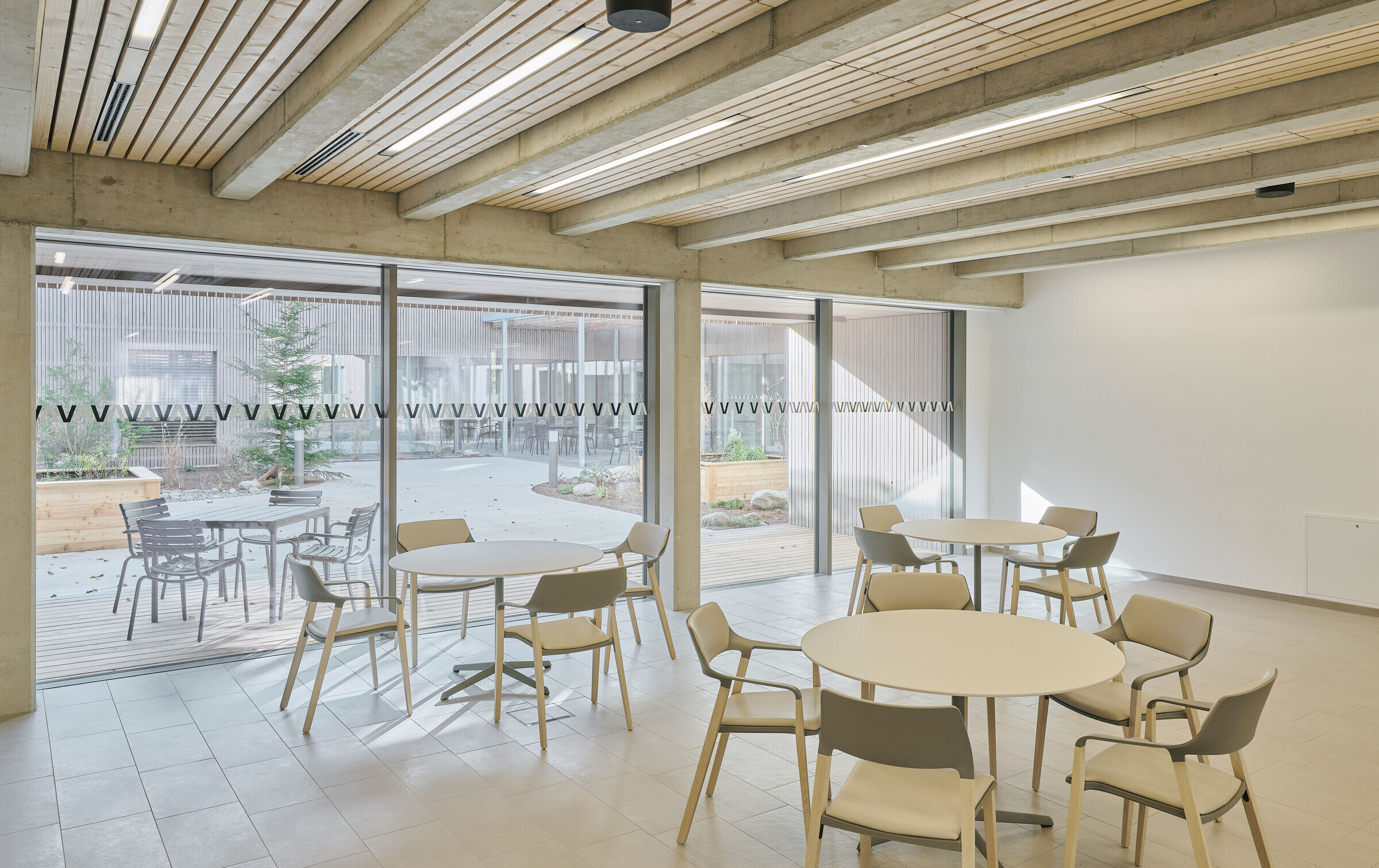
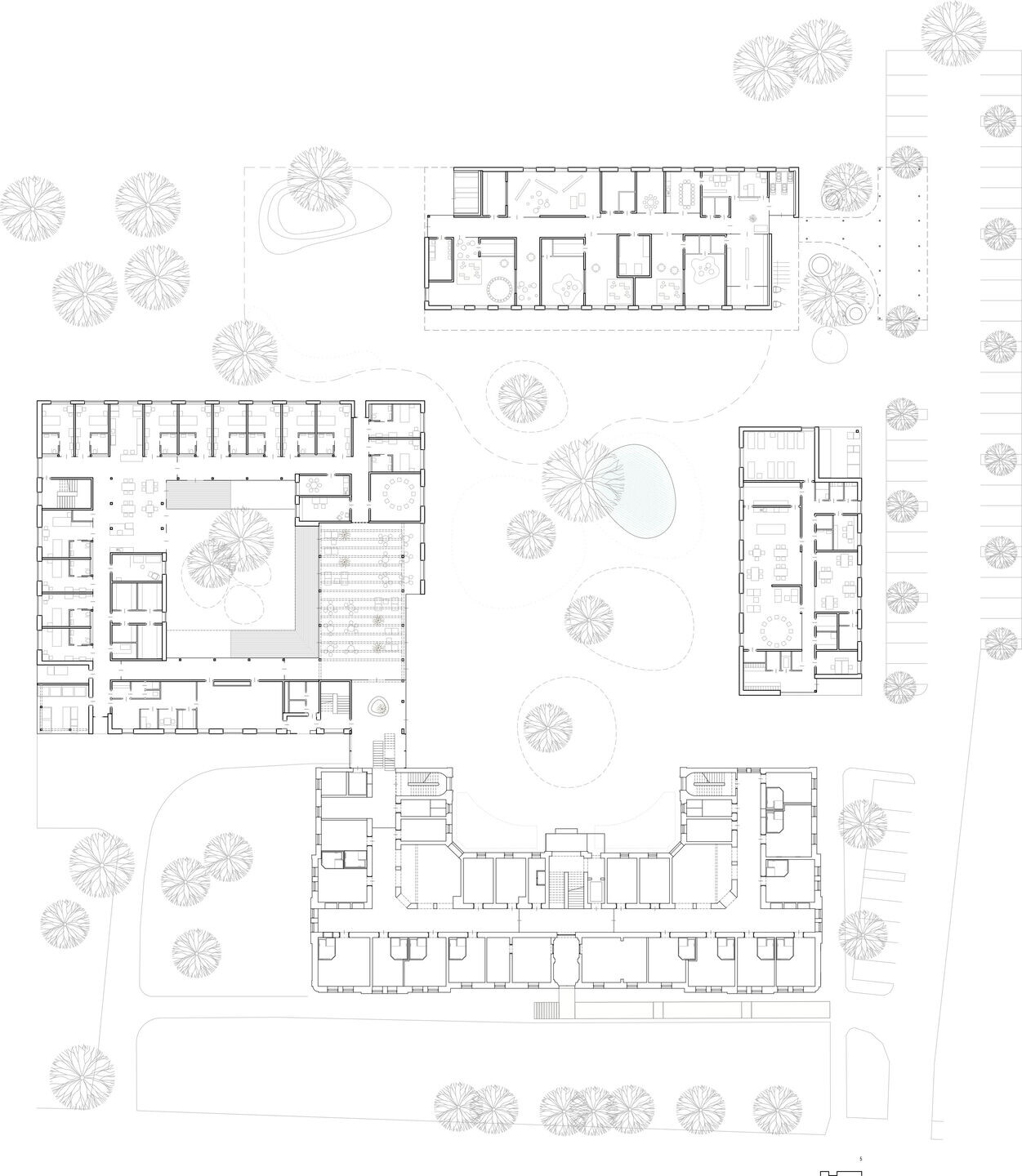
The new care home houses three residential communities, providing 45 beds in total, complementing the existing care home’s own capacity. Single and double rooms are arranged across two floors and interwoven with a sequence of communal areas. A central warm-up kitchen and a shared communication area on the first floor act as a social heart to the building — conceived as a village square — offering a clear point of orientation and encouraging interaction.
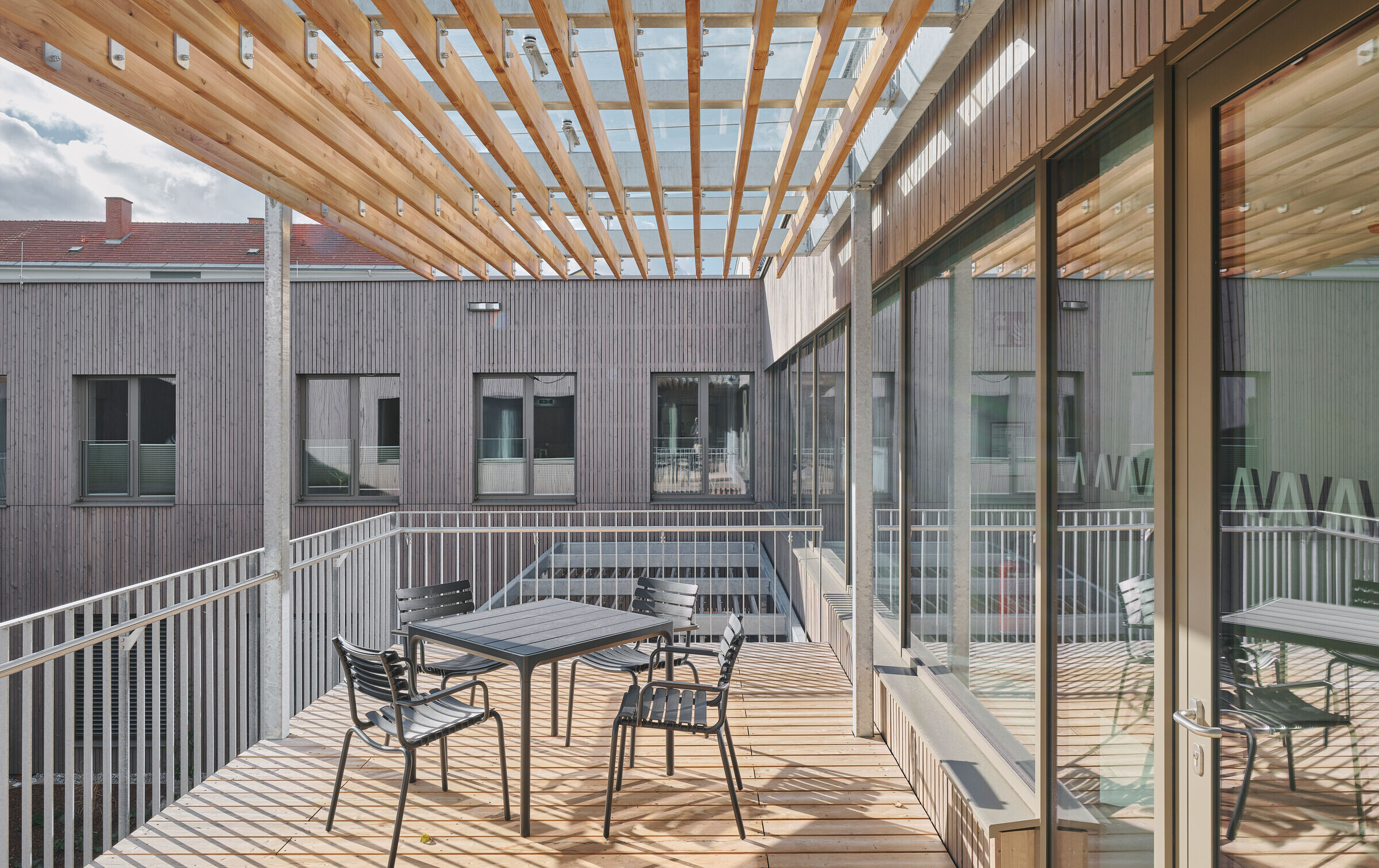
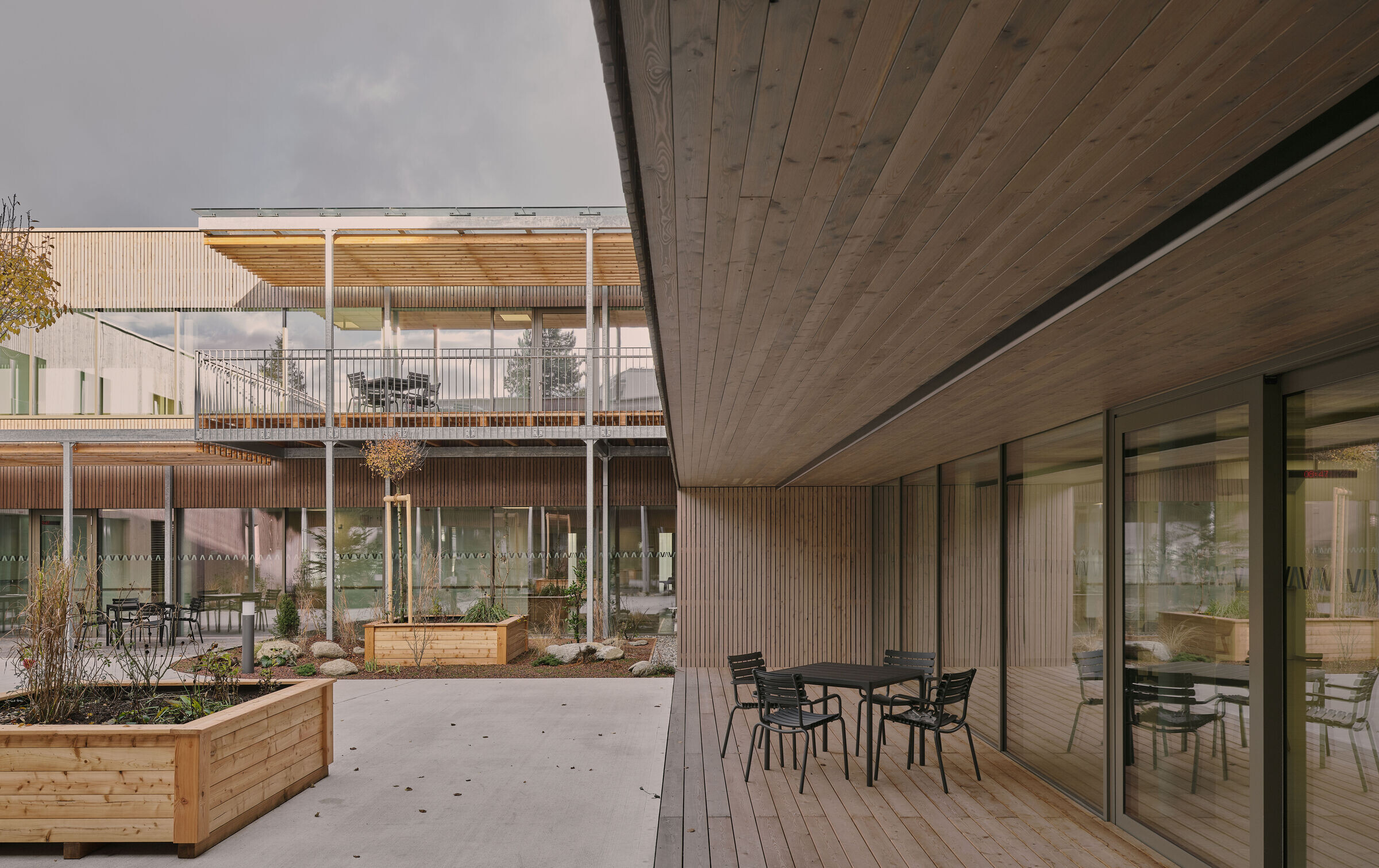
Covered verandas, terraces, and a central courtyard create a generous recreation and exercise landscape. Inside, circulation unfolds through a sequence of connected spaces — foyer, village square, and communal rooms — maintaining openness and long sightlines within a compact footprint. A new staircase with an integrated bed-lift connects the existing building to the extension, ensuring both structures operate as a coherent whole.


Childcare facilities and orientation
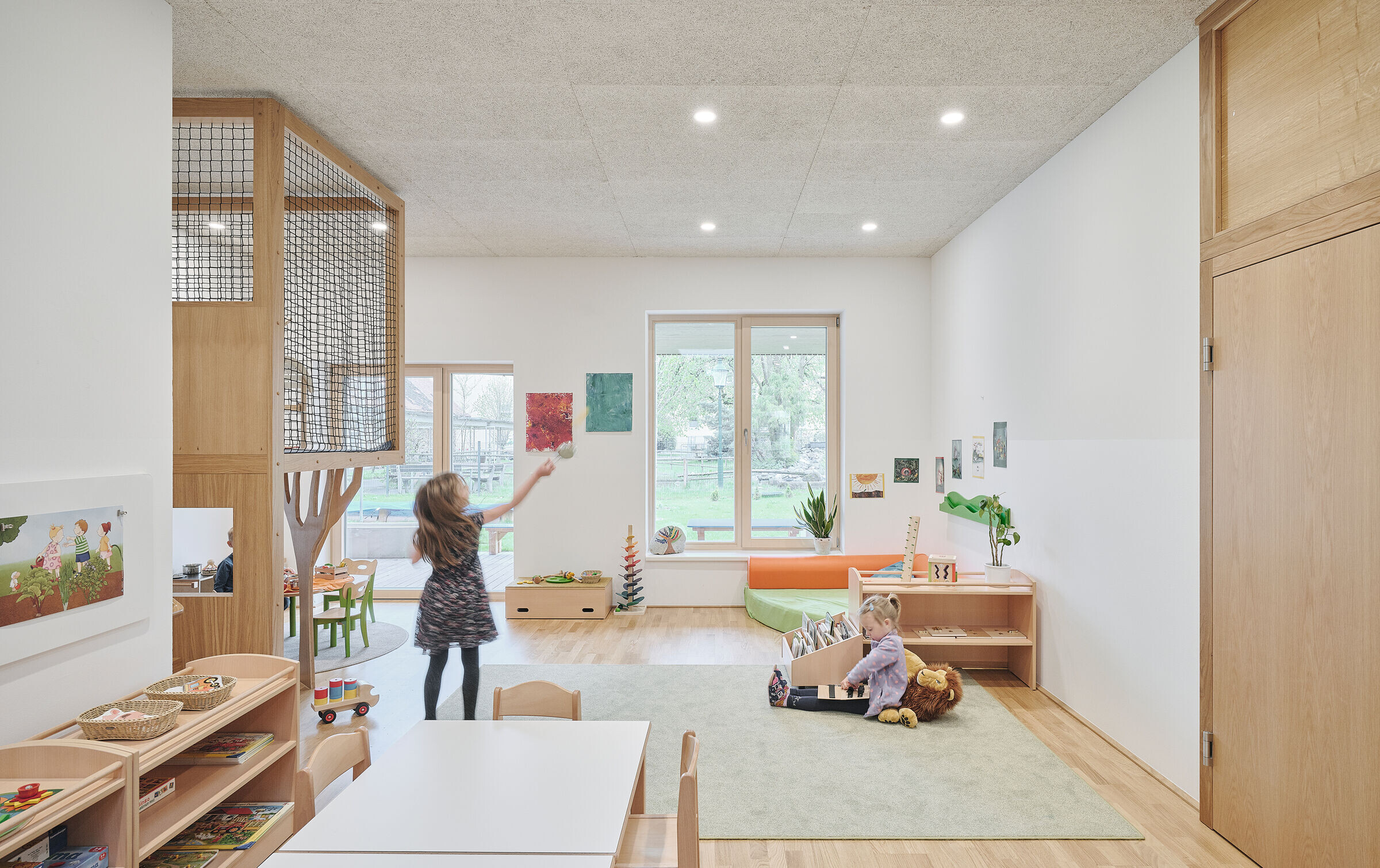
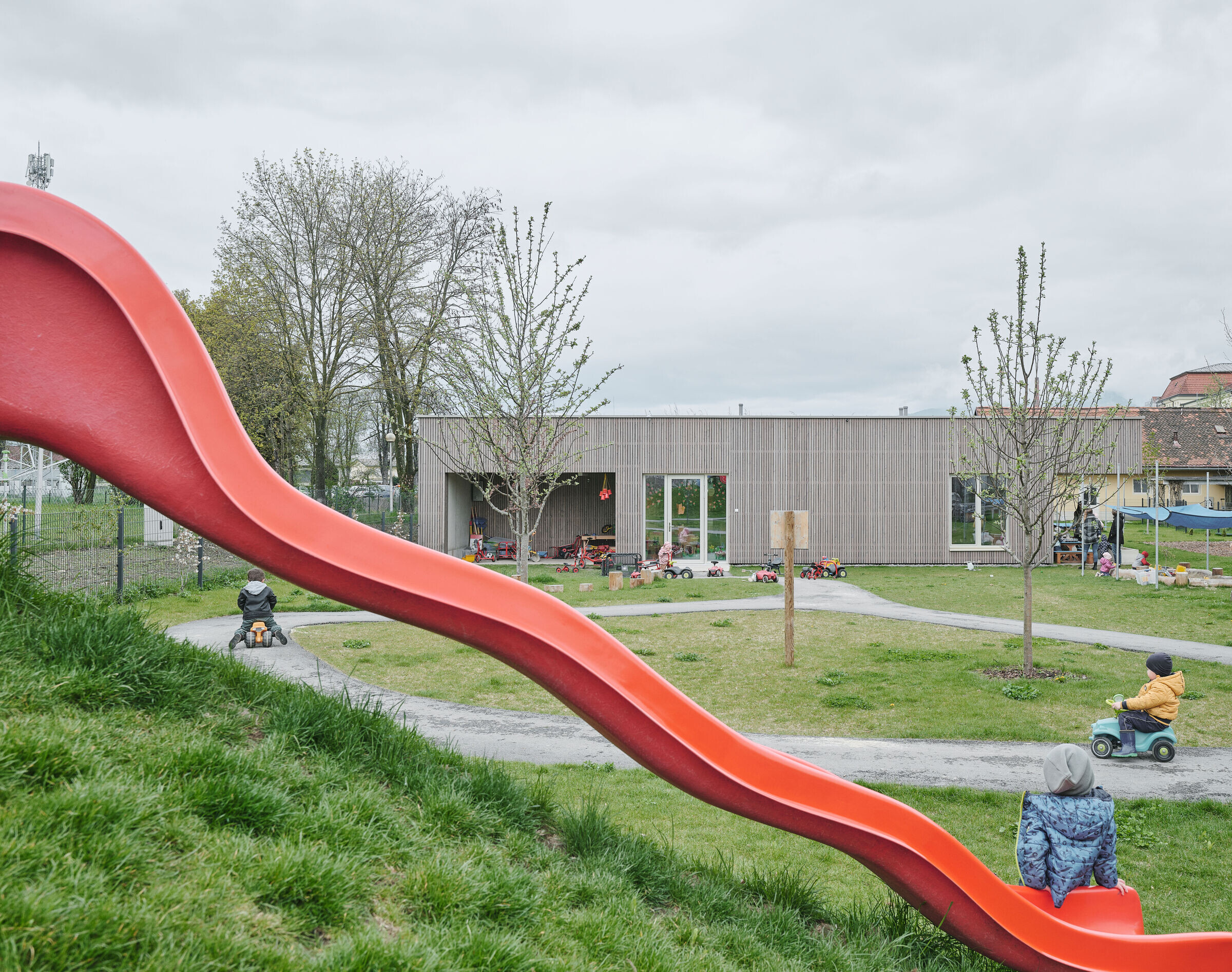
The daycare center accommodates two nursery groups and one preschool group, spread across three spacious, light-filled rooms. Each room opens onto a wraparound south-facing veranda, which serves as a transition zone to the outdoors while also providing extra protection from the sun. The more functional rooms are located on the north side of the block.
Due to the deliberate southern orientation of the building, the childcare facility is not visible to the surrounding neighborhood, creating a quiet, introverted character that remains inviting and not closed off.

Spatial organisation and relationship to the site
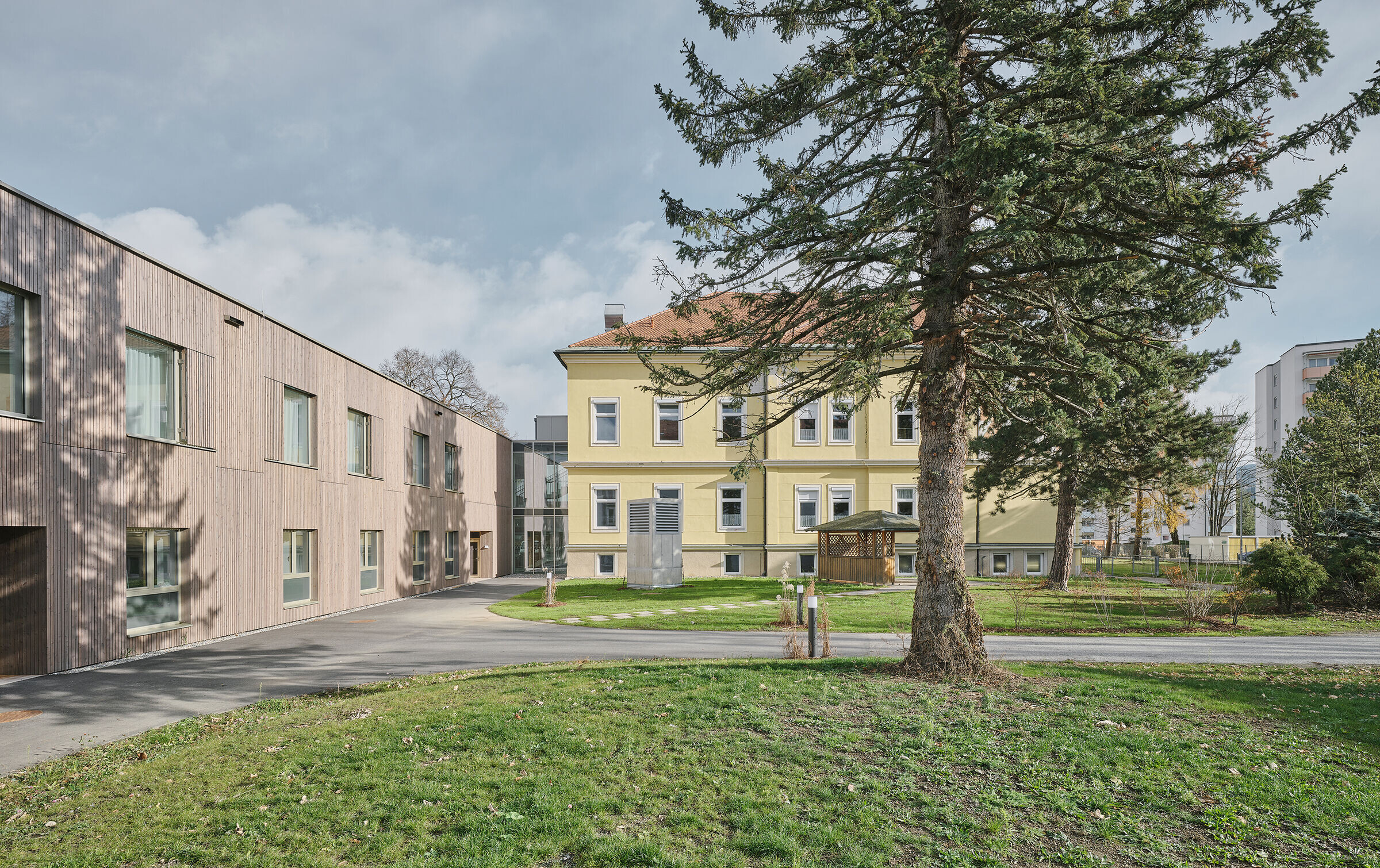
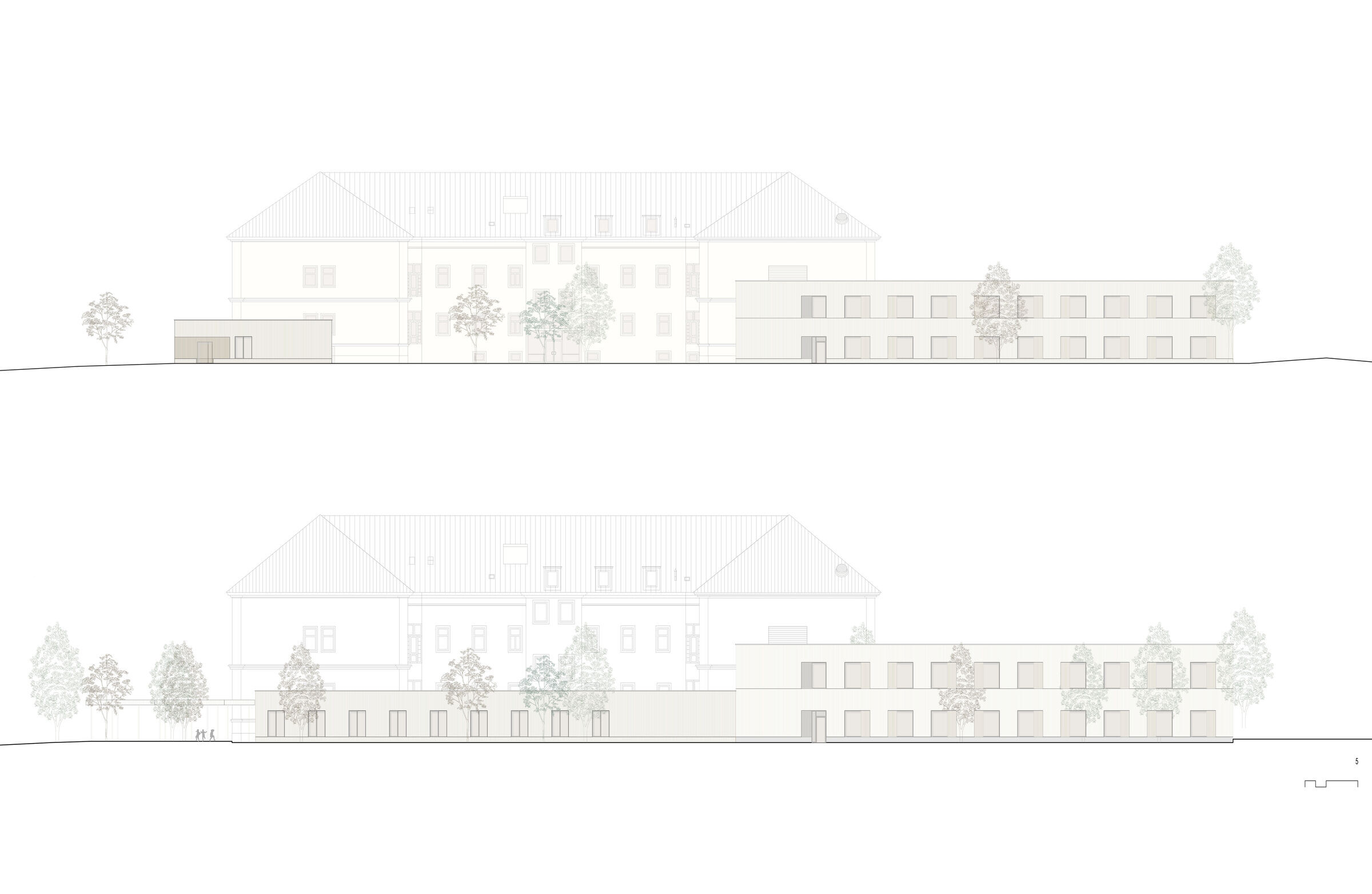
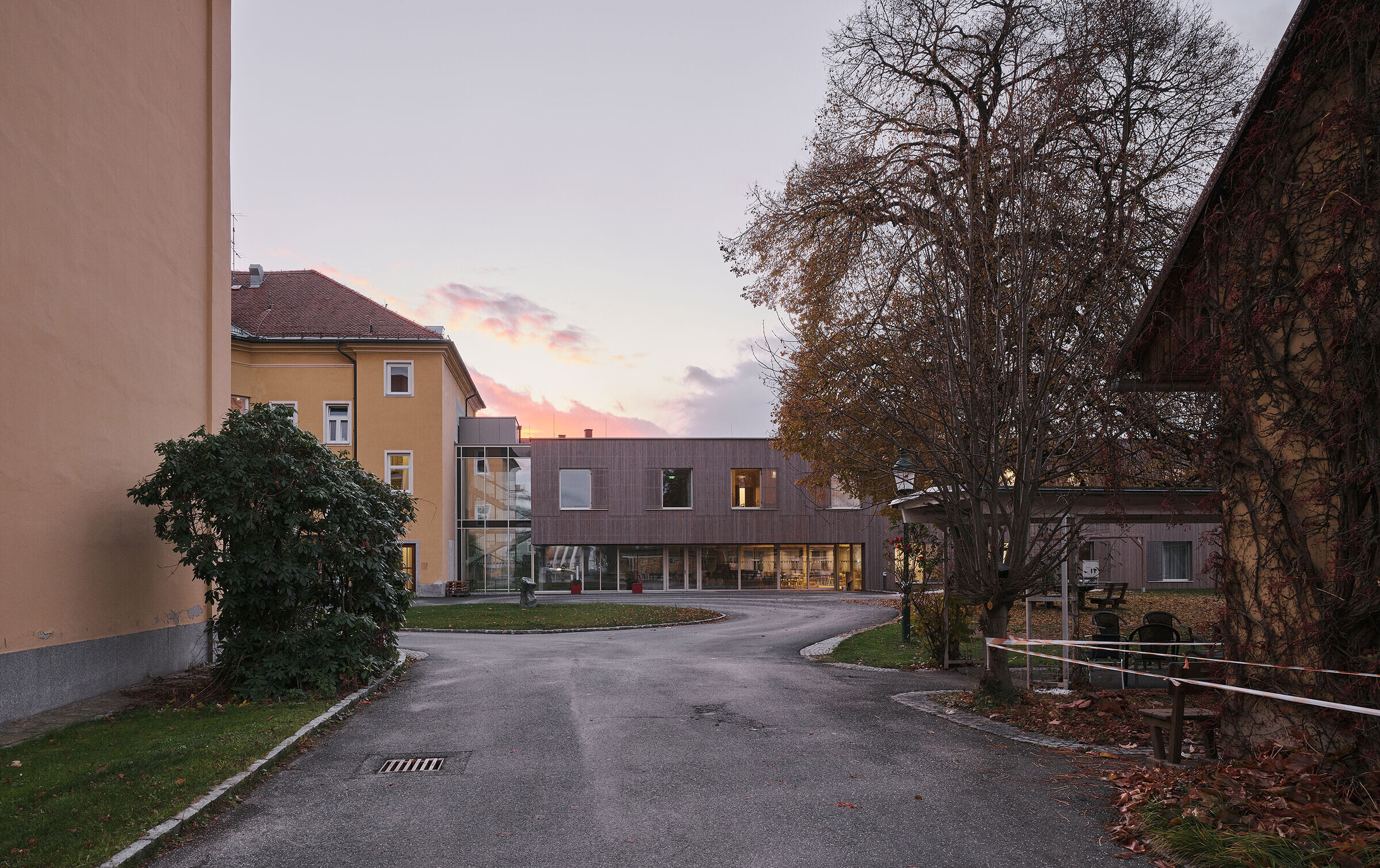
The project draws on the traditional square courtyard typology, establishing strong site edges and shaping a series of differentiated outdoor spaces. The existing nursing home retains its public-facing presence, having been updated with minimal interventions and sensitively paired with the new addition.
A glazed joint marks the meeting point between old and new, creating a respectful separation while highlighting the spatial synergies introduced by the extension. The outdoor space between the volumes forms an inviting entrance forecourt and acts as a natural distribution point in the newly composed layout.

Facade character and material expression
A unified architectural identity is achieved through subtle design strategies and a consistent use of larch wood vertical cladding. Permeable facade panels create an atmospheric shadow play after dark, while echoing the existing building’s rhythmic structure to reinforce continuity across the ensemble.
The additions are conceived not as competitors to the original building, but as open, harmonious extensions. Generous windows heighten connections to the outdoors, with seating-height parapets encouraging residents to pause and engage with the landscape. These openings also offer secondary exits, supporting informal interaction and a sense of community, and enabling residents to experience nature throughout the year.


Sustainability strategy
The project’s sustainability strategy combines passive design, thoughtful material choices, and long-term resilience. The building is constructed in a mixed reinforced-concrete and timber-frame system, expressed externally through larch cladding, with all roof areas extensively landscaped to support ecological and climatic performance. Shading is integrated into the facade rhythm to limit summer overheating, while large openings and cross-ventilation help reduce reliance on mechanical systems. Durable mineral-based insulation, regionally sourced timber, and easily replaceable facade modules contribute to lower maintenance emissions and a longer operational life. Together, these measures create a comfortable, low-impact environment designed to adapt gracefully to future needs.